
Posted on: July 17th 2026
Series Introduction: Welcome to the conclusion of our three-part series on scaling global accounts receivable. In Part 1, Priya structured multi-region contact nodes. In Part 2, she connected those nodes to regional banking rails. Here in Part 3, Priya ties it all together with a CFO-backed operational framework that outlines when to use scalable AI outreach and when to deploy native-speaking human specialists.
Balancing Automation and High-Touch Collections
As organizations scale globally, expanding footprints quickly create a fundamental challenge for Treasury and Accounts Receivable (AR) teams: the cost of international collections can easily swallow the margins on late-paying accounts. Managing cross-border tracking, local regulatory compliance, and regional personnel creates an expensive operational burden. In fact, guidelines from the Association for Financial Professionals (AFP) emphasize that cross-border operations must constantly balance complex localized risk mitigation against strict cost-efficiency.
| “Relying entirely on rigid, automated dunning templates backfires—it risks damaging high-value client relationships and completely fails to resolve complex B2B disputes.” |
However, executing this balance is incredibly difficult. Deploying regional shared service centers (SSCs) or localized AR teams across global time zones incurs massive overhead in salaries, taxes, and benefits. Yet, relying entirely on rigid, automated dunning templates backfires—it risks damaging high-value client relationships and completely fails to resolve complex B2B disputes like pricing errors or missing bills of lading.
Because complex disputes require human mediation but routine collections demand efficiency, CFOs and Heads of AR need a math-driven, tiered framework. Industry data highlights that shifting from basic automation to autonomous finance can lower the cost-to-collect by 25% to 40%. This transition relies on a proactive Human-in-the-Loop AI framework, which dictates exactly when to let artificial intelligence drive autonomous workflows and when to deploy specialist intervention.
| “Shifting from basic automation to autonomous finance can lower the cost-to-collect by 25% to 40%.” |
How the Framework Routes Data in Practice
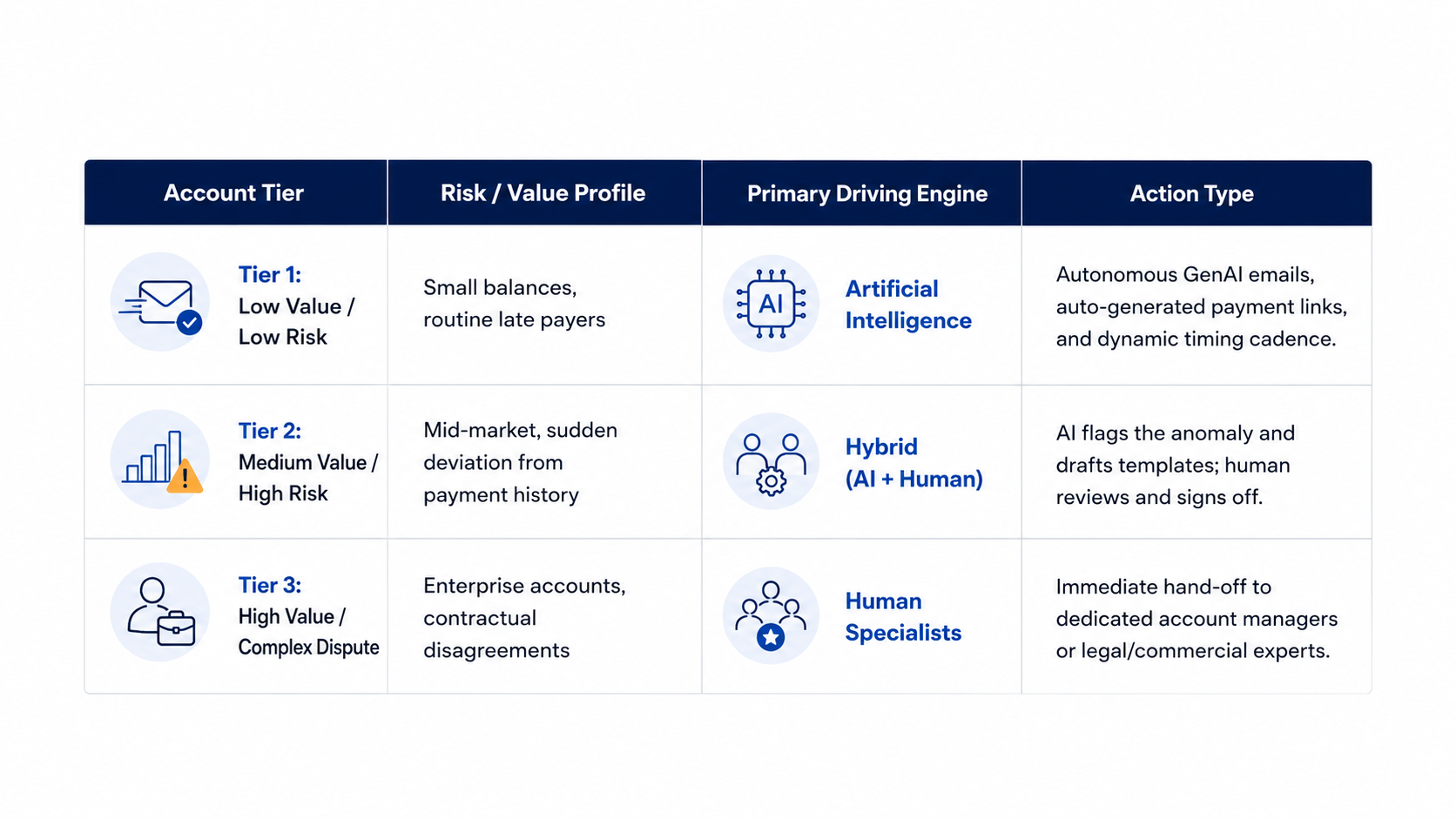
Figure 1: Dynamic Risk-Tiering Framework to Optimize Collection Recovery vs. Operational Cost.
The Cost-Benefit Threshold Formula
To establish your threshold, you must calculate the Cost to Collect against the Marginal Recovery Lift. A native-language collector’s fully loaded operational rate must be weighed directly against the probability of an invoice sliding into bad debt write-offs.
This is where advanced tech-enabled operations become vital. Companies like Straive leverage Agentic AI solutions and domain experts to manage high-volume receivables efficiently, having successfully cleared massive backlogs of tens of thousands of invoices within a single year.
A robust global framework divides the ledger into three clear operational tiers:
- Tier 1: Low-Value, Low-Risk Invoices (Fully Automated AI): Transactions falling below your median value (e.g., under $5,000) are managed end-to-end by automated, multilingual digital workflows. The marginal cost to collect drops near zero, protecting international margins on high-volume, low-balance accounts.
- Tier 2: Mid-Value Invoices (Hybrid Dynamic Outreach): Run-rate invoices are managed primarily by autonomous AI engines, but automatically route to a human specialist the moment an operational anomaly, payment roadblock, or complex commercial dispute is identified.
- Tier 3: High-Value or High-Risk Invoices (Human-First Specialists): Invoices sitting above a critical enterprise threshold (e.g., over $50,000) are assigned immediately to native-language human specialists. The risk of an outstanding asset of this scale easily justifies the dedicated human resource required to secure personal mediation.
Conclusion: Balancing Efficiency and Nuance
| “Scaling a global finance footprint requires decoupling transaction volume from administrative headcount.” |
Ultimately, scaling a global finance footprint requires decoupling transaction volume from administrative headcount. Relying on blanket, rigid automation damages strategic relationships, while deploying localized human collectors across every time zone destroys international margins.
By implementing this math-driven, three-tier framework, CFOs and Heads of AR can successfully resolve this tension. The model creates a dual operational benefit: it insulates operating margins by letting autonomous AI absorb the high-volume, low-value transactional burden, while simultaneously ensuring that high-value global accounts receive the precise level of human nuance required to resolve complex disputes.
Hardcoding these quantitative boundaries into the Order-to-Cash cycle allows organizations to aggressively protect international cash flow without sacrificing customer goodwill.

Priya Roy is Vice President, Delivery Leadership at Straive, where she translates ambitious growth strategy into high-performing customer experience and technology operations. With deep expertise in large-scale transformation, she offers a practical leadership perspective on scaling AI, elevating service excellence, and turning operational complexity into lasting enterprise value.


