
Posted on: July 16th 2026
Series Introduction: Welcome to our three-part series on scaling global accounts receivable. In Part 1, Priya explored how to build clean, multi-region data schemas. In Part 2, Beyond Translation—Bridging the Regional Payment Gap, she examines why true financial localization requires integration with local banking infrastructure—not just translated emails. In Part 3, Priya outlines the math-driven framework CFOs use to determine how cash collection responsibilities should be divided between AI and human specialists.
Why Linguistic Localization Fails the Treasury Test
Part 1 established that accurate regional data structures are the foundation of scalable global collections. However, clean customer data alone does not guarantee faster cash realization. An invoice may reach the right contact in the right language, yet payment can still be delayed if customers must navigate expensive, unfamiliar, or inefficient cross-border payment processes.
Optimizing regional dunning notifications and data hygiene fixes only addresses top-of-funnel customer communication. For the corporate treasury, the critical failure point of international collections isn’t language—it is infrastructure. A perfectly translated email cannot overcome the working capital drag, manual reconciliation overhead, and unpredictable revenue leakage inherent to traditional correspondent routing.
| “A perfectly translated email cannot overcome the working capital drag, manual reconciliation overhead, and unpredictable revenue leakage inherent to traditional correspondent routing.” |
While today’s consumer payment experiences create expectations of instant transactions, cross-border B2B payments continue to rely heavily on multi-tier banking networks. Commercial payments routinely take three to five business days to settle because funds pass through multiple intermediary institutions, each introducing processing delays, compliance checks, and additional costs.
For treasury leaders, this is far more than a payment inconvenience. Delayed settlement reduces cash visibility, complicates forecasting, postpones credit availability, and forces finance teams to manage exceptions rather than optimize liquidity. As organizations expand internationally, these inefficiencies multiply across countries, currencies, banking relationships, and regulatory environments, increasing operational complexity and the cost of collections.
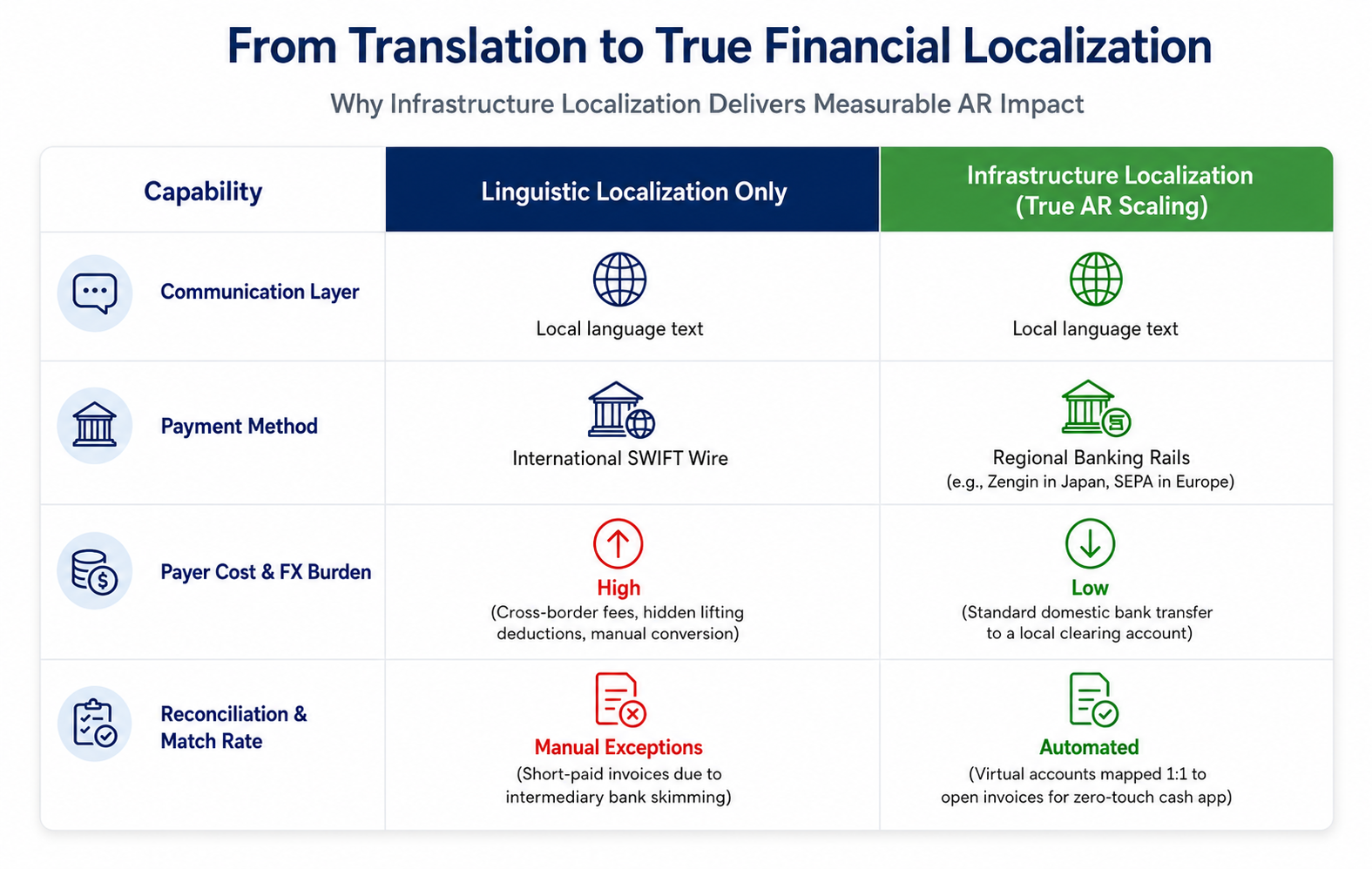
Figure 1: Linguistic Translation vs. Structural Financial Infrastructure on AR Efficiency
| “Cross-border B2B transactions routinely face settlement delays spanning 3 to 5 business days due to multi-tiered bank processing legs.” |
The distinction between communication localization and infrastructure localization becomes increasingly significant as transaction volumes grow. Translating invoices improves customer engagement, but it does not eliminate the operational bottlenecks created by international payment routing.
Financial localization addresses the mechanics of how money moves. Instead of asking customers to navigate international wires, organizations enable them to pay through familiar domestic banking systems. This reduces payment friction while improving settlement speed, reconciliation accuracy, and overall accounts receivable performance.
The G20 Roadmap for Enhancing Cross-Border Payments has established ambitious targets to reduce settlement times to under one hour. Achieving those goals requires organizations to move beyond traditional correspondent banking models and integrate directly with regional clearing networks such as SEPA Instant, Faster Payments, ACH, or Japan’s Zengin system.
Eliminating Friction with Local Virtual Accounts
When regional buyers encounter international wire fees, foreign exchange markups, or manual payment workflows, paying suppliers becomes more complicated than it should be. Enterprise payment studies show that unnecessary payment friction contributes directly to delayed payments and weaker supplier relationships.
Local Virtual Bank Accounts eliminate these barriers.
Instead of initiating an international SWIFT transfer, a Japanese customer simply makes a domestic payment to a dedicated Tokyo-based virtual account using the Zengin network. The payment clears under standard domestic banking rules, reducing costs while ensuring the exact invoice amount reaches the supplier without intermediary deductions.
The benefits extend beyond payment convenience. Each virtual account can be uniquely assigned to a specific customer or invoice, allowing incoming funds to be automatically identified without manual interpretation of remittance advice. Treasury teams gain real-time visibility into incoming cash, while finance teams spend significantly less time investigating unidentified receipts, resolving short-paid invoices, or manually matching payments.
Rich payment information carried through modern standards such as ISO 20022 further improves straight-through processing by transmitting invoice references, purchase order numbers, and customer identifiers alongside the payment itself. This significantly reduces reconciliation exceptions and enables highly automated cash applications.
Transitioning from legacy SWIFT wires to localized real-time payment rails transforms cross-border collections into domestic cash velocity—accelerating cash conversion, automating accounting workflows, and improving liquidity across global operations.
| “Transitioning from legacy SWIFT wires to localized, real-time clearing rails converts cross-border collections into domestic cash velocity—slashing days off your cash conversion cycle, automating accounting workflows, and unlocking global liquidity on demand.” |
The Cross-Border Treasury Matrix
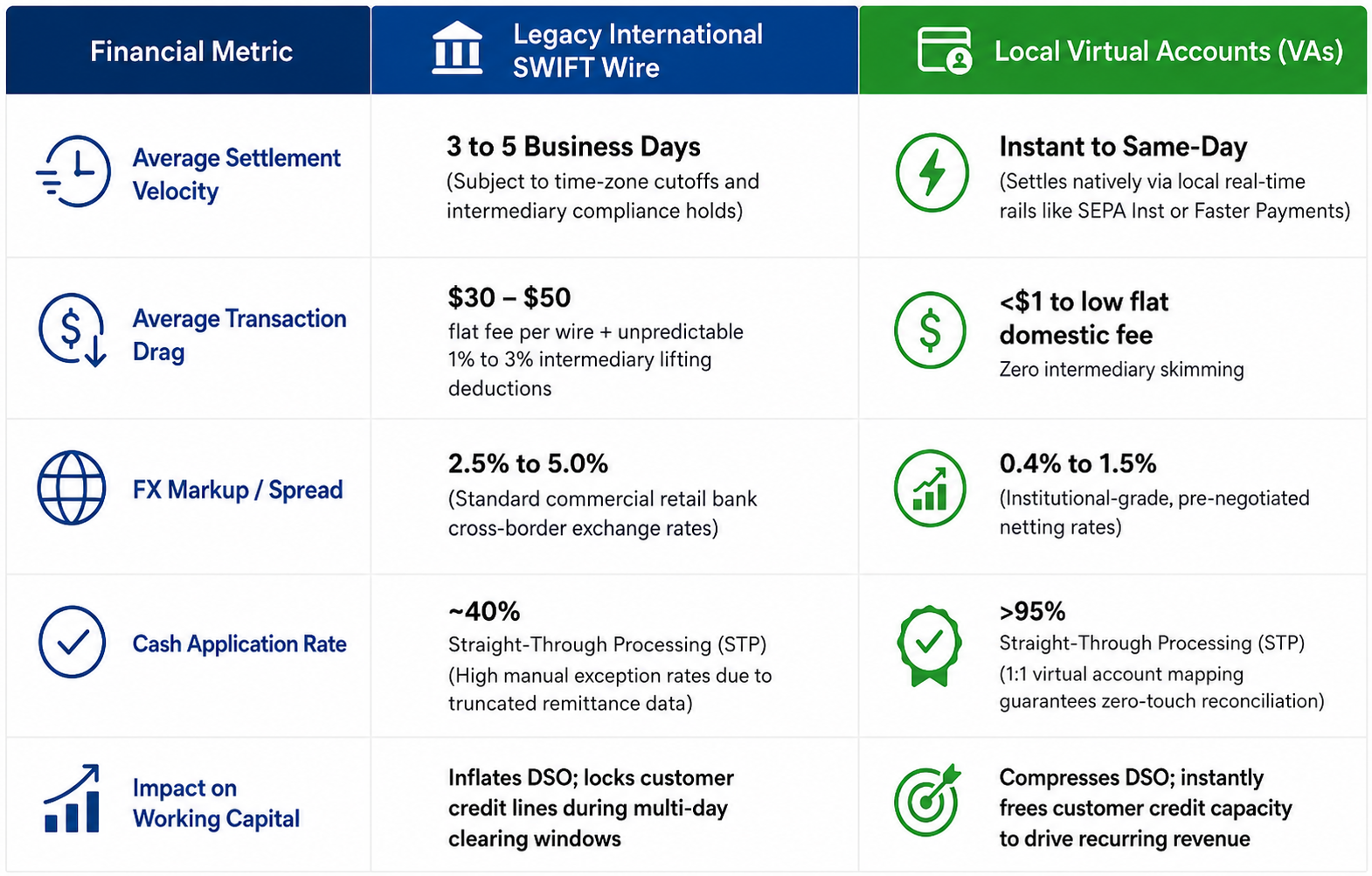
Figure 2: Structural Impact of Cross-Border Payment Architecture on Capital Velocity, Margins, and Cash Application Rates
| “True localization is a capital efficiency strategy, not a linguistic exercise.” |
The comparison illustrates that infrastructure choices directly influence treasury performance. Organizations relying on traditional SWIFT-based collections continue to absorb higher transaction costs, slower settlement, lower automation rates, and greater working capital drag. By contrast, localized payment infrastructure reduces operational friction while enabling higher straight-through processing, improved forecasting accuracy, and stronger cash flow visibility.
Rather than treating payment localization as a customer experience initiative, finance leaders increasingly recognize it as a strategic treasury capability that improves liquidity, protects margins, and scales global receivables more efficiently.
The Bottom Line
Organizations often view localization primarily as translating invoices, reminder emails, and customer communications. While these capabilities remain important, they represent only one component of an effective global accounts receivable strategy.
The greater opportunity lies in redesigning the payment infrastructure itself. Local payment rails, virtual accounts, real-time settlement, and automated reconciliation collectively reduce payment friction, compress Days Sales Outstanding (DSO), improve cash application, strengthen forecasting accuracy, and enhance working capital efficiency. These benefits extend well beyond collections, creating measurable improvements across treasury, finance, and customer operations.
With both clean regional data structures (Part 1) and localized payment infrastructure now in place, organizations are ready for the next stage of optimization: determining which collection activities should be automated and which require human judgment.
Read Part 3: The Hybrid AR Model—CFO Framework for AI vs. Human Outreach to explore how finance leaders balance AI-driven efficiency with human expertise to maximize collections performance while controlling operating costs.

Priya Roy is Vice President, Delivery Leadership at Straive, where she translates ambitious growth strategy into high-performing customer experience and technology operations. With deep expertise in large-scale transformation, she offers a practical leadership perspective on scaling AI, elevating service excellence, and turning operational complexity into lasting enterprise value.


