
Posted on: September 28th 2026
Introduction: Vendor Master Data as a Financial Control Perimeter
By the time a royalty payment reaches final approval, fraudulent banking details can blend seamlessly into routine account history. The payment amount is accurate and authorization proceeds, yet funds are redirected to an unauthorized account.
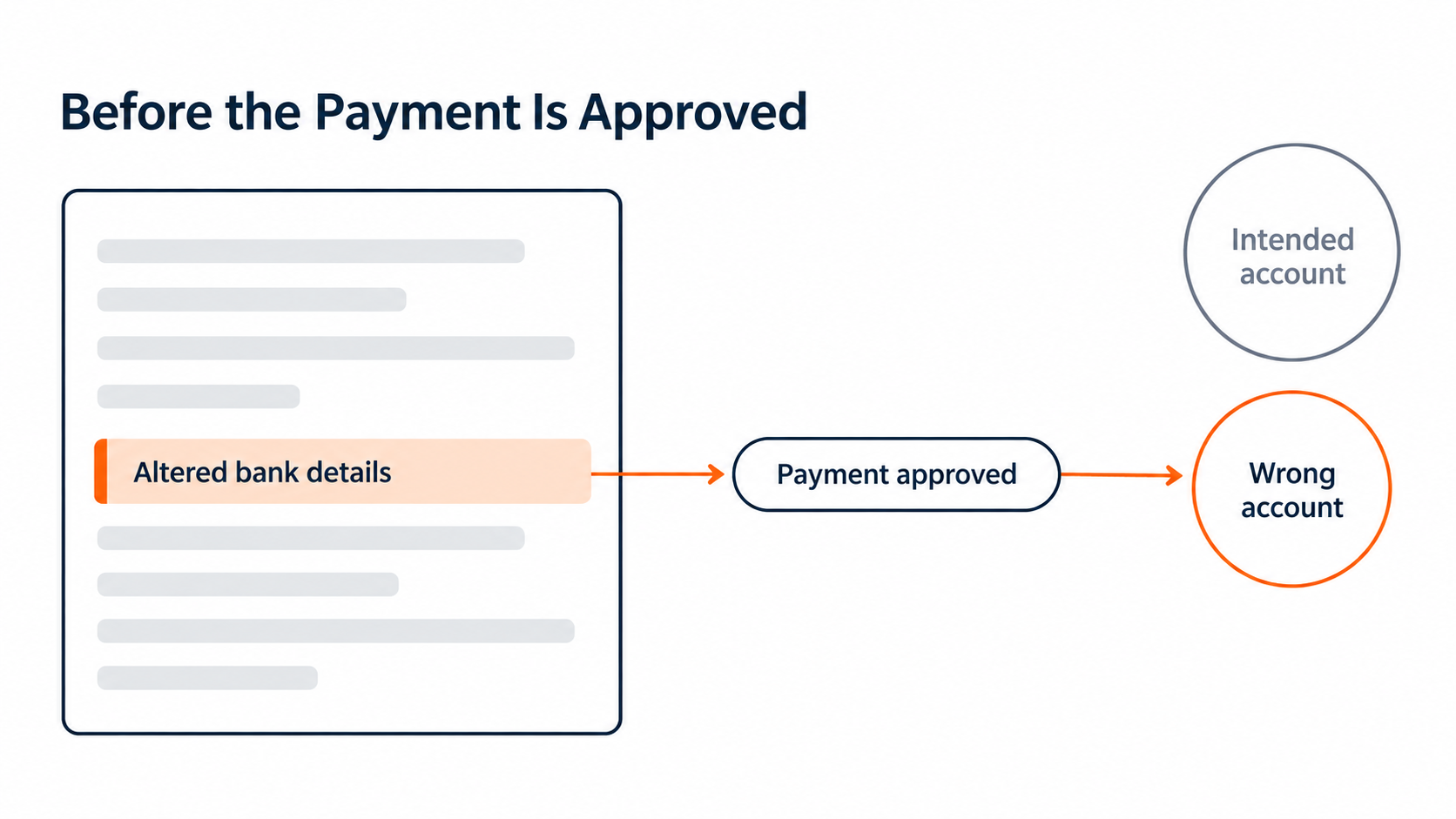
Because approvers rely heavily on stored records, maintaining data accuracy is essential for effective financial control. Beyond technical controls, a strong organizational culture and ongoing employee training ensure staff recognize social engineering tactics before updates are accepted.
Why Royalty and Payee Disbursements Present Distinct Fraud Risks
Extended gaps between payment cycles often leave contact records outdated. Additionally, third-party agents or estate representatives frequently act on behalf of rights holders, requiring robust verification of both identity and authority. These payees differ significantly from traditional operational suppliers.
Mechanisms of Vendor Master Data Fraud
1. Impersonation and payment-data modification
Access to an author’s statement or account details lends credibility to a change request, but it does not constitute valid authorization to redirect disbursements.
2. Business email compromise (BEC)
BEC attacks leverage compromised or spoofed communication channels. Inadvertently replying within an existing thread may simply route confirmation back to the attacker who provided the fraudulent instructions.
3. Duplicate and incomplete vendor profiles
While duplicate records do not inherently indicate malicious intent, they obscure line-of-sight and create ambiguity around which record governs active disbursements.
4. Fragmented systems and ill-defined ownership
Approval workflows often lack full visibility into supporting evidence managed in disparate systems. As a result, reviewers may authorize updates without detecting underlying discrepancies.
5. Deficiencies in approval and audit controls
Dual-authorization (maker-checker) models segregate initiation from approval. However, without rigorous verification protocols, multiple reviewers can still pass off on invalid documentation.
Five Critical Vendor Master Data Elements to Secure
- Payee identity: Identifies the legal recipient independently of rights ownership structures.
- Payment instructions: Defines banking routing details for accurate fund transfers.
- Tax records: Establishes regulatory documentation and statutory withholding requirements.
- Trusted contacts: Maintains authenticated communication channels for out-of-band verification.
- Status and audit history: Tracks effective dates and maintains a complete historical trail of record modifications.
Architecting a Secure Vendor Master Data Workflow
Step 1: Receive and classify update requests
Identify high-risk changes affecting payment routing and apply scrutiny proportionate to their potential financial impact.
Step 2: Verify identity via independent channels
Authenticate requests through pre-approved, independent communication paths. Confirming that a bank account exists does not validate the authority of the instruction to use it.
Step 3: Audit supporting documentation
Validate submitted documentation against existing master records and active payment schedules. The presence of a document on file does not guarantee its authenticity. To strengthen document integrity, organizations should implement specific technological safeguards, such as multi-factor authentication (MFA) for change portals, automated bank account validation services, and strict role-based access controls (RBAC).
Step 4: Enforce dual-authorization approvals
Provide secondary approvers full access to underlying verification evidence. Ensure all discrepancies are resolved prior to activating updates.
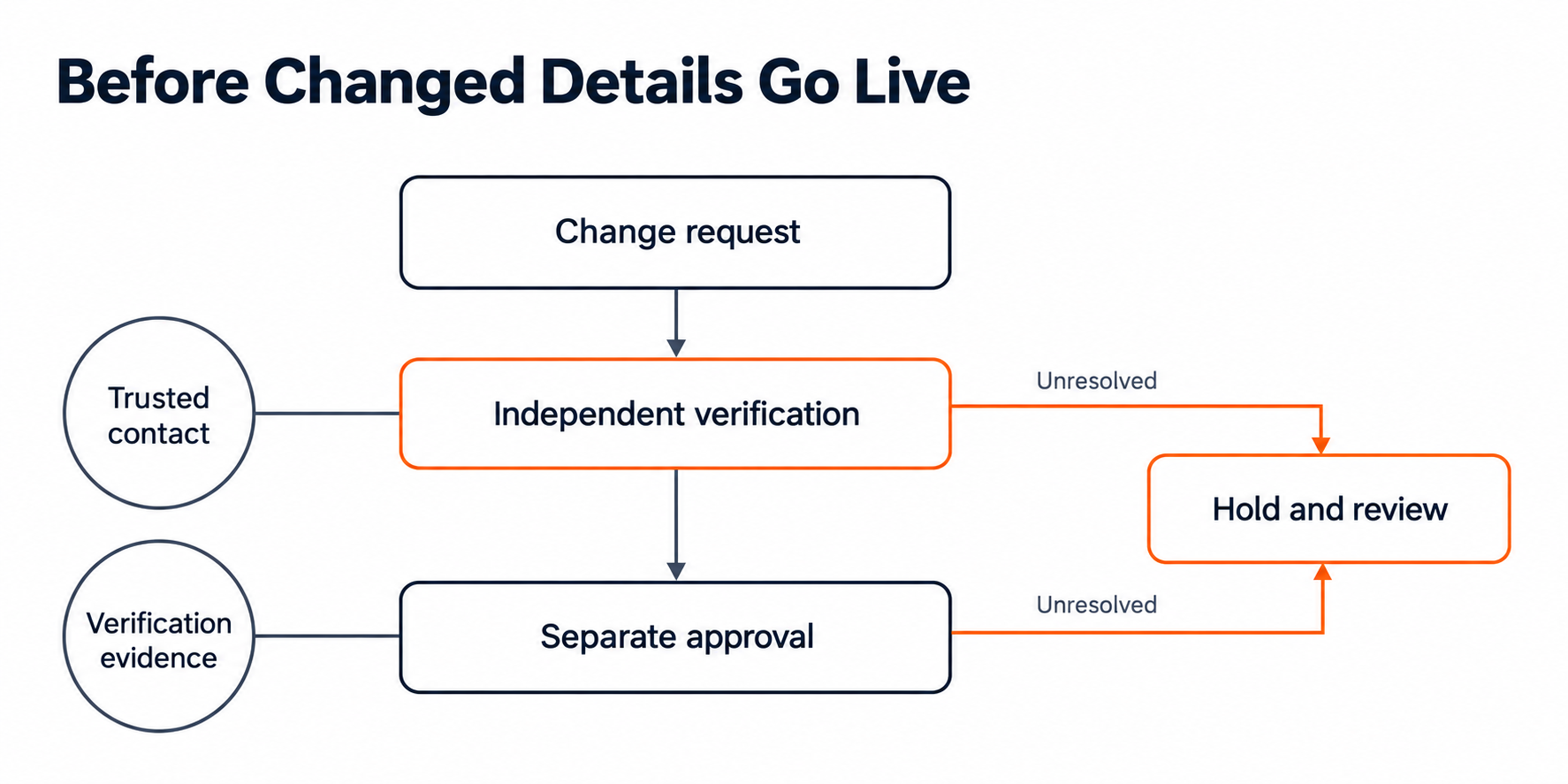
An approved change requires a clearly defined effective date, particularly when disbursement processing is already in progress.
Step 5: Synchronize systems and communicate securely
Cross-reference record activation dates with pending payment batches. Confirm operational status updates strictly through authorized channels.
Step 6: Maintain comprehensive audit trails
Log every system modification, verification check, and approval event to preserve an immutable history for compliance and reporting.
The Role of Technology and AI in Fraud Prevention
While automation can effectively enforce review gates, human reviewers still require reliable, authenticated evidence. Automated anomaly flags require structured investigation rather than immediate assumptions of fraud. Credible AI applications can assist by flagging duplicate profiles, identifying anomalous change request patterns, and verifying document formatting, though human oversight remains indispensable.
Integrating Master Data Management with Royalty Operations
When an author updates banking details after statements are finalized, financial calculations remain valid, but operations must verify which instructions apply to the upcoming payout.
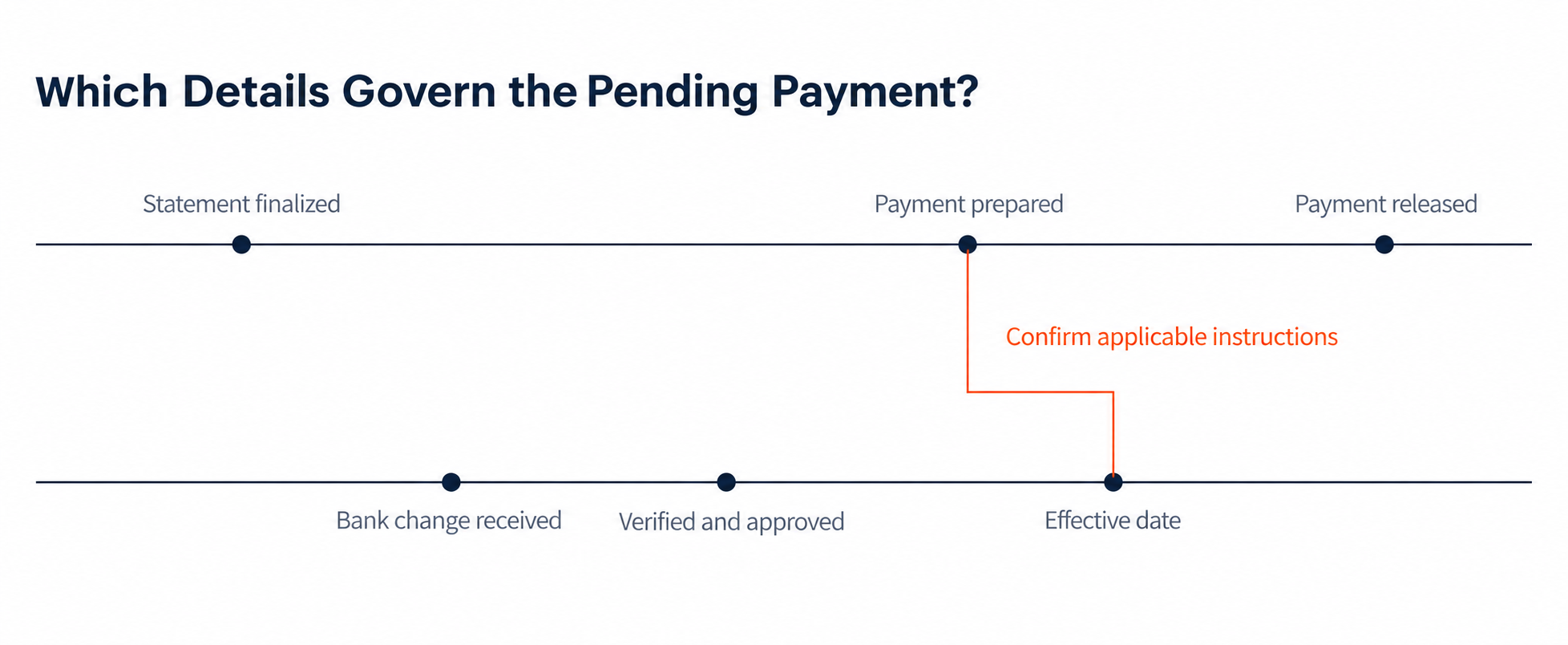
Updating a vendor profile does not automatically update a queued payment. Operations teams must explicitly confirm parameters for pending disbursements.
Evaluating Vendor Master Data Control Metrics
Track key indicators such as pre-activation verification completion, segregation of duties compliance, documentation completeness, and unresolved request aging. Analyzing post-change payment exceptions alongside turnaround times ensures processing speed does not compromise verification rigor.
Conclusion: Securing the Data Behind Payment Routing
Payment integrity relies on the quality of upstream data governance. Straive supports critical record maintenance, identity validation, royalty inquiries, and documented escalation within client-defined workflows, ensuring reviewers have verified evidence at every decision point.

Priya Roy is Vice President, Delivery Leadership at Straive, where she translates ambitious growth strategy into high-performing customer experience and technology operations. With deep expertise in large-scale transformation, she offers a practical leadership perspective on scaling AI, elevating service excellence, and turning operational complexity into lasting enterprise value.


