
Posted on: October 5th 2026
Content is becoming valuable for more than reading, search, and reference. AI applications can use it to answer questions, complete tasks, and guide actions within enterprise workflows. That makes the quality, structure, and usage rights of content more important.
AI brings new technologies, but a familiar rule still applies. Well-organized data helps organizations turn those technologies into business value. An IDC white paper reveals that digital product teams with the strongest data practices reported up to 2.5 times better combined business outcomes than teams with the weakest practices.
For Chief Technology Officers, Digital Transformation Leaders, and Product Teams in publishing, preparing content for AI requires a shift in how it is managed. When valuable content is scattered across flat files, outdated formats, and disconnected content management systems, AI applications may struggle to find, interpret, and use it reliably.
To support AI content licensing and conversational search, publishers need content that AI systems can find, interpret, and use with the appropriate permissions. Structuring content and adding consistent metadata are practical steps toward that goal.
Why Legacy Systems Fail AI Consumers
| It is time to stop building pages and start engineering structured data products. |
Many digital publishing workflows prioritize how content appears to readers in PDFs and web pages. Many content management systems are designed to manage complete pages or articles. This can make it harder to reuse individual elements, such as figures or abstracts, across other formats and applications.
AI applications need to understand more than how a page looks. They need to identify its parts, such as the title, abstract, figures, and citations, and understand how those parts relate. Clear structure and metadata help them find and use the right information.
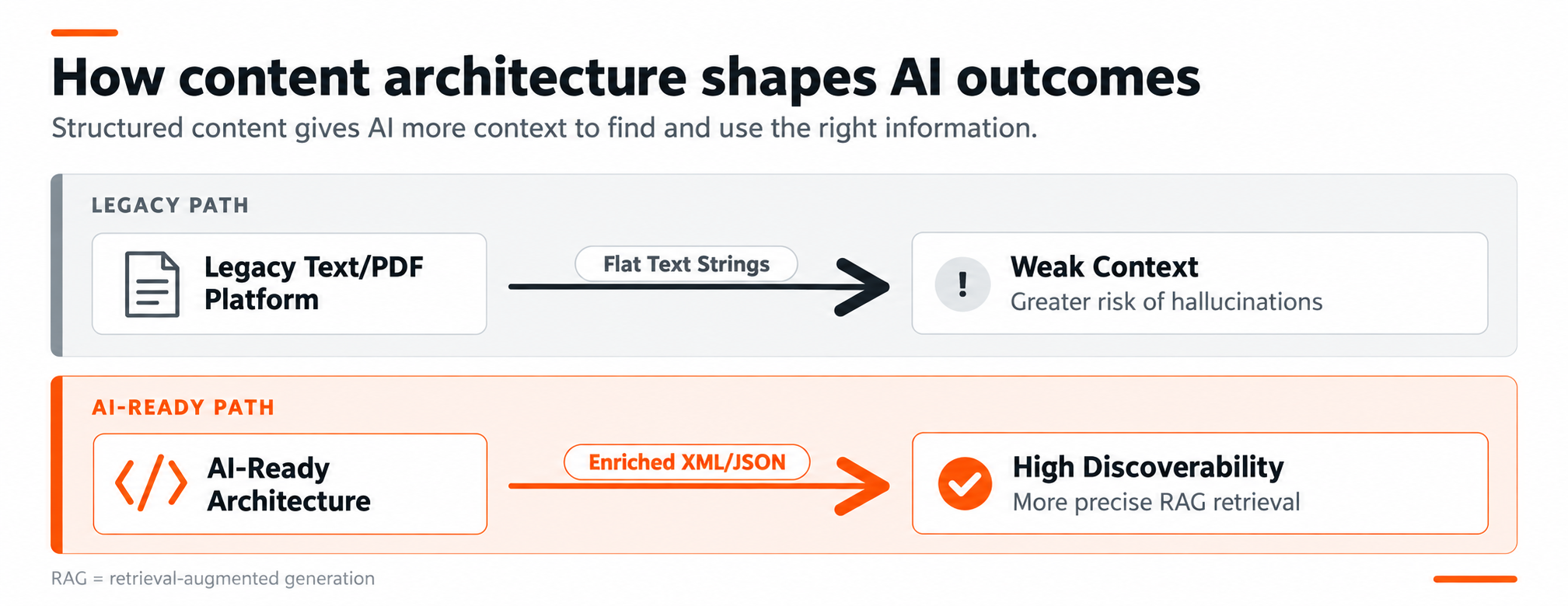
Figure 1: A comparison of unstructured legacy data pipelines versus structured, semantically enriched architectures optimized for LLM ingestion and RAG precision.
When PDFs are difficult to search or text lacks clear structure, AI applications may struggle to find relevant passages and interpret them in context. For publishers, the effects can extend to source verification and rights management.
- Lost document relationships: Converting tables, figures, and multi-column pages into plain text can obscure reading order and the relationships between content elements.
- Harder source verification: Without reliable links between retrieved passages and their sources, teams may find it harder to check where an AI-generated answer came from.
- Harder rights management: If usage rights are recorded separately from the content, publishers may need additional work to determine which material they can license for a particular AI use.
Addressing these issues starts with making content, source information, and usage rights easier for systems to identify. Publishing technology leaders can store content in structured elements, link passages to their sources, and record rights alongside the material they cover. Readers can still see a well-designed page, while AI applications can find and use the appropriate content more reliably.
Strategic Pillars of an AI-Ready Content Architecture
Making publishing content usable by AI takes more than converting files into a searchable format. Publishers need to identify the parts of each article or book, add metadata that explains what those parts mean, make sources easy to find and verify, and deliver content in formats other systems can use. The four pillars below address these needs across the content workflow.
1. Component-Based XML Publishing Workflows
Technical transformation of the structured content begins when manuscripts and other source files enter the publishing workflow.begins at the point of ingestion. Transitioning to a component-based XML architecture ensures that text is broken down into structured, reusable data blocks rather than saved as monolithic documents. Key elements, such as abstracts, methodologies, data tables, and citations, are tagged as distinct, independent objects. This structural granularity allows enterprise AI tools to instantly extract or cite the relevant part of an article without searching the full text of every document.
2. Deep Semantic Content Enrichment
Structure alone is not enough; content needs context. By applying automated semantic enrichment, publishers use Natural Language Processing (NLP) models to tag assets with domain-specific metadata, mapping entities, taxonomy terms, and conceptual relationships to a unified knowledge graph. Semantic enrichment helps AI tools identify relevant content based on context, rather than keywords alone. It can improve retrieval for retrieval-augmented generation (RAG) and give the model better source material for its answers, reducing the risk of unsupported claims.
3. Scholarly AI Discoverability Protocols
Beyond basic metadata, academic and scientific information providers must optimize specifically for machine discovery. LLMs serving high-stakes industries like healthcare, finance, and legaltech heavily prioritize schema-level citation accuracy, author verification, and funding transparency. If your underlying infrastructure does not natively code these specific variables, your research papers will fail to register in conversational search outputs, academic discovery engines, or enterprise RAG pipelines.
4. Complete Content Interoperability
Isolated data silos prevent scale. Achieving true interoperability requires standardizing your entire catalog on open industry formats such as JATS XML for journals and BITS for books. This standardization ensures that third-party applications, LLM aggregators, and internal retrieval platforms can seamlessly ingest and cross-reference your content without requiring costly, bespoke middleware.
Building the Enterprise AI Maturity Roadmap
Making content ready for AI starts with identifying gaps in how it is structured, tagged, stored, and accessed.Technology leaders can assess those gaps alongside their wider AI capabilities. Straive’s AI maturity guide assesses capabilities across the organization. For content operations specifically, the following five-stage model can help teams identify how well their content supports AI use cases:
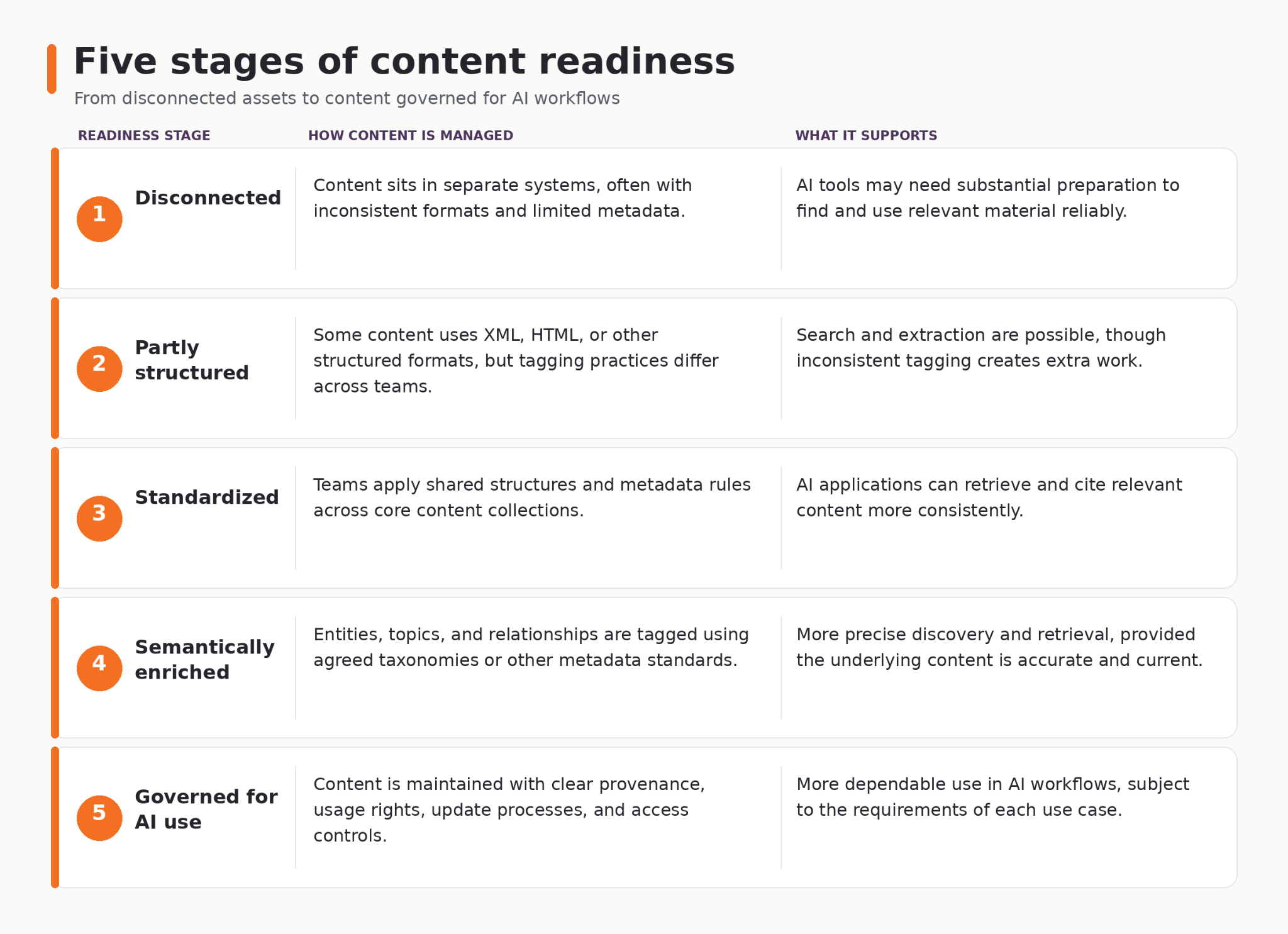
Figure 2: A diagnostic matrix allows tech and data executives to quickly look at their current content setups (Operational Blueprint) and instantly see the business and technical consequences (AI Capabilities).
As teams progress through these stages, they can use AI during content production as well as in applications that use the finished content. During production, AI can help check metadata, flag inconsistencies, and suggest detailed tags for human review.
Scaling Content Transformation with Specialist Support
AI can help teams check metadata, flag inconsistencies, and suggest tags during content production. Applying those practices across a large archive, however, also requires decisions about content standards, migration, quality checks, and ongoing maintenance.
A specialist content partner can help put those decisions into practice. For example, Straive offers content migration services and production platforms alongside metadata enrichment and quality testing. These capabilities can help publishers structure legacy content and prepare new content for AI applications.
Human review remains important as these workflows scale. Teams need to check whether automated outputs are accurate, traceable, and suitable for their publishing requirements, particularly when content will be reused in search, licensing, or other AI applications.
Action Plan for Technology Leaders
Whether the work is handled internally or with a specialist partner, technology leaders can start with four steps:
- Assess the backlist: Identify which assets have usable text, consistent structure, reliable metadata, and clear usage rights. Prioritize collections based on demand and the effort needed to prepare them.
- Set common content standards: Agree on how content components and metadata should be represented. Then determine how existing systems will apply those standards and share content; consolidation may be useful where systems cannot work together.
- Create and check metadata earlier: Capture available metadata at submission or acquisition, then use automation to suggest tags and flag missing or inconsistent fields. Check the results at appropriate editorial and production stages. Established publishing formats such as JATS provide defined places for article metadata and content components.
- Track sources and permitted uses: Keep records that connect content to its source, version, contributors, and applicable rights. Provenance helps teams assess where information came from, while license information helps determine how it may be used.
Together, these steps make content easier to find, assess, and use in AI applications. They also give teams a clearer basis for deciding which collections are suitable for new products or licensing opportunities.

Straive helps clients operationalize the data> insights> knowledge> AI value chain. Straive’s clients extend across Financial & Information Services, Insurance, Healthcare & Life Sciences, Scientific Research, EdTech, and Logistics.


