
Posted on: August 26th 2026
Artificial Intelligence (AI) is rapidly shifting from a speculative experiment to a core operational engine across the life sciences ecosystem. Pharma and biotech companies are already leveraging algorithmic tools to analyze molecular data, predict clinical outcomes, and optimize supply chains.
As industry associations step up to support and mirror this digital transformation, scaling AI across their own membership networks presents a distinct set of challenges.
Unlike individual commercial enterprises, industry associations run entirely on collective trust, data sovereignty, and shared reputation.The stakes are significantly higher when an association deploys an AI tool to aggregate market research, facilitate collaborative R&D, or manage member databases. In this environment, a single governance slip can easily expose sensitive IP, violate regulatory standards, or alienate member organizations.
To avoid these fallouts, Biotech and Pharma associations should not rush into deployment. They must first ask themselves one fundamental question: Have we built the governance frameworks required to protect our members’ most critical assets?
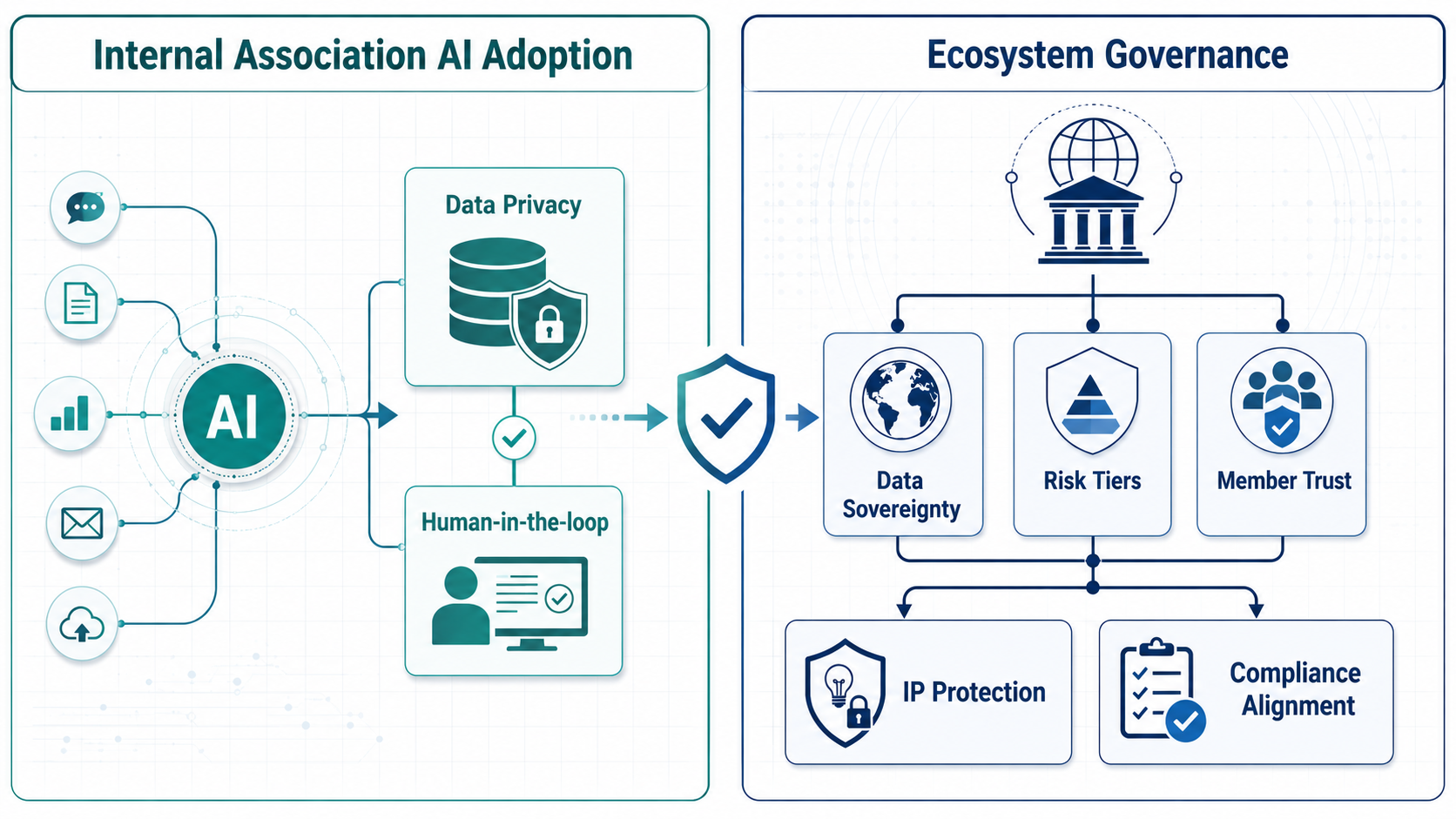
Figure 1: Building a foundation of trust and compliance before expanding AI across life sciences association networks.
The High-Stakes Environment of Life Sciences AI
In most corporate settings, an AI system going wrong might result in a bad customer service interaction or misclassified accounting data. In pharma and biotech, the stakes involve three sensitive assets:
- Clinical Trials: Algorithms that assist in patient selection or trial monitoring directly affect human safety and regulatory approval.
- Patient Health Information (PHI): Health data is strictly protected by global laws. Leaking patient data via AI training sets triggers catastrophic regulatory fines and legal liability.
- Proprietary IP: A single molecular structure can represent $2 B+ in R&D investment. Treating AI as a black box without clear data boundaries risks exposing trade secrets.
This creates a unique dilemma for trade and industry associations. By nature, an industry association (e.g., a biotechnology council or medical device trade group) is a collaborative network of competitors.
Associations often build centralized AI tools to analyze policy trends, track supply chains, or aggregate clinical research. To work, these platforms require member organizations to share their proprietary data.
This requirement creates an immediate psychological and legal barrier. Member companies think:
“If I upload my data to the association’s AI, will my competitor be able to extract my proprietary secrets?”
“If the association’s AI makes a mistake, will the FDA audit my company?”
Faced with these risks, member organizations consistently voice four major concerns before agreeing to adopt shared AI platforms:
- IP Leakage & Data Contamination: Will sharing proprietary research data inadvertently train public or third-party AI models?
- Regulatory Non-Compliance: Does the AI tool comply with evolving global frameworks like the FDA Risk-Based Framework for AI/ML or the EU AI Act?
- Data Bias & Model Drift: Are the underlying algorithms trained on diverse, high-quality datasets that deliver accurate, reproducible insights without introducing clinical bias?
- Member Sovereignty: Does the association maintain strict data boundaries so that smaller biotechs and large pharma members maintain complete ownership of their data?
Key Takeaway: For life sciences associations, AI governance is a strategic necessity that protects the association’s credibility and its members’ intellectual property.
Non-Negotiable Governance Steps Before Scaling
To transition from small-scale pilots to enterprise-grade AI programs, associations must establish clear operational boundaries.
Ungoverned AI creates paralysis by ambiguity. When staff do not know what is allowed or safe, two things happen:
- Risky Behavior: Employee usage creates hidden legal liabilities, intellectual property leaks, or compliance violations.
- Total Stagnation: Risk-averse departments refuse to adopt AI entirely because there are no clear rules or legal guarantees.Operational boundaries provide the explicit parameters that enable teams to innovate quickly without asking for permission on every task.
Guardrails turn this paralysis into progress. By establishing clear parameters up front, associations can protect sensitive data while empowering staff to innovate with confidence. Below are the key boundaries to put in place:
1. Establish Zero-Retention & Privacy Guarantees
Associations must secure strict enterprise service level agreements with technology vendors. These agreements should feature zero-data retention policies to guarantee that proprietary member inputs, confidential survey data, or R&D metrics are never stored, exposed, or used to train public LLMs.
2. Implement a Tiered Risk-Assessment Framework
The core challenge in governance is treating all technology tools the same slows down innovation or invites extreme danger.
Applying the highest level of legal review, security testing, and human oversight to every AI tool will bottleneck your association. Conversely, allowing staff to use AI for critical operations without strict controls exposes the organization to massive legal, financial, and reputational damage.
Categorizing AI projects by potential impact allows associations to apply appropriate guardrails. An effective governance structure relies on a Tiered Risk-Assessment Framework aligned with global standards like the EU AI Act and NIST’s AI Risk Management Framework:
- Low Risk: Administrative automation, event scheduling, internal search engines.
- Medium Risk: Aggregating industry trends, market intelligence reports, member engagement profiling.
- High Risk: Clinical trial matching tools, regulatory synthesis platforms, decision-support tools affecting member compliance.
3. Ensure Transparency & Algorithmic Traceability
This principle ensures that an association’s AI tools never operate as an opaque “black box” by pairing public disclosure with technical record-keeping.
Core Breakdown
- Transparency (External Disclosure): Explicitly informing members whenever they interact with AI or consume AI-generated material—such as labeling chatbots, disclosing AI assistance in research reports, or explaining matching algorithms in member portals.
- Algorithmic Traceability (Internal Auditability): The technical capacity to reconstruct how an output was generated by logging prompt histories, model versions, source data inputs, and human edits.
Why It Matters
If an AI application outputs flawed regulatory advice or biased member analysis, traceability provides the audit trail leadership needs to pinpoint the error, prove due diligence, and protect the association from legal liability.
4. Co-Create Governance Principles with Member Task Forces
Effective AI guardrails should never be imposed as unilateral top-down mandates. TTo ensure policies are both practical and compliant, associations need a multi-disciplinary AI Steering Committee. This group must bring together member legal counsel, data engineers, risk officers, and domain experts. Co-designing governance with cross-functional stakeholders ensures that operational boundaries account for technical feasibility, regulatory nuances, and real-world industry workflows.
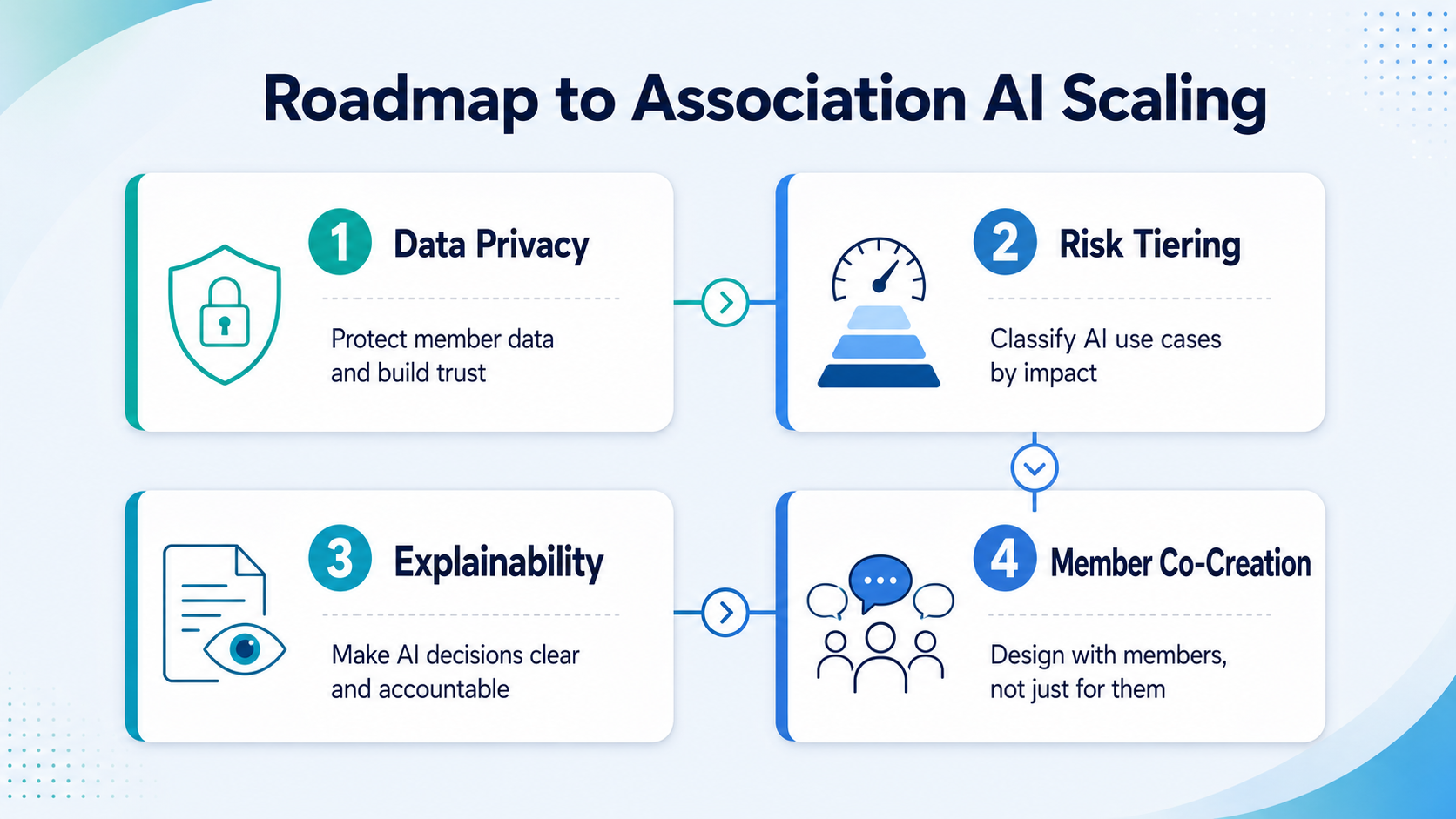
Figure 2: The essential four-step roadmap for pharma/biotech association AI readiness.
Moving from Gatekeeper to Ecosystem Enabler
Good AI governance is not a red light that slows you down. It is the green light that lets you move forward safely.
Setting clear rules for data privacy, transparency, and control does more than lower risk. It gives members the confidence to share data and participate fully.
When trust comes first, both sides win:
- For Members: They gain safe, high-powered tools to accelerate research, track complex health regulations, and get far more value from their membership.
- For the Association: Active participation boosts member retention, strengthens leadership authority, and unlocks richer aggregated data to drive industry-wide policy.
By building on a foundation of trust and security, your association can scale its AI vision with confidence—delivering real innovation while protecting the reputation you built together.

Straive helps clients operationalize the data> insights> knowledge> AI value chain. Straive’s clients extend across Financial & Information Services, Insurance, Healthcare & Life Sciences, Scientific Research, EdTech, and Logistics.


