
Posted on: October 22nd 2026
Introduction: Why Author Support in Scholarly Publishing Is Changing
When an author reaches out about a manuscript, a standard status update rarely tells the whole story. A submission might be held up by a missing declaration, stuck mid-transfer, or waiting on an editorial decision. Delivering a truly useful response requires understanding the underlying context, knowing what information can be shared, and identifying who needs to take action next.
This reality is driving a fundamental shift in author support across academic publishing. As contributor networks expand, open-access models broaden, and journal requirements grow more complex, inquiries naturally cross departmental lines. Publishers increasingly need support teams that can work with appropriate manuscript metadata and orchestrate next steps—all without compromising editorial independence.
The Help Desk Era: Foundations of Traditional Support
Traditional help desks established needed structure around inquiry management. Shared inboxes, ticket assignments, standard templates, and clear escalation paths brought consistency and helped publishers monitor query volume. For straightforward procedural questions, this model remains effective.
Friction occurs when queries span operational silos. A support representative might see an author’s email history without access to the latest submission file; conversely, an editorial assistant might review the manuscript while remaining unaware of open support tickets.
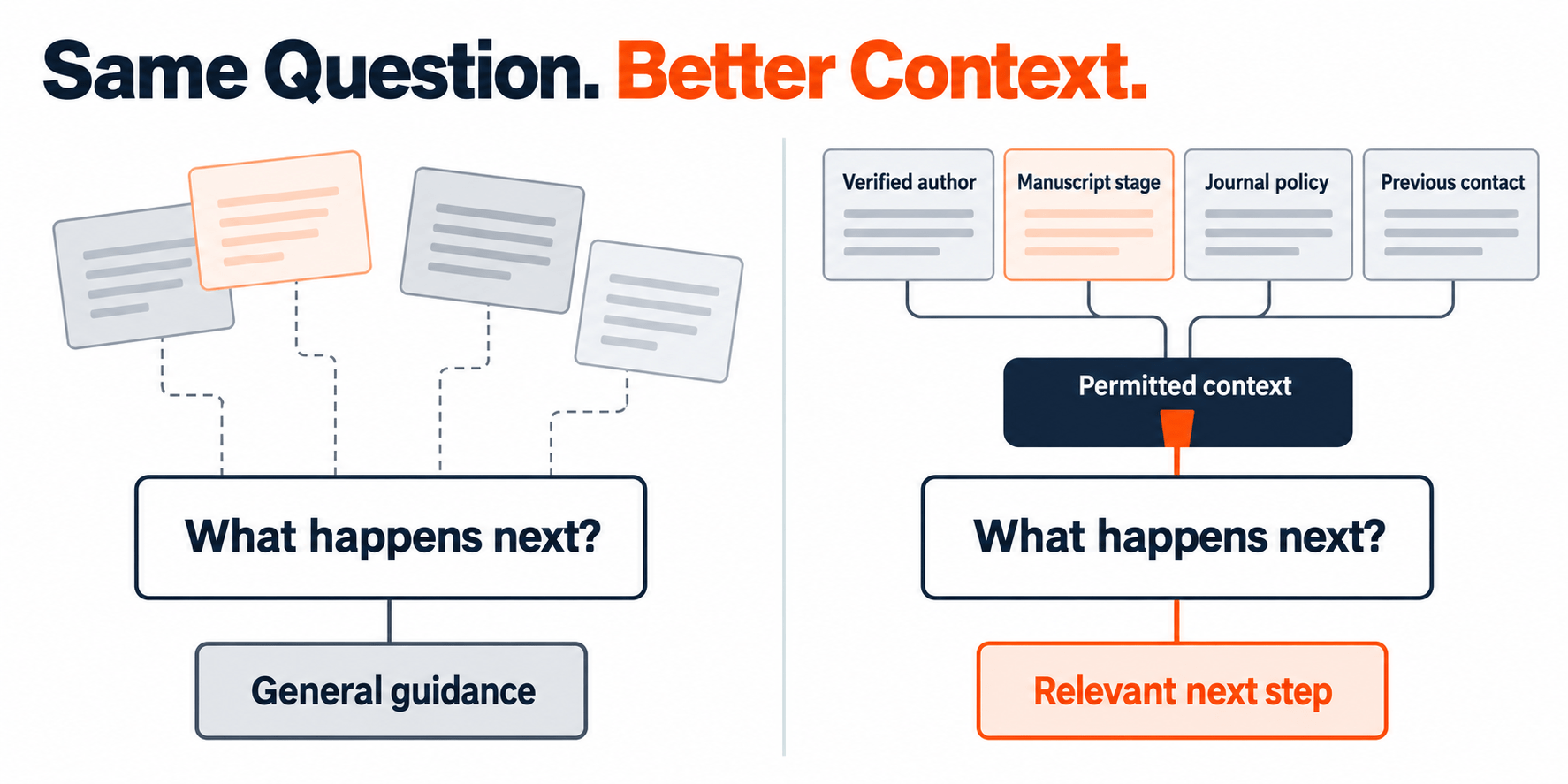
The author experience breaks down when each team addresses only the narrow slice of information visible on their screen.
Navigating Financial & Open Access (APC) Friction Points
Financial transactions remain one of the primary drivers of author inquiry volume in open access and hybrid models. Authors frequently encounter roadblocks with Article Processing Charge (APC) waivers, institutional transformation agreements, voucher applications, and split-billing requirements across co-authors. By surfacing billing status, eligibility for institutional coverage, and payment milestones directly within the support context, teams can proactively resolve financial holds before they stall the publication workflow.
A more effective operational framework equips every team with the context needed for their immediate tasks, alongside clear handoff routes for everything else. Achieving this requires establishing explicit permissions, ownership, and escalation protocols before introducing automation.
Moving Beyond Reactive Support to a Data-Informed Author Experience
From Generic Responses to Relevant Author Engagement
Meaningful communication starts with the specific manuscript and the sender’s relationship to it. A corresponding author submitting revisions needs entirely different guidance than a co-author requesting a profile update. Drawing on past interaction history avoids redundant back-and-forth, provided those records remain accurate.
Disambiguating identities requires precision, especially when researchers move between institutions, use multiple email addresses, or fulfill different roles across journals. Persistent identifiers like ORCID help verify individuals, but manuscript access must still mirror authorized roles for each document. Effective context relies on maintaining these clear boundaries.
Anticipating Support Needs Through Workflow Data
Publishers can proactively address support needs by tracking key workflow milestones. A manuscript sitting unsubmitted due to missing compliance forms signals an immediate need for clear instructions; an incomplete journal transfer points to specific pending actions. Connecting these operational events to targeted messaging helps authors resolve issues quickly.
Inquiry trends also highlight systemic process bottlenecks. Frequent questions about whether transferred files were received often stem from inadequate automated confirmations rather than unhelpful support documentation. Support data becomes actionable when teams address the root causes of recurring inquiries.
Real-Time Support: Modernizing Author Help Desks
How On-Demand Assistance Elevates the Author Journey
Providing accessible, dependable assistance is essential when supporting global author bases working across multiple time zones. Submission guidelines, policy explanations, and authenticated status updates serve as ideal self-service entry points. AI tools can streamline these interactions when backed by well-maintained knowledge bases.
Equally critical is knowing when to route queries to human experts. If context is missing, the system should offer a direct escalation path rather than generating a generic response. Authors need a clear distinction between live, account-specific updates and general policy advice.
Shifting From Reactive Tickets to Proactive Guidance
Effective notifications clearly state pending actions, designate who must complete them, and provide direct links to finish the task. Crucially, automated communications should pause once a step is completed; sending reminders based on outdated data erodes author confidence.
AI can assist in categorizing inbound messages, summarizing ticket threads, and directing queries to the right teams. Handoffs should preserve the original inquiry, verified details, completed checks, and required next steps so specialists can step in immediately without asking authors to re-explain their issue.
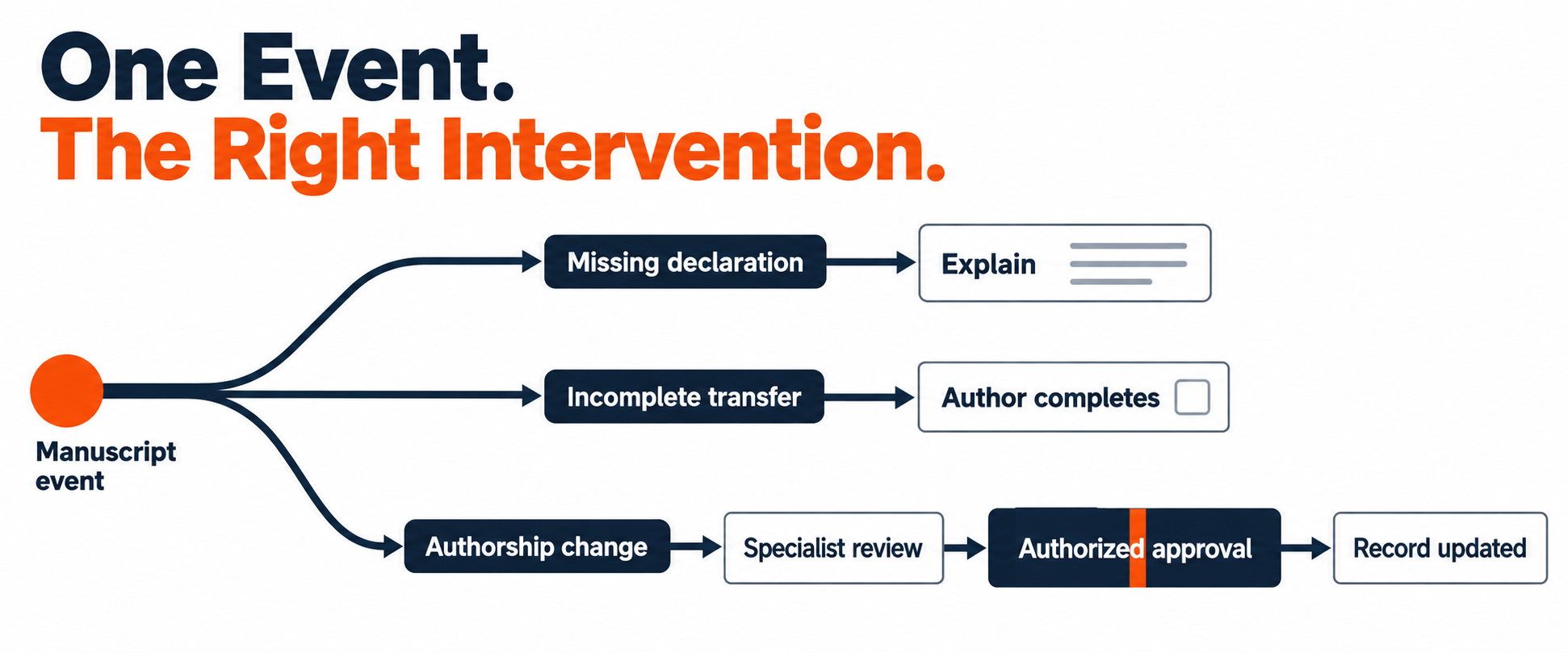
Around-the-clock intake services can log and prepare incoming requests while formal editorial reviews remain in progress. Transparent ownership and realistic resolution timelines make these waiting periods far easier for authors to navigate.
AI in Publishing: Enhancing Editorial Workflows
AI-Assisted Triage and Peer Review Workflows
Modern publishing operations increasingly use automated tools for technical validation, scope matching, reviewer recommendations, and research integrity checks. These tools deliver the most value when findings integrate directly into editorial workflows, offering staff clear evidence to make informed decisions. Adoption, however, varies across journals and technical platforms.
AI tools must distinguish simple administrative omissions from potential ethical concerns. An unattached file calls for a routine follow-up, whereas an integrity red flag requires qualified human evaluation. Scope assessments and reviewer suggestions must remain advisory, respecting journal policies and human oversight.
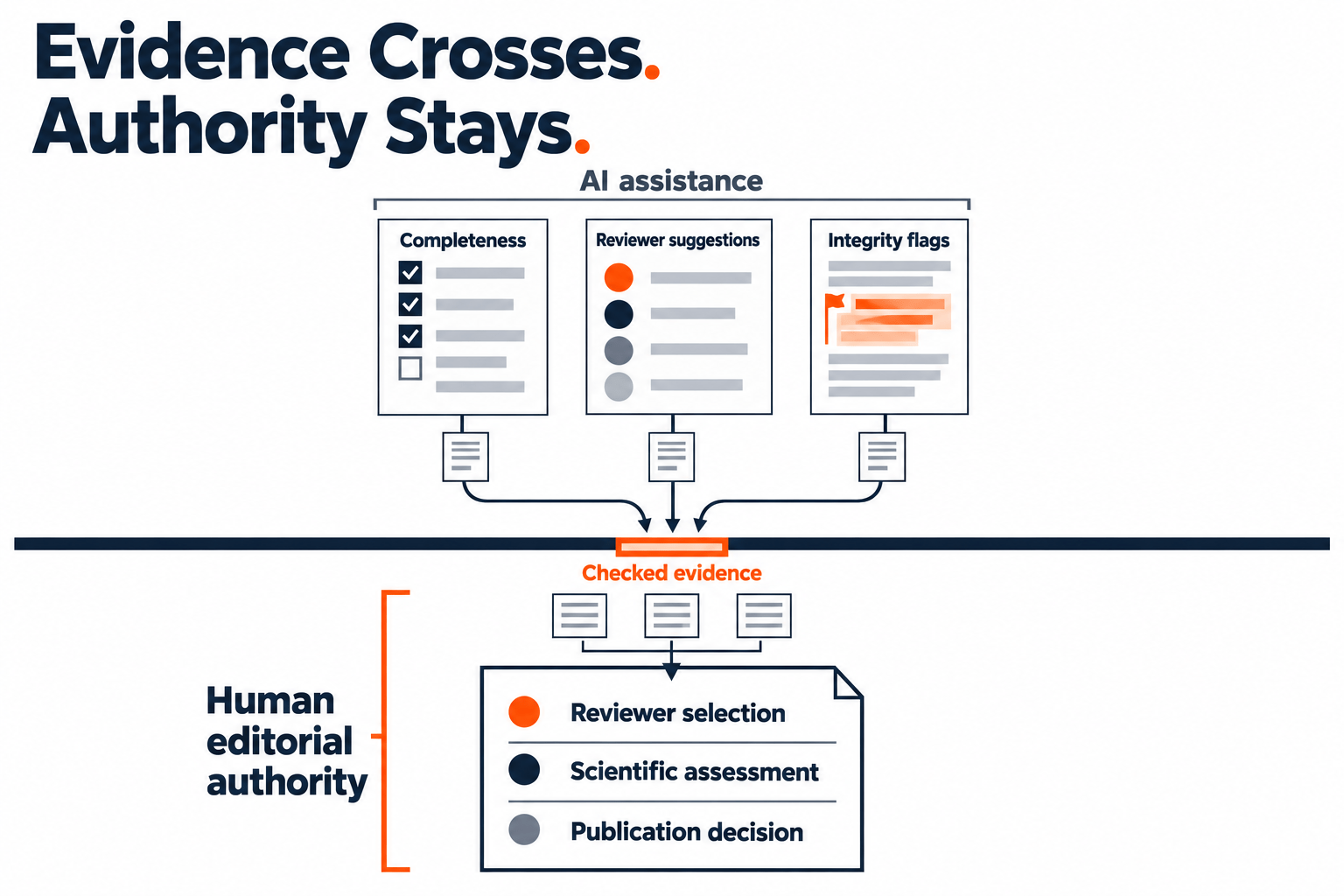
Strict confidentiality must govern processing environments and manuscript data handling. Publishers require clear rules on data retention, access control, and permitted uses. Support summaries should convey relevant operational status without exposing confidential peer reviewer comments or internal editorial deliberations.
Integration Realities with Legacy Submission Systems
Modernizing author support rarely happens on a blank canvas; publishers often manage heterogeneous platform ecosystems composed of legacy peer-review systems, proprietary databases, and third-party vendor platforms. Establishing unified support workflows requires robust API connectors and event-driven architecture to synchronize manuscript statuses and metadata in real time across disparate databases without disrupting existing editorial operations.
Mitigating Author-Facing GenAI Risks & Adversarial Vulnerabilities
As conversational AI and automated assistants are introduced into author support, publishers must safeguard against adversarial prompt injection, hallucinated journal policies, and unauthorized disclosure of sensitive manuscript data. Support AI models must operate within strictly deterministic guardrails, drawing exclusively from validated journal documentation and maintaining clear boundaries between general policy assistance and confidential submission updates.
System-generated alerts must remain clearly distinct from confirmed findings as cases move between teams, preventing automated flags from being mistaken for established facts down the line.
Automating Routine Tasks While Preserving Human Judgment
AI can streamline drafting responses, classifying files, cross-checking metadata, and summarizing case histories. Standardized requirements and deterministic step changes, however, are often handled more reliably by traditional business logic. Choosing the right mechanism depends on the specific operational task and tolerance for error.
Updating database records demands stricter security controls than drafting correspondence. Automated systems must validate inputs, verify user permissions, and confirm execution before closing actions. Complex scenarios—such as conflicting data, authorship disputes, or ambiguous policy edge cases—require direct attention from a dedicated specialist equipped to resolve the matter.
How Intelligent Operations Improve the Overall Author Journey
Integrated author support maintains context seamlessly across submission, editorial evaluation, production, and post-publication stages. At each transition, receiving teams require the pending questions and context relevant to their role; for instance, a production query rarely needs access to confidential peer-review exchanges.
Continuous context is particularly vital during manuscript transfers. Consenting to a transfer does not automatically mean a submission is complete at the destination journal. Support communications should clearly detail what files were moved, what items remain outstanding, and any new requirements—without guaranteeing peer review or acceptance by the receiving journal.
Publishers also benefit from shared definitions of query resolution. Sending instructions may answer an initial procedural question, but an ongoing upload failure still requires assistance. Closing a support ticket while an underlying task remains blocked simply pushes the problem back onto the author.
Multilingual Support & Global Author Equity
A truly global publishing ecosystem requires equitable support for non-native English speaking authors. AI-assisted translation and real-time multilingual routing enable publishers to deliver clear, localized guidance without expanding regional help desks. Ensuring consistent, culturally attuned communication helps level the playing field for international researchers navigating complex submission requirements.
Measuring Impact: Tracking Workflow Automation Success
Evaluating modern author support requires metrics aligned with different query types. First-contact resolution works well for straightforward procedural questions, whereas total resolution time is a better metric when multiple departments are involved. Reopen rates, escalation accuracy, repeat inquiries, and age of exceptions reveal operational friction points that standard response-time averages hide.
Author satisfaction should be evaluated alongside staff workload, handoff completeness, and policy compliance. Separating wait times by internal dependencies versus author response times provides a clearer picture: a manuscript awaiting academic peer review requires a different management approach than a backlog in administrative processing.
Establishing segmented performance baselines prior to introducing automation is essential. As routine queries shift toward self-service options, the remaining assisted queue naturally grows more complex, making simple before-and-after averages misleading. Periodically reviewing complex edge cases alongside high-level metrics helps uncover where operational models need refinement.
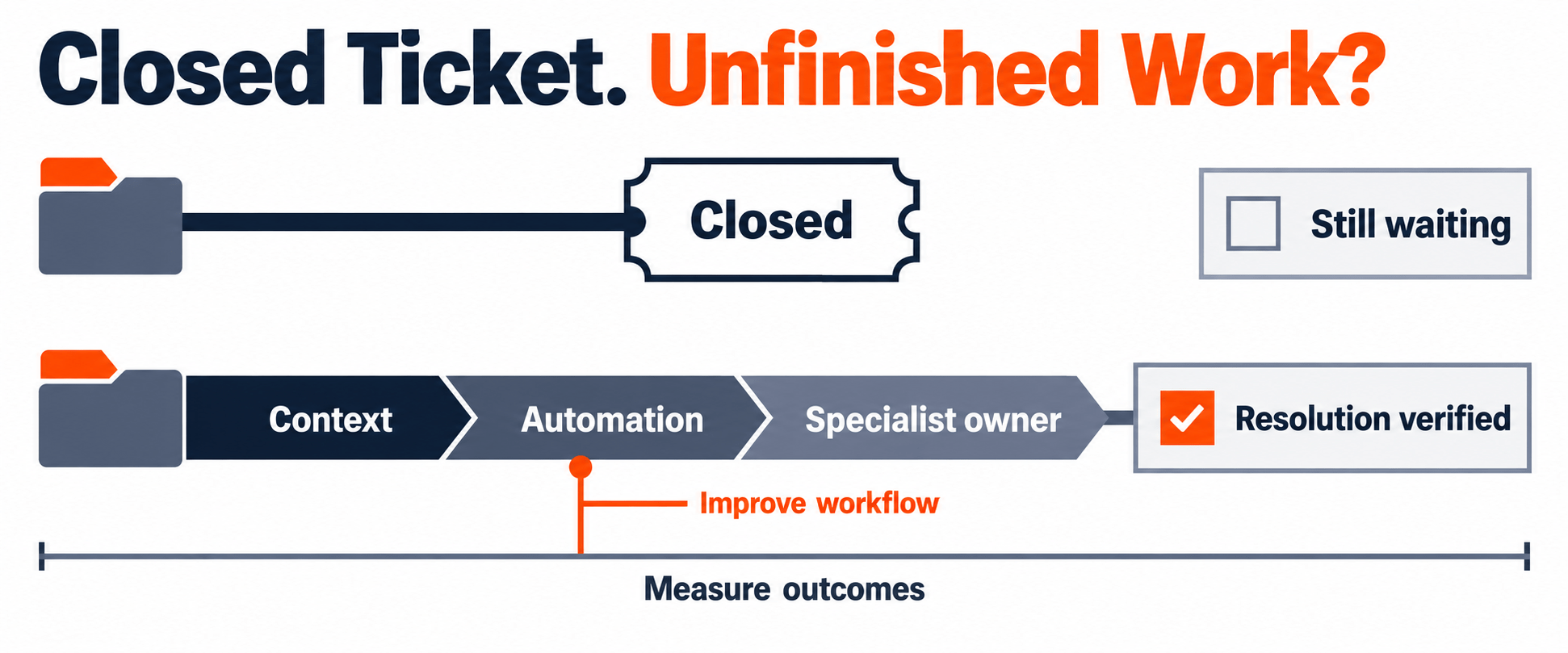
Insights gathered from query trends need clear operational ownership. Frequent escalations should prompt direct updates to author guidance, system integrations, permissions, or team workflows, backed by follow-up reviews to ensure underlying issues are resolved.
Conclusion: The Future of Author Support in Publishing
A successful modernization effort starts by targeting specific query types with clear data requirements, access permissions, and resolution paths. Publishers can integrate approved data sources, test edge cases, train operational teams, and scale systematically based on performance outcomes, keeping journal-specific policies and technical constraints in focus throughout implementation.
Straive combines deep publishing operations expertise with advanced AI capabilities across editorial, production, and support workflows. Its aiKira platform offers modular tools for editorial screening, integrity checks, and reviewer matching, providing practical foundational components for modern service transformations.
For scholarly publishers, the opportunity lies in reducing operational overhead while offering authors a more seamless, transparent publishing experience. Discover how Straive can help connect workflow context, automation, and expert support to deliver measurable improvements across your publishing operations.

SVP, Advanced Digital Solutions


