
Posted on: October 07th 2026
Open access support hinges on applying the right policy to the right article. An institutional agreement may cover a journal without covering every article published in it. Eligibility often depends on the corresponding author’s affiliation, article type, acceptance date, and institutional approval. Funder requirements and waiver terms introduce additional conditions that must be evaluated independently of payment responsibility.
AI can integrate these checks into the support workflow by retrieving applicable terms, cross-referencing article records, and flagging missing documentation. Its effectiveness, however, relies on preserving clear distinctions between potential matches, confirmed eligibility, and approved coverage. That clarity must extend from the author’s response to the records relied upon by agreement administrators and billing teams.
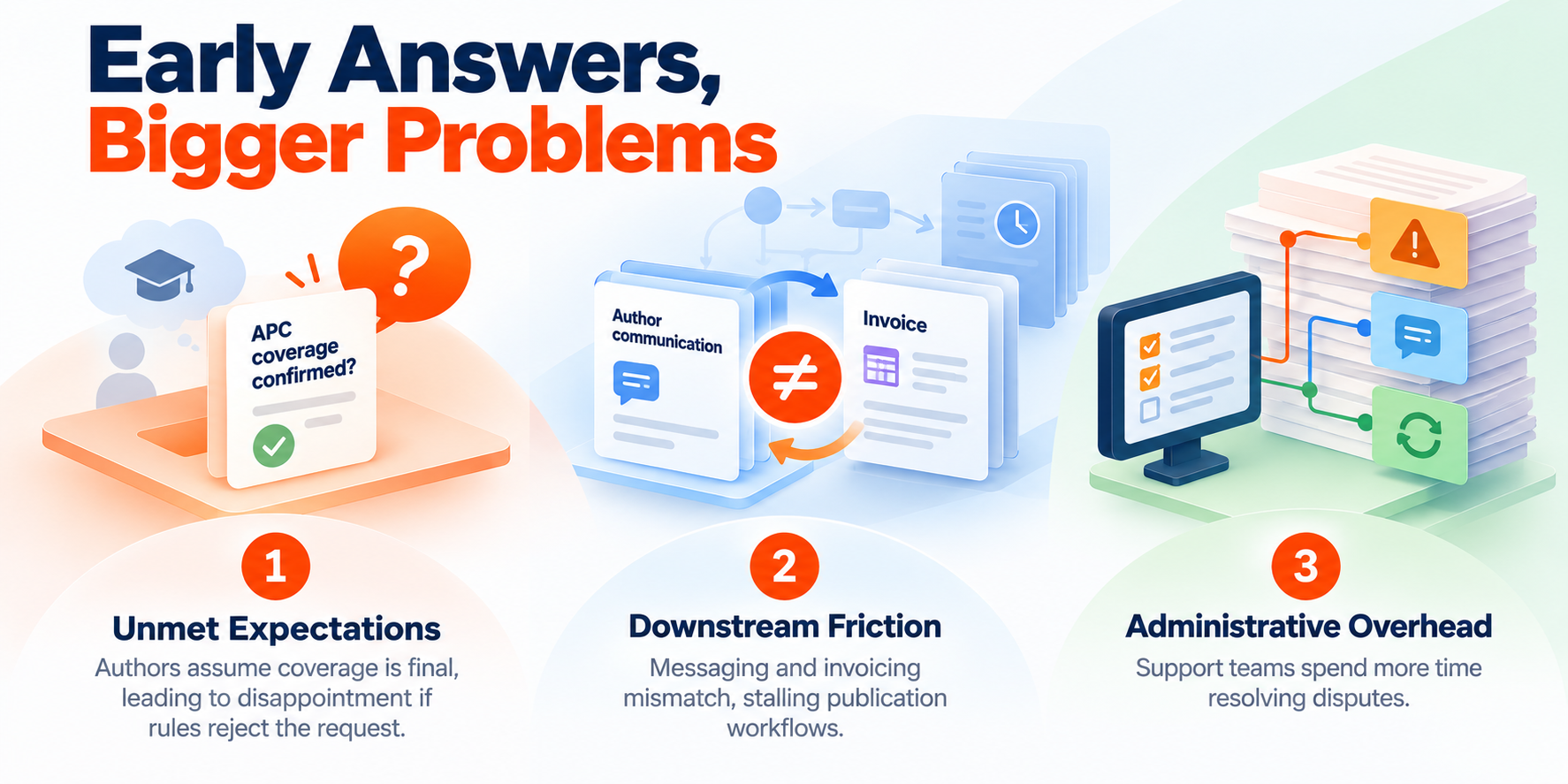
For authors, these administrative distinctions carry direct operational consequences. Someone completing publication forms needs to know whether payment is fully covered, requires approval, or must be arranged independently. A prominent, positive search result can set expectations long before an article undergoes formal assessment. Publishers must therefore consider how messaging, user interface design, and communication sequences shape author decisions—a subtle qualifier placed beneath a prominent coverage headline is easily overlooked.
Institutional terms complicate simple lookup logic. While many arrangements turn on the corresponding author, definitions and policies regarding institutional transitions vary widely. Some agreements mandate a qualifying affiliation at acceptance, whereas others accommodate prior affiliations under specific criteria. Covered journals, eligible article types, term windows, and institutional funding caps also differ. Furthermore, listing an institution on a manuscript document where research occurred—it does not automatically establish funding eligibility, nor does an institutional email address alone resolve the query.
Consider an author who changes institutions during peer review. The submission system may record the former institution, the manuscript may correctly reflect where the research took place, and production records may list the new address. None of these records are incorrect. AI should help establish their timeline and locate the governing affiliation rule rather than overwriting historical values with current data, which could destroy essential evidence needed for evaluation.
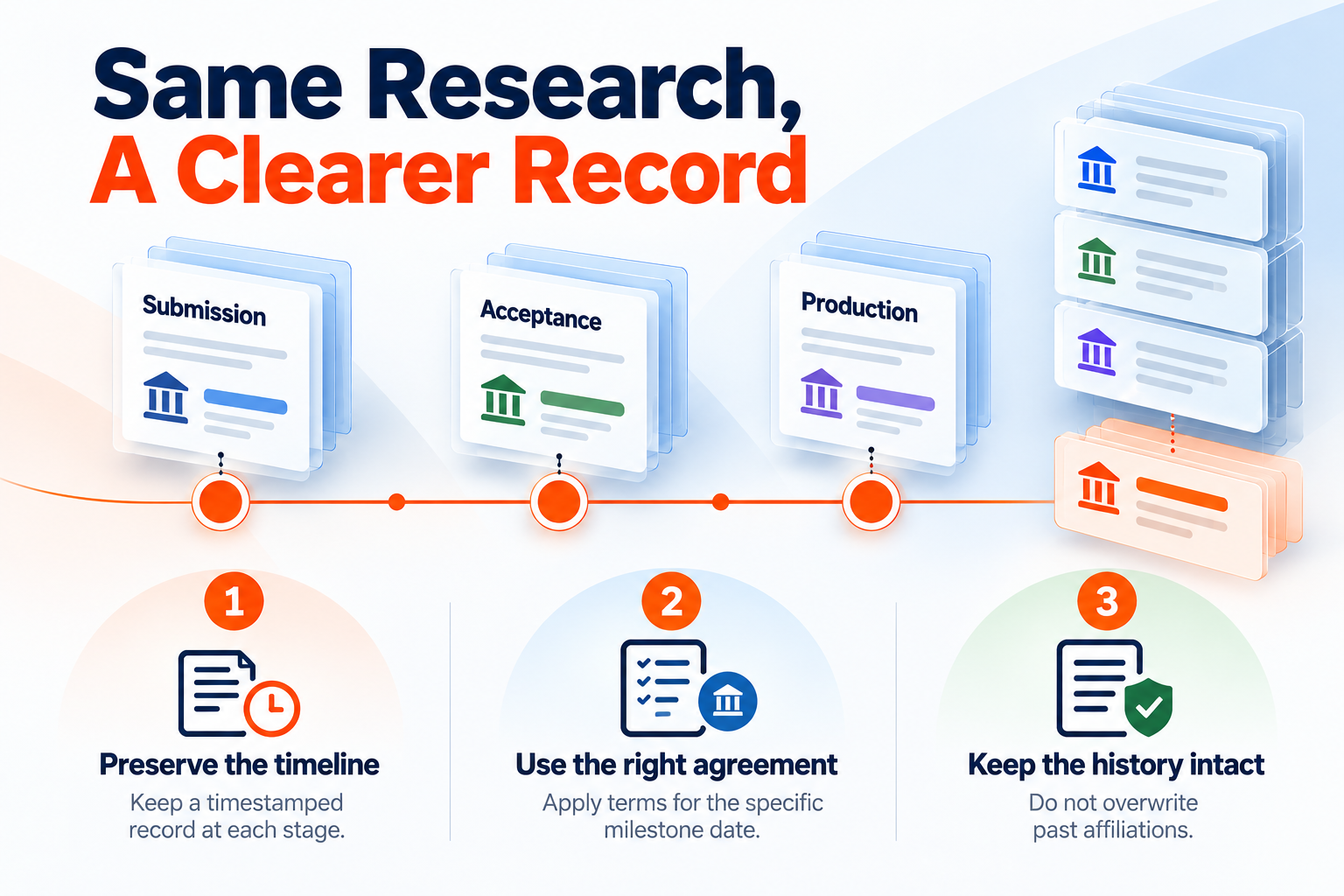
This requires maintainable policy knowledge alongside access to operational records. The system must retrieve terms active on the relevant article dates rather than defaulting to current web pages. Where coverage requires institutional sign-off or available allocations, responses must accurately state the recorded status—identifying a participating institution is no substitute for confirming coverage for a specific paper.
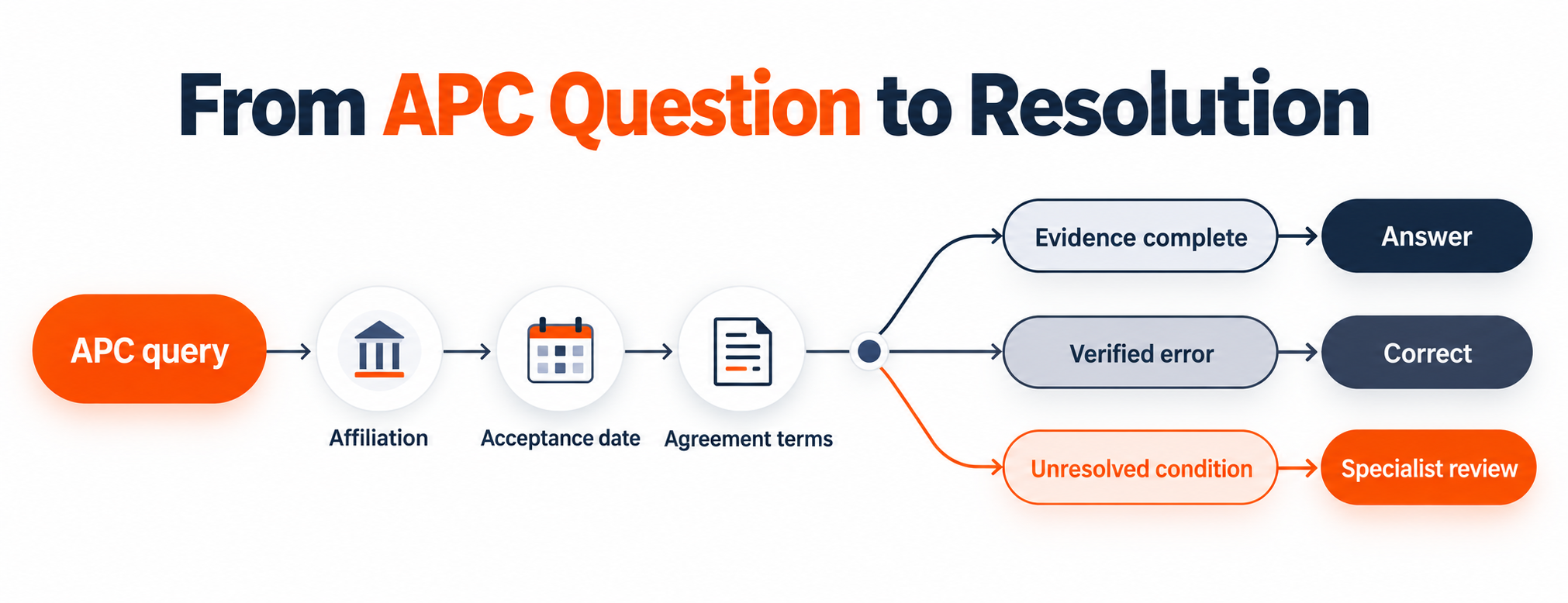
Straive’s framework for AI-assisted support structures this work around three factors: matching responses to verified evidence, permitted actions, and required expertise. Routine questions about journal participation can be handled via self-service. Verified data-entry corrections can move through automated workflows. Conflicting affiliations require human review, while ambiguous agreement clauses or disputed charges should be escalated to open access specialists who can coordinate directly with policy owners. Crucially, authors should always have a direct path to human assistance when needed.
System responses must express these boundaries in clear, direct language. Statements like “Your institution participates” and “Coverage has been approved” convey fundamentally different outcomes. If approval is pending, support communications should clearly identify the condition and explain the necessary next step. A precise response tells the author whether to provide additional evidence, await a decision, or pursue alternative payment arrangements. Premature confirmation only creates friction downstream when authors and institutions reconcile conflicting records.
Funder requirements must be verified alongside institutional coverage. A mandate might govern licenses, access timing, or repository deposits, while separate guidelines control grant funding for APCs. Depending on the funder and journal, compliance may rely on a qualifying publishing agreement, an eligible APC payment, or depositing the accepted manuscript under explicit terms. AI can aggregate guidance and prepare compliance checks for review, but it must never assume compliance from APC coverage alone or mistake a funder acknowledgment for grant authorization.
Waiver processing requires strict attention to timing and application rules. Some assistance programs require requests at submission and reject applications made after acceptance. If expected institutional coverage falls through, an author may find themselves with fewer options than anticipated. Support systems should pull up prior assistance requests, clarify terms, and lay out remaining paths forward. Waiver requests demand deliberate evaluation and should never be presented as automatic relief.
When escalation is necessary, AI’s primary contribution is delivering a clean, timestamped case history so specialists do not have to reconstruct past interactions. It should consolidate the initial query, article identifiers, publication details, relevant affiliations, consulted terms, and completed checks. Author statements must remain distinct from verified records, and approval requests separate from final decisions. Hand-offs should pinpoint the exact issue requiring judgment, ensuring authors do not have to re-explain institutional moves or resend acceptance letters.
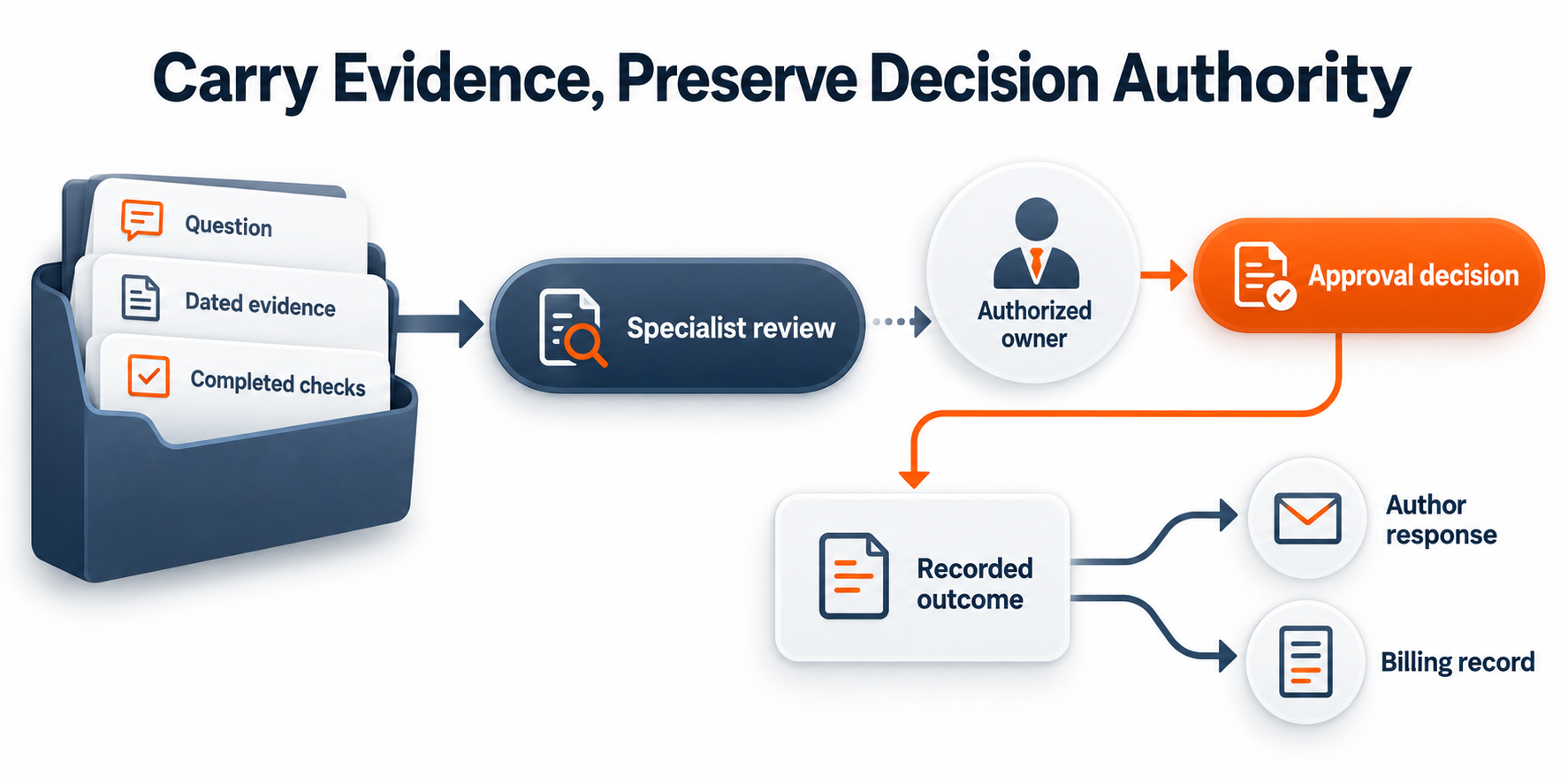
Billing systems provide an essential check on continuity. An eligibility determination is not an invoice instruction. Once coverage is approved, that decision must flow directly into billing workflows to set the payer and charge. If an invoice contradicts an earlier answer, support teams should audit the approval history and billing record together before redirecting the author back to their institution.
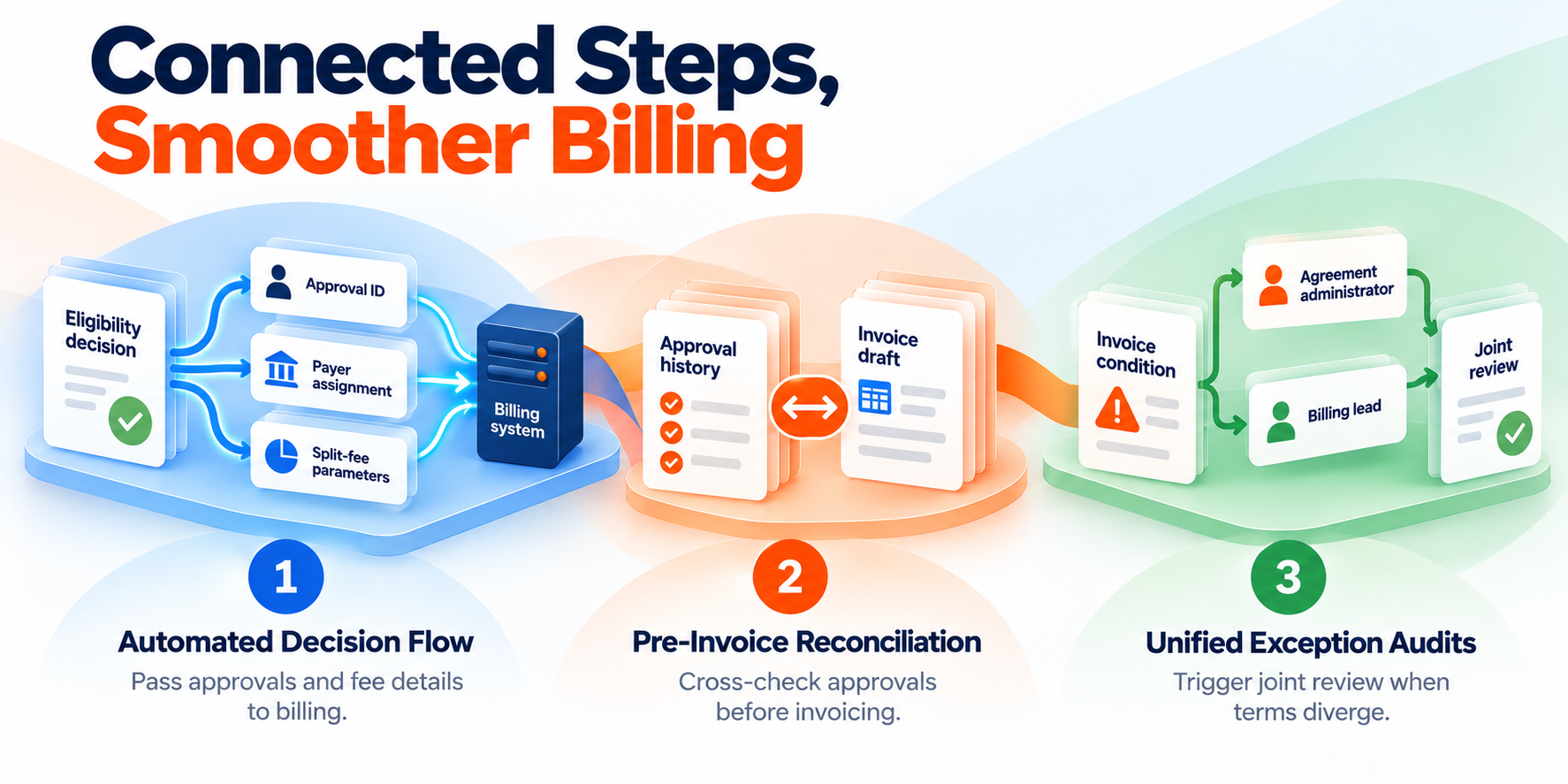
Quality evaluation should focus on these operational outcomes. Publishers can test edge cases involving institutional moves, agreement boundaries, missing approvals, funding caps, and billing discrepancies. Audits should verify that AI tools retrieved correct terms, executed only authorized actions, and preserved uncertainty during escalation. Finally, gathering author feedback on proposed messaging provides a vital check: Is coverage clear, who owns the next action, and could an unexpected charge still arise?
The core question—“Will my institution cover the APC?”—demands an answer that holds true through publication. Quality is proven when agreement administrators evaluate the article, funder requirements are validated, and billing systems execute the result smoothly. AI-supported service should streamline these determinations while safeguarding the evidence and authority behind them.
Contact Straive to learn how AI-assisted researcher workflows can connect policy knowledge, operational processes, and specialist review across open access publishing.

SVP, Advanced Digital Solutions


