
Posted on: October 16th 2026
Peer reviewers lend their expertise across systems and services over which they rarely have control. Editors select them, platforms manage assignments, editorial offices coordinate correspondence, and third-party services track contributions. Publishers must carefully examine how these moving parts interact from the reviewer’s perspective.
The primary goal is to protect time for genuine evaluation while keeping administrative demands clear and manageable. While better interfaces cannot solve workload constraints or sharpen scientific judgment on their own, refining reviewer selection, engagement, and recognition offers substantial opportunities to improve the experience without compromising standards.
Selection shapes the experience
An invitation asks a researcher to take responsibility for evaluating specific claims. Selection must therefore center on the precise expertise required. Subject familiarity often needs to be complemented by methodological or statistical rigor; keyword matching alone cannot guarantee either.
Publication records and AI-assisted discovery tools expand the candidate pool, yet editors must still carefully verify expertise, check identities and contact details, and evaluate potential conflicts of interest—especially for author-suggested reviewers. Persistent identifiers aid disambiguation, but they do not confirm suitability.
Workload data provides helpful, albeit partial, visibility. Researchers frequently manage assignments across multiple publishers that single-system tracking cannot detect. Over-relying on a trusted pool of dependable reviewers risks overburdening a few, even if each individual request seems reasonable in isolation.
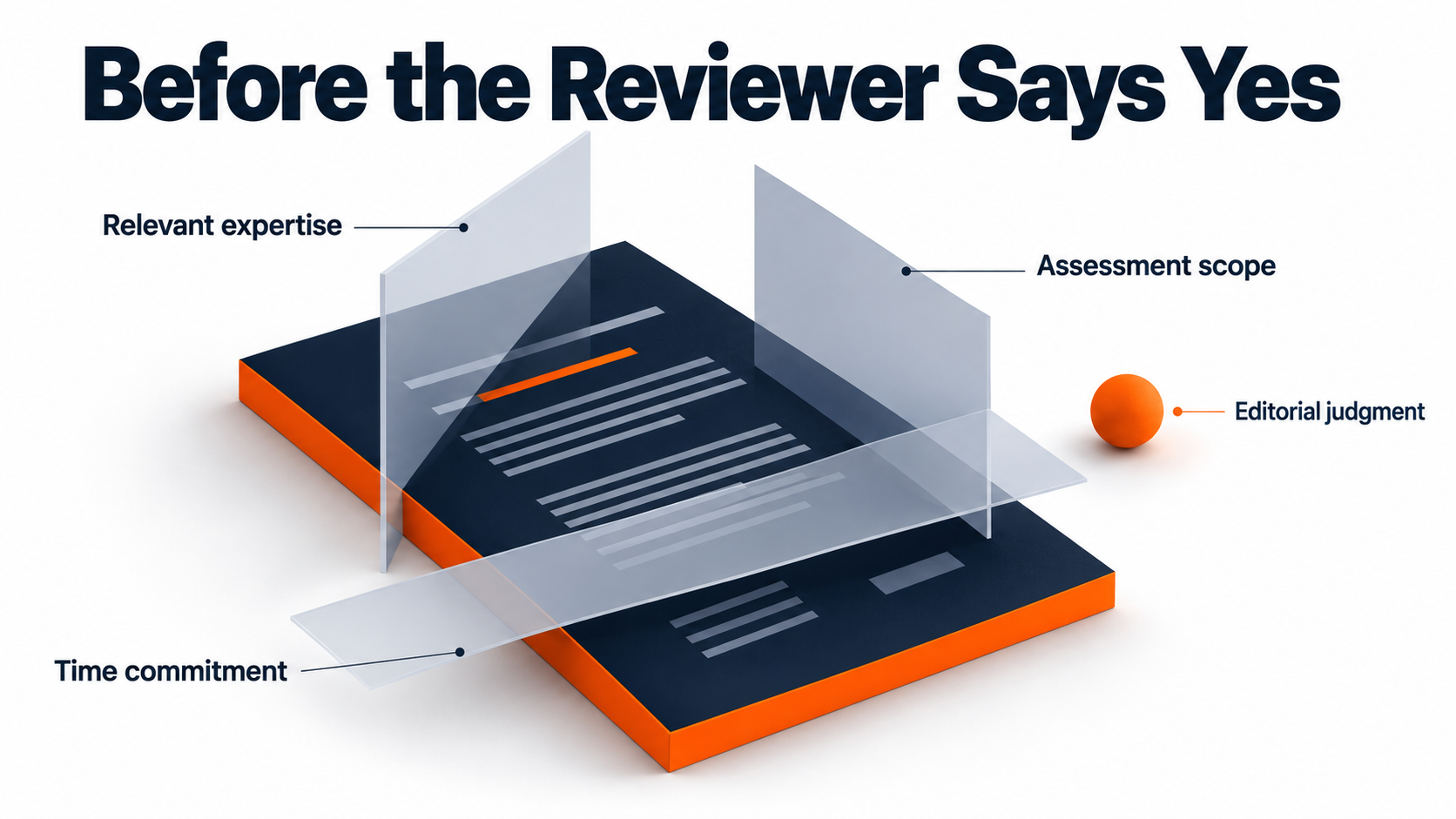
Every invitation should clearly state the requested scope, deadline, and evaluation criteria, alongside sufficient manuscript detail to assess relevance. Motivations—such as research interests, professional service, journal prestige, and competing priorities—vary widely across disciplines and career stages. Publishers should avoid assuming a one-size-fits-all approach to invitations or incentives.
To prevent reviewer fatigue and avoid over-relying on a narrow pool of established researchers, candidate discovery must actively look beyond traditional regions and senior cadres. Expanding reviewer selection across diverse geographies, emerging research hubs, and early-career researchers enlists fresh perspectives and distributes evaluation duties more equitably across the global scholarly community.
Engagement includes the revision experience
Once an invitation is accepted, reviewers need seamless access to files, intuitive report forms, and reliable submission confirmations. Revisions require special attention: determining whether feedback was adequately addressed means tracing connections between original comments, author responses, and manuscript edits.
Modern platform development streamlines this process by consolidating comments and author responses. Publishers should assess whether these enhancements meaningfully lower the effort required in their own workflows. Of course, a cleaner user interface alone does not automatically yield superior scientific rigor or faster turnaround times.
Support systems must resolve operational obstacles through appropriate channels. Access failures, deadline extensions, and newly disclosed conflicts each require distinct handling. Reviewers should never have to navigate a publisher’s organizational hierarchy or repeat themselves across support handoffs.
Workflows should preserve the original inquiry, steps taken, and required follow-up while restricting confidential material to authorized personnel. Approved extensions must automatically update reminder systems, and re-evaluation requests should specify the precise areas requiring further attention rather than needlessly re-opening settled issues.
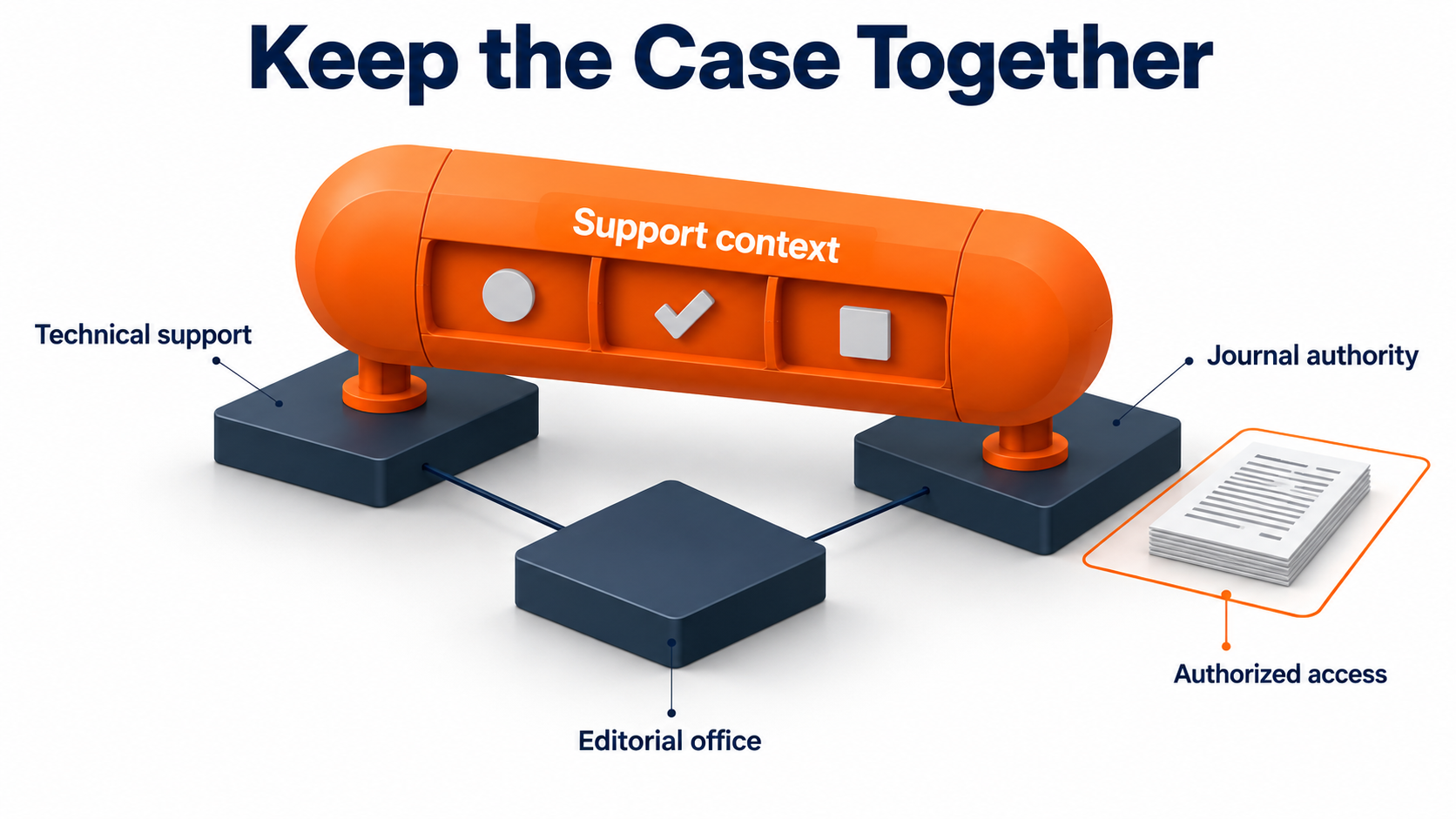
AI can streamline candidate discovery, policy-based support, and administrative triage within vetted environments. However, its implementation must adhere to strict journal guidelines and access controls. Bibliographic metadata cannot measure willingness or impartiality, and automated support cannot substitute for editorial authority.
Similarly, clear guidelines must govern reviewers’ use of generative AI tools. While AI may assist with language editing or initial summarization, manuscript confidentiality must be maintained, and human critical judgment remains indispensable for evaluating scientific validity and methodology.
Recognition needs accurate records and closure
Acknowledgment should be transparent and easily accessible. Certificates and verified contribution logs serve different purposes than direct editorial feedback. A record of completed service confirms participation, but it does not evaluate the depth of the report or signal endorsement of the final publication decision.
Recognition is increasingly shifting toward portable, publisher-verified records that scholars can share across platforms. Because system integration varies, publishers should clearly communicate what gets recorded, who verifies it, and how reviewers can adjust privacy or correct missing entries. Recognition loses its value if claiming it creates just another administrative burden.
Beyond digital badges and static records, publishers should offer tangible benefits to acknowledge reviewer time, such as Article Processing Charge (APC) discounts, subscription access, expedited processing for their own submissions, or institutional service credits.
Where supported, records should also credit authorized co-reviewers. Formal co-review framework renders previously invisible contributions visible while preserving journal standards around permission and confidentiality.

Providing timely decision feedback brings meaningful closure to an assignment. Specifically, closing the loop means sharing the editor’s final decision letter, anonymized co-reviewer evaluations, and revised author responses with all reviewers. This gives reviewers complete visibility into how their assessments influenced the editorial outcome. Publishing review reports, disclosing reviewer identities, and crediting service are separate choices; reviewers should understand each option without feeling compelled to expose confidential work to receive credit.
Measure what publishers can improve
Publishers should track key metrics: invitation acceptance rates, time to secure suitable reviewers, workload concentration, completion reliability, editorial utility, repeat participation, and recognition adoption. These metrics should be cross-referenced with access issues, unresolved requests, and recurring operational hurdles.
Findings must be interpreted within the context of specific disciplines, manuscript types, and review models. A dip in engagement does not automatically indicate dissatisfaction, nor does repeat participation guarantee it. Assessing editorial utility also requires explicit evaluation criteria rather than simply gauging agreement with the final decision.
Publishers can start by addressing documented pain points and feedback within a single journal. Resolving unclear assignments, broken access links, inconsistent reminders, and cumbersome recognition workflows provides immediate relief. Evaluating the impact of these changes ensures measurable progress before claiming gains in reviewer retention or publication speed. Supporting reviewers ultimately means taking full accountability for the administrative load imposed on scientific assessment.

Priya Roy is Vice President, Delivery Leadership at Straive, where she translates ambitious growth strategy into high-performing customer experience and technology operations. With deep expertise in large-scale transformation, she offers a practical leadership perspective on scaling AI, elevating service excellence, and turning operational complexity into lasting enterprise value.


