
Posted on: September 17th 2026
Fraudulent manuscripts and publications are eroding trust in scientific publishing. This decline is driven partly by a small minority of researchers seeking promotions, funding, or recognition through unethical practices, including participation in organized citation and peer-review networks.
As we mark Peer Review Week, the growing volume of manuscript submissions underscores the importance of protecting research integrity. At the same time, paper mills are using Artificial Intelligence (AI) to produce fraudulent papers at an industrial scale, while predatory publishers profit by publishing them. These interconnected threats are reshaping the research integrity landscape.
In this fast-changing scenario, the top priority for Compliance Leaders (CLs) and Integrity Teams (ITs) tasked with safeguarding research funding and academic reputation, is to continuously update themselves on the next-generation plagiarism detection and research fraud prevention tools.
To prevent this large-scale contamination of scientific records publishers have to make a conscious leap from the single gatekeeper model to an active oversight framework that has the following critical capabilities:
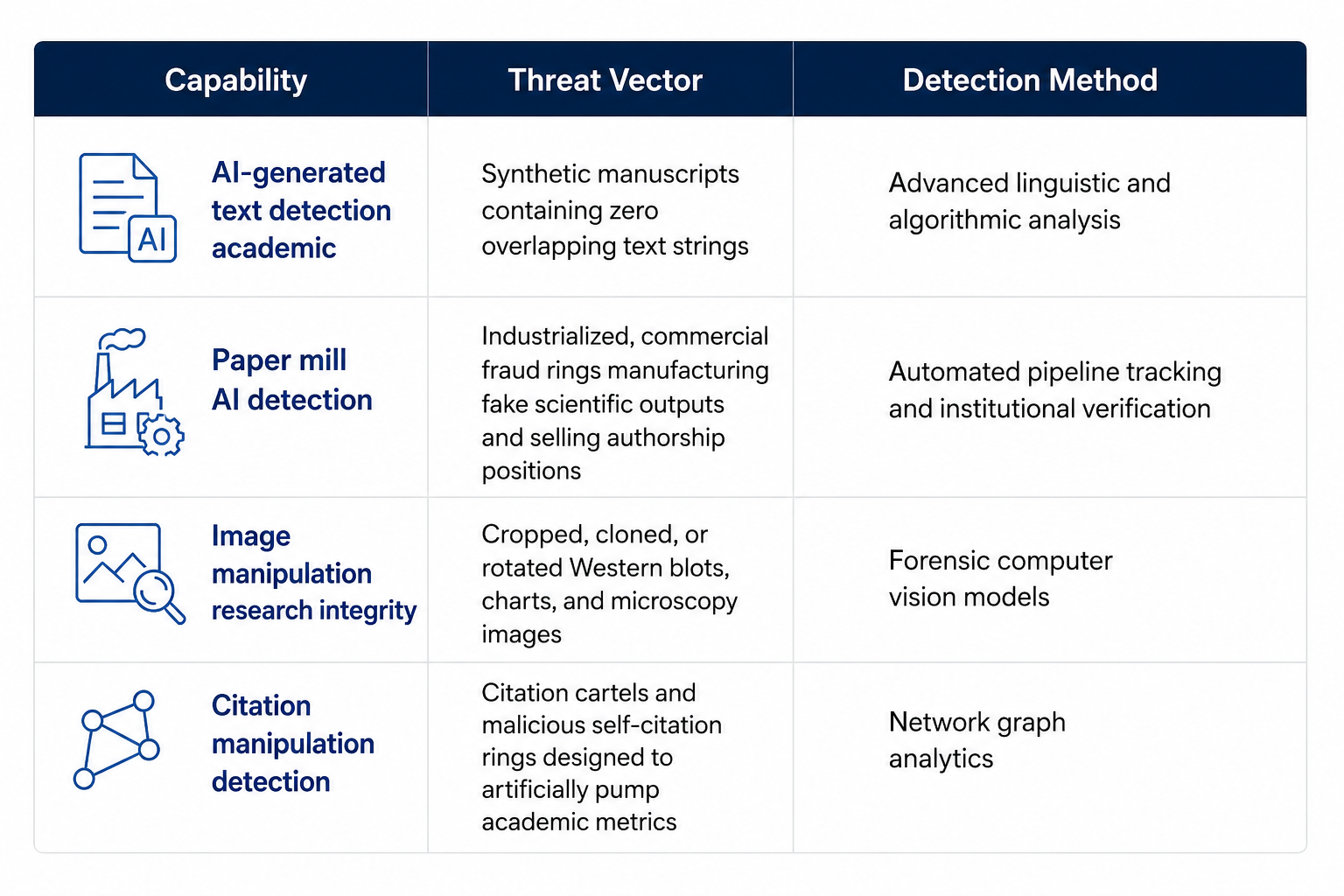
Figure 1. Four critical capabilities required for modern compliance frameworks to safeguard institutional research integrity.
The Current Research Integrity Scenario
Many scholarly publishers and leading research institutions have realized that large scale- scientific misconduct is not a theoretical threat. They recognize that a plagiarism tool can miss synthetic data and manipulated images. Besides, these tools cannot stop paper-mill submissions and citation abuse.
Consequently, publishers and research institutions have adopted editorial workflows that are used in combination with sophisticated integrity screening systems to target four distinct publication fraud methods.
- Identifying AI-generated academic text: To identify manuscripts generated by leveraging Large Language Models (LLMs) many publishers are using AI-text detection systems. These systems, which are a part of their screening workflow, analyze stylometric features, linguistic consistency, perplexity, token-probability patterns, and other statistical signals to estimate whether a manuscript exhibits statistical characteristics consistent with AI-generated writing. These results are probabilistic, and need to go through a human review before being considered as conclusive evidence.
- Detecting paper mill activity: A growing number of publishers are participating in collaborative initiatives such as the STM Integrity Hub, to flag fraudulent practices of paper-mills. The Hub integrates specialized screening technologies and tools that help identify anomalous submission patterns, duplicate submissions, analyze metadata and integrity indicators, and surface manuscripts for editorial investigation before publication.
- Screening for image manipulation: AI-powered image integrity platforms analyze scientific images for reuse, duplication, and manipulation. There are some platforms that run manuscript images against databases containing more than 155 million images harvested from open access literature to flag manipulated and reused images. Additionally, forensic analysis detects splicing, cloning, and editing done within an image. These results enable editors to identify anomalies and send these images for expert review before publication.
- Uncovering citation manipulation: To help safeguard research integrity, some publishers increasingly use bibliometric and citation-network analyses to identify suspicious citation patterns. These analyses reveal anomalies in citations and statistical patterns that call for editorial investigation.
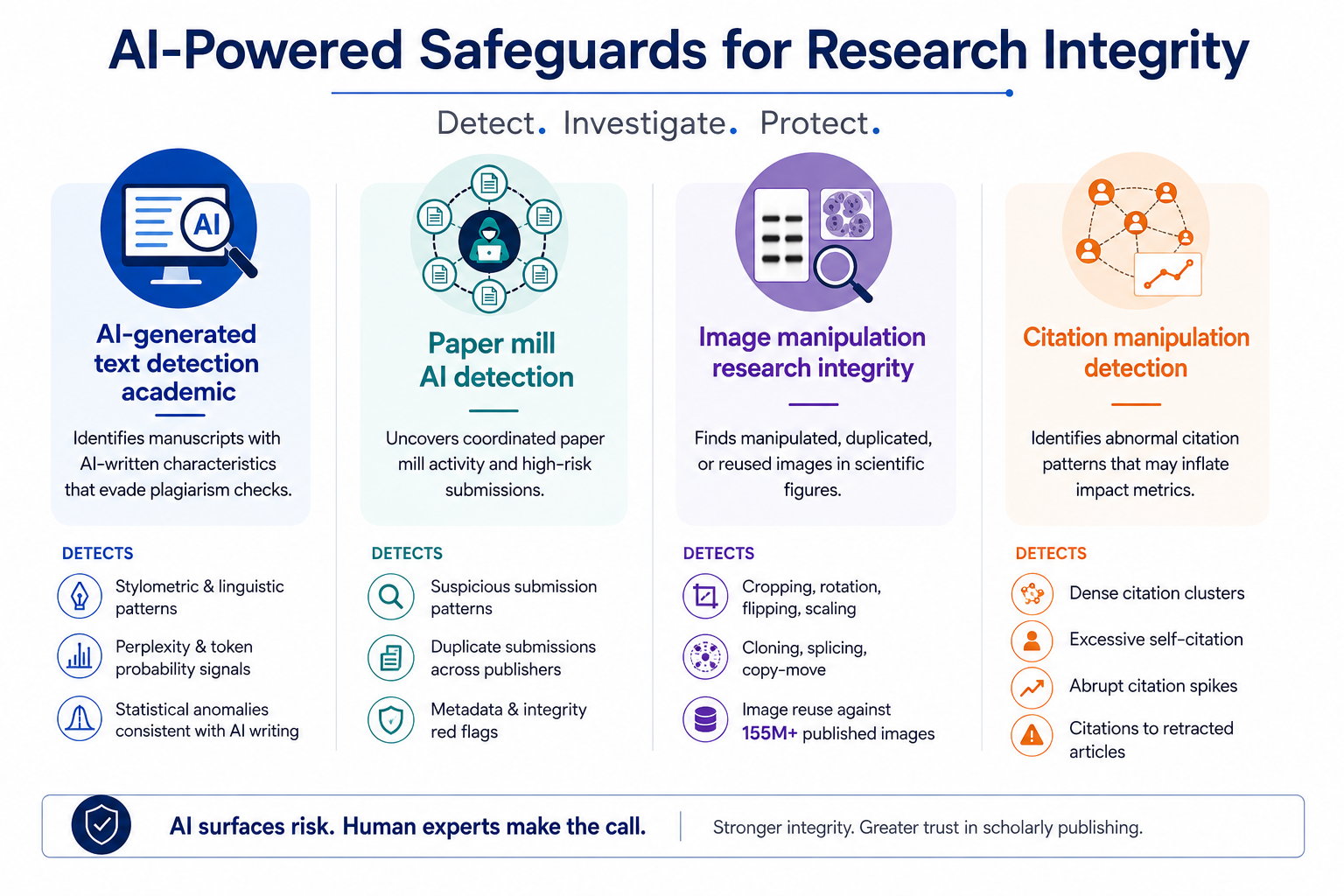
Figure 2. AI-Powered Integrity Screening Across the Scholarly Publishing Workflow
The operational reality is integrity screening is now a standard part of publishing, but deceptive practices are evolving alongside it.
The Next-Generation Integrity Systems
As integrity screening tools become more effective in detecting plagiarism, image manipulation, and certain forms of AI-generated content, bad actors continue to adapt their tactics. In response, Compliance Leaders and research Integrity Teams should prepare for a future shaped by the following innovations.
1. AI-Generated and Manipulated Scientific Images Screening
Scientific image-screening tools can detect duplicated or manipulated images. However, these tools find it challenging to identify AI-generated synthetic images. Forensic screening is expected to move beyond image matching by increasingly analyzing intrinsic image features, including sensor noise, frequency patterns, lighting inconsistencies, and traces left by image-generation or reconstruction tools.
2. Source-Data Provenance and Cryptographic Verification
Future integrity checks may make large-scale data fabrication harder to conceal by examining raw data and supporting records alongside final spreadsheets and processed datasets. This will enable investigators to review raw instrument files, metadata, timestamps, and records of any changes made during data processing. To make these checks possible, journals, funders, and research infrastructures are increasingly encouraging the preservation of primary instrument data and supporting metadata. Emerging approaches could combine these records with trusted timestamps, digital signatures, and provenance logs to provide stronger evidence of when and where data were generated and whether they were subsequently altered.
3. Multilingual Cross-Submission Mapping
Cross-language plagiarism remains a persistent challenge in scholarly publishing because translated manuscripts can evade traditional text-matching systems. To address this, research integrity teams are increasingly incorporating multilingual semantic similarity models that compare the meaning of documents rather than the exact wording. By analyzing conceptual similarity across languages, these models can help identify translated plagiarism, duplicate submissions, and other forms of cross-language research misconduct.
4. Author Behavioral Profiling and Footprint Tracking
Research fraud has evolved from document-level to an organizational level challenge. To address this problem, research integrity systems are expanding beyond manuscript screening to analyzing metadata generated throughout the submission and peer-review process. These signals may include unusual submission patterns, inconsistencies in geographic or institutional metadata, unusually rapid peer-review timelines, and behavioral patterns associated with coordinated fraudulent activity. Together, they provide editors with additional evidence to identify high-risk submissions for further investigation
5. Continuous, Autonomous Retroactive Auditing
Publishers are expanding their research-integrity checks beyond manuscript content to include metadata from the submission and peer-review process. As detection technologies improve, publishers are adopting continuous monitoring and re-examine published research for previously undetected signs of misconduct. By reanalyzing archived manuscripts with newer image-forensics, AI-assisted screening, and bibliometric analysis, Compliance Leaders and research Integrity Teams can uncover manipulation patterns that were not detectable at the time of publication.
The Mandate for Compliance Leaders and Integrity Teams
As research integrity technologies become more sophisticated, the challenge increasingly shifts from detection to governance. AI can identify anomalous submission patterns, manipulated images, suspicious citation networks, linguistic signals, and other indicators of compromised research. However, human judgment remains indispensable for interpreting context, assessing intent, managing institutional investigations, and making ethical decisions.
Solutions such as Straive’s aiKira Research Integrity bring these detection capabilities into manuscript screening. By analyzing manuscripts for potential bad actors, problematic references, and compromised research content, aiKira Research Integrity helps integrity teams identify risks earlier and focus their attention where deeper investigation is needed.
Compliance leaders must therefore focus as much on governance as on technology. This means establishing clear policies for responding to algorithmic alerts, defining acceptable uses of generative AI in research, integrating multilayered screening into editorial and institutional workflows, and equipping integrity teams to translate technical findings into fair, transparent, and defensible decisions.
The race between scientific integrity and sophisticated fraud will continue to evolve. Institutions that combine advanced solutions such as aiKira with strong governance, human expertise, and continuous oversight will be best positioned to protect research credibility, strengthen public trust, and preserve the integrity of the scientific record.

Straive helps clients operationalize the data> insights> knowledge> AI value chain. Straive’s clients extend across Financial & Information Services, Insurance, Healthcare & Life Sciences, Scientific Research, EdTech, and Logistics.


