
Posted on: March 26th 2026
From Fragmentation to Foundation
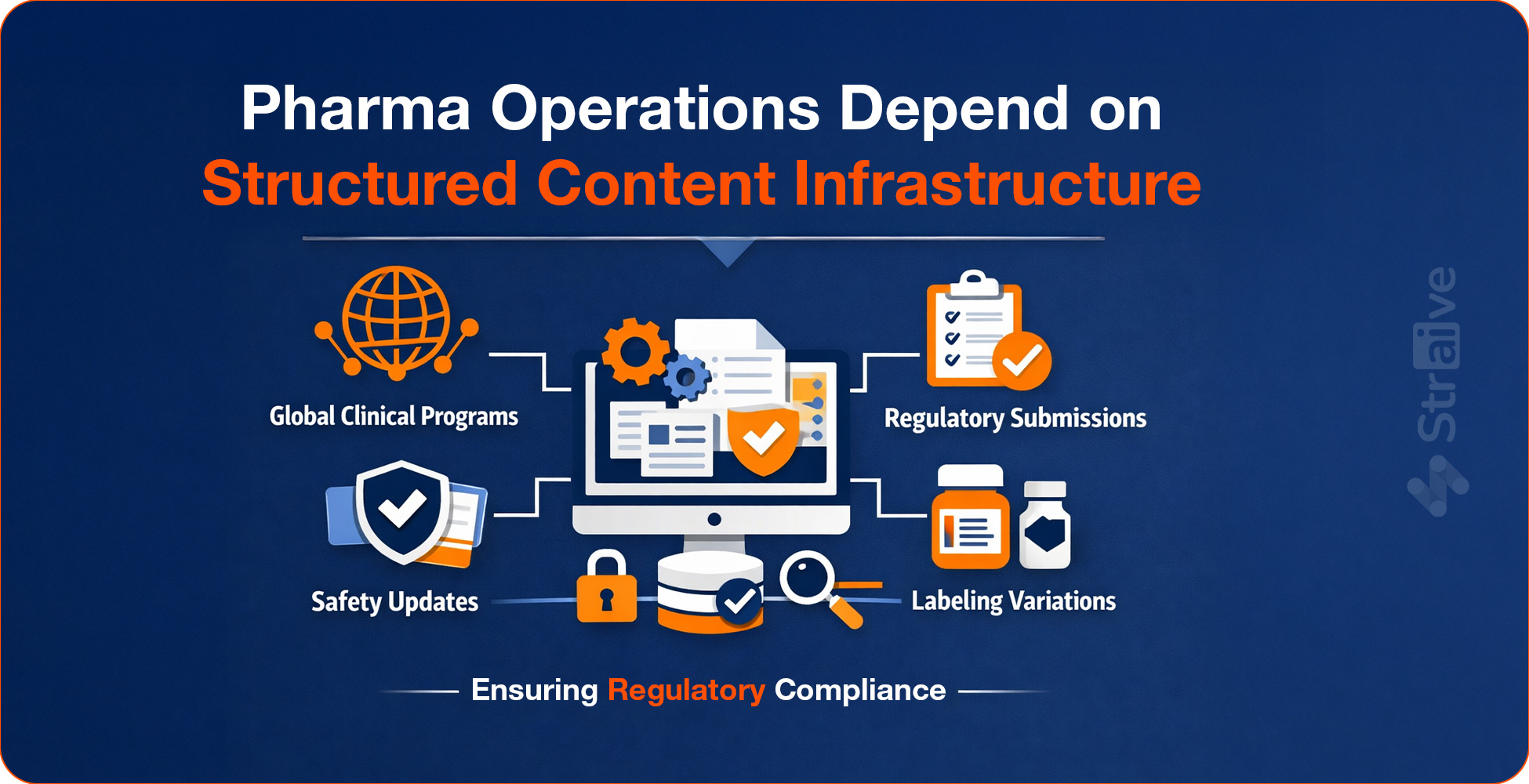
Pharmaceutical organizations today operate across multiple geographies, therapeutic areas, and regulatory environments. A single product may involve global clinical programs, region-specific labeling variations, parallel submissions, and ongoing safety updates. Content flows continuously across these layers and functions.
At the same time, expectations around regulatory compliance management have become more stringent. Agencies demand transparency, audit readiness, and demonstrable data integrity. Submissions must be traceable and defensible. Global regulatory compliance is no longer achieved solely through documentation; it depends on how that documentation is structured, governed, and maintained.
Many companies have invested in digital tools to modernize isolated functions. However, without a unifying structural foundation, fragmented systems and manual workflows struggle to scale. The shift required is not incremental automation. It is architectural alignment.
Pharma Operations Depend on Structured Content Infrastructure Global clinical programs, regulatory submissions, safety updates, and labeling variations all rely on well-governed content systems to maintain regulatory compliance. |
Defining a Scalable Content Backbone
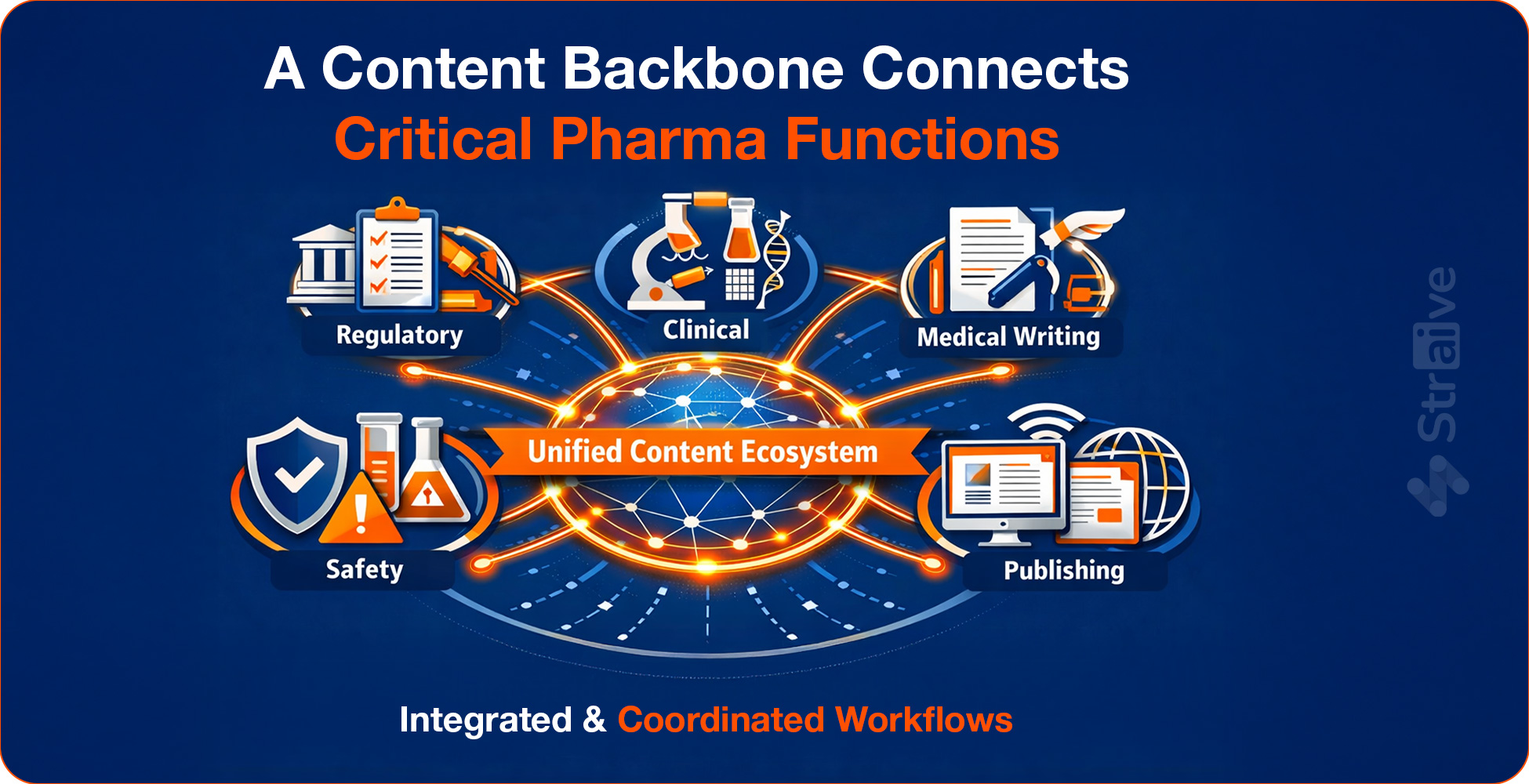
A scalable content backbone acts as a unified digital layer and system of record across Regulatory, Clinical, Medical Writing, Safety, and Publishing functions. It supports a structured pharma document management system that governs content at the component level rather than at the file level.
Instead of disconnected repositories, the backbone enables interoperability between authoring platforms, regulatory information management environments, and publishing systems. Governance is embedded directly into the content lifecycle. Compliance by design ensures that review checkpoints, access controls, and validation mechanisms are built into workflows rather than added later.
A Content Backbone Connects Critical Pharma Functions A unified backbone integrates Regulatory, Clinical, Medical Writing, Safety, and Publishing environments into a coordinated content ecosystem. |
Alignment with GxP standards and global regulatory expectations becomes operationally embedded. Structured content models replace isolated documents, allowing information to be reused consistently across submissions and markets.
Core Attributes of an Intelligent Backbone
An effective content backbone eliminates duplication by ensuring that validated content elements are centrally managed and consistently deployed. Updates do not require manual replication across disconnected systems. Instead, structured integration reduces rework and strengthens alignment.
Domain-specific intelligence strengthens the backbone further. Semantic search capabilities, metadata frameworks aligned with therapeutic taxonomies, and controlled vocabularies improve content accuracy and discoverability. These capabilities support AI in regulatory affairs by providing contextual awareness rather than simple keyword matching.
Scalability depends on a flexible architecture. Cloud-native, API-first infrastructure enables integration across enterprise platforms while maintaining governance boundaries. Modular design ensures that new capabilities can be introduced without destabilizing the ecosystem.
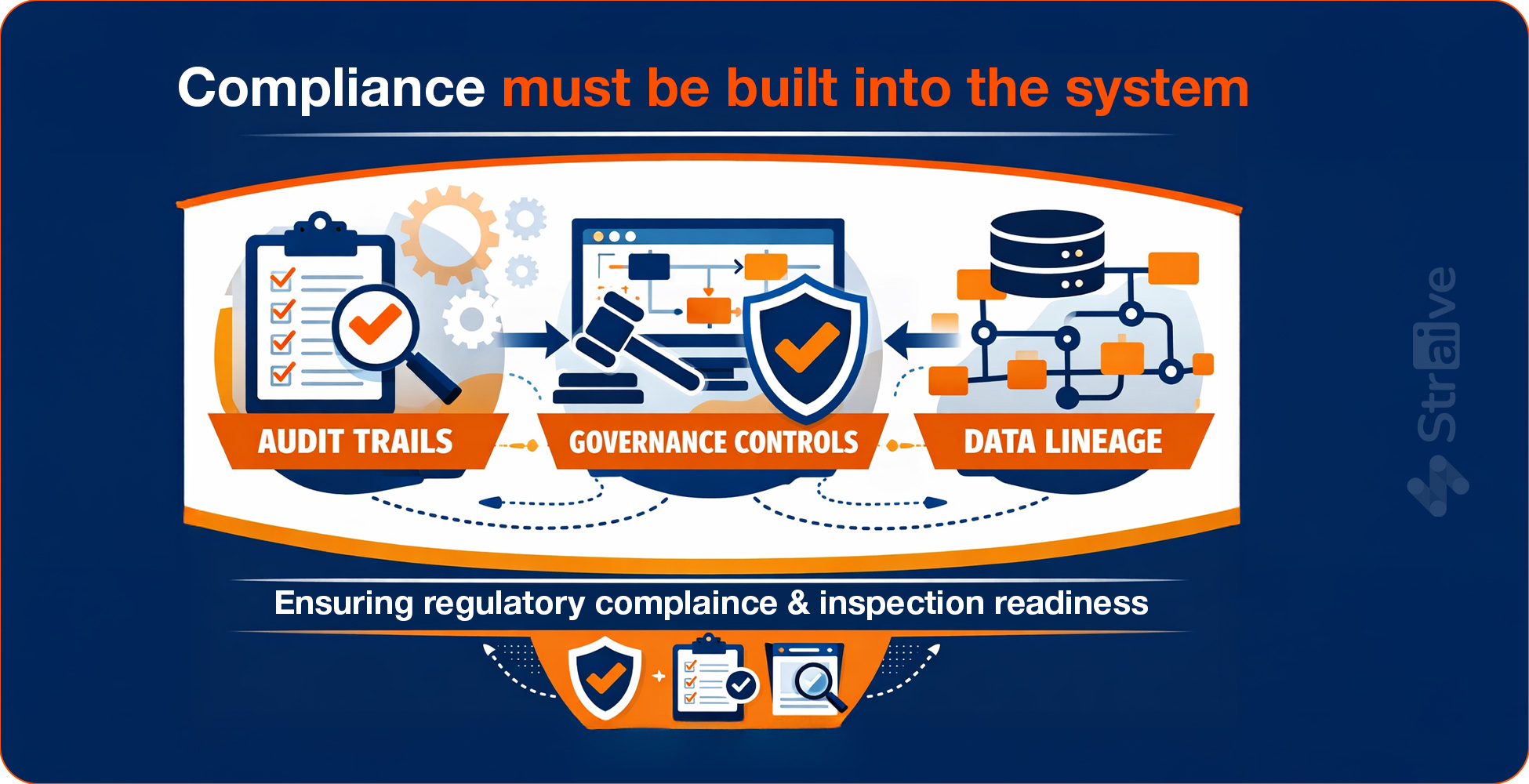
Compliance by design remains foundational. Audit trails, validation checks, and data lineage tracking are embedded within the pharma document management system itself. Regulatory compliance management becomes part of operational design rather than a downstream verification step.
The Five Pillars of the Foundation
Automation and Artificial Intelligence
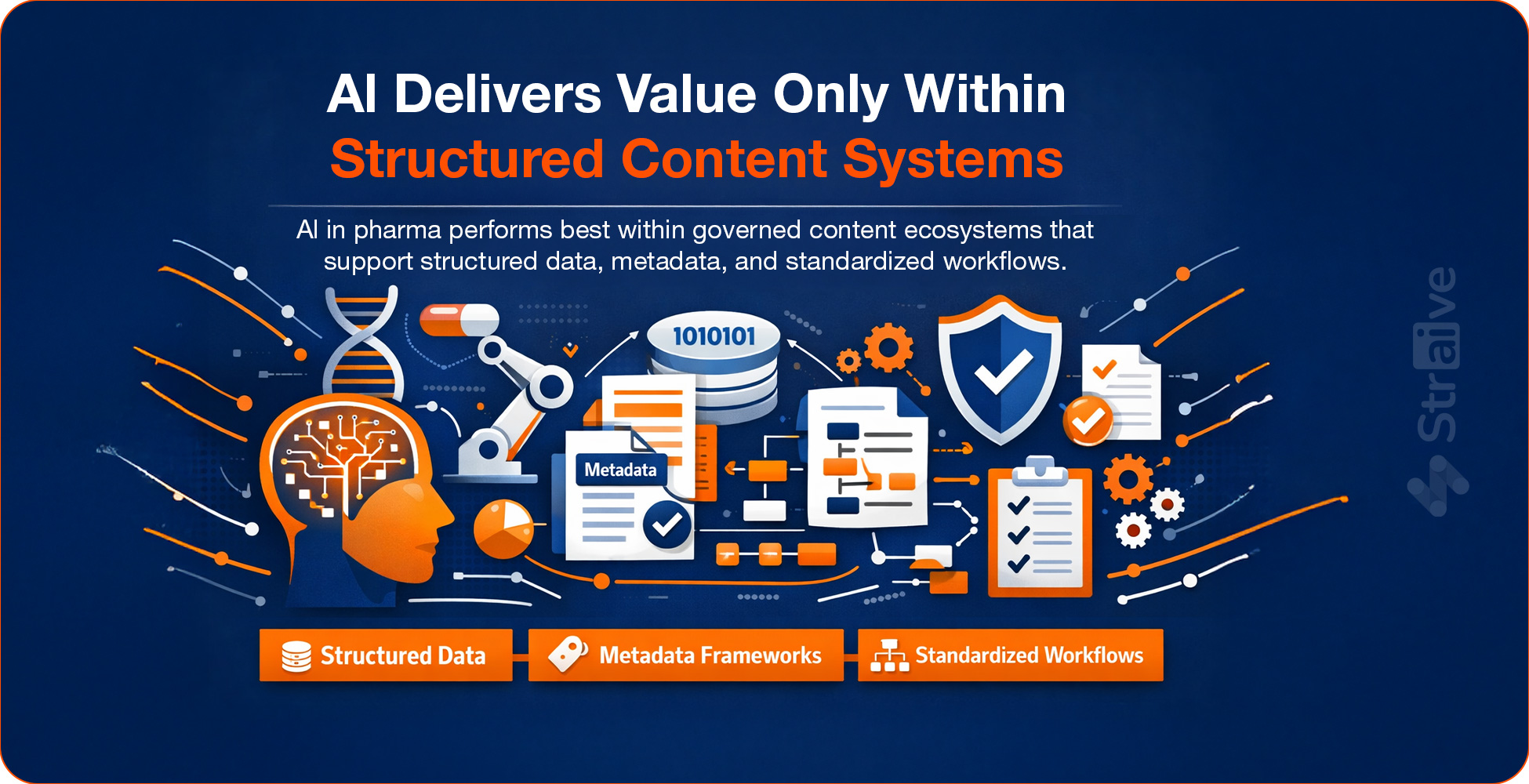
Artificial intelligence in pharma is most effective when applied within a governed structure. Natural language processing can support metadata tagging, structured summarization, and content classification. Machine learning–based quality checks can detect inconsistencies in terminology, safety statements, or formatting before documents are submitted.
Automation also improves routing. Review and approval workflows can be accelerated without reducing oversight, enabling AI in regulatory affairs to enhance efficiency while preserving compliance integrity.
Interoperability and Integration
Interoperability ensures that regulatory information management systems, authoring tools, and publishing platforms operate as an integrated network. APIs and microservices allow secure data exchange between systems without manual export and reconciliation.
Centralized repositories improve content reuse and findability. Alignment with FAIR principles supports long-term accessibility and traceability, strengthening global regulatory compliance efforts.
Compliance and Governance
Governance structures within the backbone enforce version control, access management, and approval workflows. Immutable audit trails provide a clear record of content evolution. Data lineage tracking simplifies inspection readiness and regulatory reporting.
When compliance is architected into the system, organizations reduce dependence on retrospective reconciliation and manual documentation checks.
Compliance Must Be Built into the System Embedding audit trails, governance controls, and data lineage directly into workflows strengthens regulatory compliance management and inspection readiness. |
Scalability and Global Collaboration
Global pharmaceutical operations require multilingual publishing, regional customization, and secure cross-border collaboration. A structural foundation supports controlled adaptation of core content while preserving alignment with global masters.
Data localization requirements can be addressed without creating isolated silos. Teams across regions operate within a shared governance framework that balances flexibility with control.
Analytics and Intelligence
Operational dashboards provide visibility into document lifecycles and submission readiness. Leaders can monitor review cycle durations, identify bottlenecks, and assess reuse patterns across therapeutic areas.
Predictive insights derived from integrated systems help anticipate submission risks and optimize timelines. Intelligence becomes embedded within regulatory compliance management rather than being layered externally.
AI Delivers Value Only Within Structured Content Systems Artificial intelligence in pharma performs best when applied within governed content ecosystems that support structured data, metadata frameworks, and standardized workflows. |
Measurable Outcomes
Organizations that establish a structured content backbone experience measurable improvements. Regulatory and clinical documentation cycles become more predictable. Audit readiness improves because traceability is built into the pharma document management system.
Reuse reduces redundant effort and lowers operational cost. Automation minimizes routine manual tasks, allowing regulatory and scientific teams to focus on strategic analysis and evidence development.
Operational agility improves. Global regulatory compliance initiatives become easier to coordinate across markets, enabling organizations to manage simultaneous lifecycle updates without disproportionate strain.
A Phased Roadmap to Foundation
Transitioning to a content backbone requires a phased and controlled approach. The first step is to conduct a maturity assessment to identify capability gaps across systems, governance, and workflows.
Establishing unified repositories and consistent metadata standards creates the structural baseline. Once foundational alignment is achieved, AI capabilities can be introduced through targeted pilots within regulatory compliance management functions. These pilots validate the value of artificial intelligence in pharma without disrupting core operations.
Scaling globally requires structured change management. Clear ownership models, training programs, and executive sponsorship support adoption across departments and regions.
Continuous optimization follows. Analytics and feedback loops refine workflows and strengthen system intelligence over time.
Building the Structural Foundation for Scalable Pharma Content Operations
Designing a scalable content backbone is not simply a technology initiative. It is a strategic decision about how regulatory compliance management and global operations will function at scale.
Organizations that build a structural foundation gain resilience, speed, and stronger alignment with compliance. They create an environment where artificial intelligence in pharma enhances regulated workflows rather than complicates them.
For a complete framework outlining the architectural components, governance principles, and phased implementation roadmap, read the whitepaper.

Straive helps clients operationalize the data> insights> knowledge> AI value chain. Straive’s clients extend across Financial & Information Services, Insurance, Healthcare & Life Sciences, Scientific Research, EdTech, and Logistics.


