

Rather than depending solely on fixed schedules or reacting to failures, predictive maintenance uses machine learning and advanced analytics to predict when a machine will likely stop functioning. Read More
Manufacturing

Interpolating Embeddings: Nudging Sentences Toward One Another
Embedding interpolation unlocks new possibilities in understanding how models interpret language. While some transitions create smooth semantic blends, others remain abrupt due to the text’s discrete nature. Read More

How Food Manufacturers Use Computer Vision to Eliminate Packaging Defects
Since humans first used fire 250,000 years ago to process food, the food industry has continually evolved. Today, it stands on the cusp of a significant technological leap. Read More

5 Signs Your Factory Needs an AI Visual Inspection System Today
Quality control failures have several immediate consequences. Defects at any stage of the manufacturing process can lead to rework, which takes more time and resources, while scrap and reduced yield can cause monetary losses. Read More

Boost Manufacturing Process with IIoT-Based Predictive Maintenance
For businesses involved in manufacturing, equipment failures can have devastating consequences as they can cause production delays, lead to missed deadlines, and, in most cases, lost revenues. Read More

The Role of AI-Powered Analytics in Preventing Equipment Failure
Reduced Downtime: AI’s ability to predict failures allows companies to perform timely maintenance, minimizing disruptions. Companies implementing AI-driven PdM report up to a 50% reduction in unplanned downtime. Read More

Integration of Computer Vision with IoT: How Computer Vision Helps Turn Data Into Decisions in IoT Ecosystems?
Imagine seeing thousands of packages tracked in real-time and each movement monitored and recorded with precision in a vast warehouse. The combination of IoT and computer vision enables such capabilities. Read More
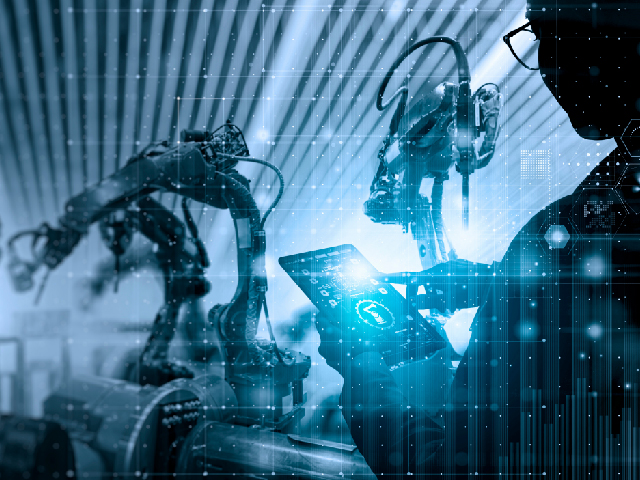
The Impact of Generative AI on Manufacturing Industries
Generative AI, or GenAI as it is commonly known, is a subset of artificial intelligence that involves creating new solutions, content, or designs based on existing data. It is completely. Read More

Creating a Data-Driven Supply Chain: Key Strategies and Best Practices
Discover strategies and best practices for creating a successful data-driven supply chain, improving efficiency, enhancing decision-making, and driving better performance across operations for a competitive edge in today’s dynamic market. Read More

Importance of Digital Twins in Supply Chain
Digital twins provide a unique perspective on a business’s operations by integrating real-time data with advanced analytics, enabling improved decision-making, optimization, and predictive insights for enhanced performance and operational efficiency.
Read More