
Posted on: October 28th 2026
Introduction: Why AI Chatbots Are Transforming Author Support in Publishing
Even with published guidelines, authors often face unexpected requirements mid-submission, leading to costly delays and operational burdens for publishers. Modern publishing workflows require scalable intelligence to bridge the gap between static author instructions and real-time execution.
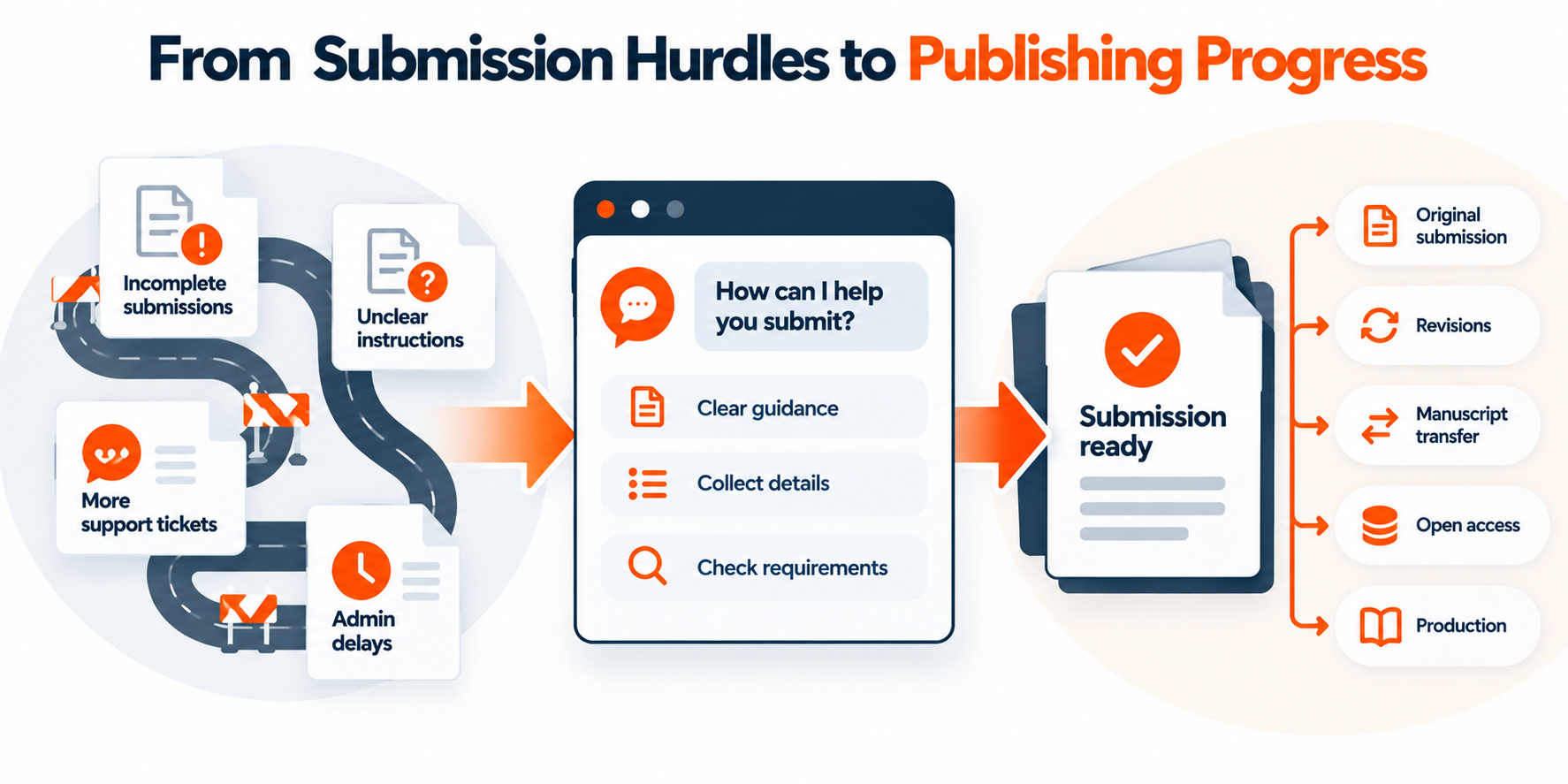
The commercial opportunity depends on how effectively publishers connect conversation with legitimate author tasks across every stage of the lifecycle. The strongest implementations will reduce avoidable work for authors and publishing teams while improving the accuracy, consistency, and completeness of information entering editorial systems. By leveraging platforms like aiKira, publishing houses can move beyond basic query handling toward fully operationalized, intelligent submission pipelines.
How AI Chatbots Are Changing Author Support
24/7 Answers to Common Author Queries
Author support teams regularly answer repetitive queries regarding manuscript preparation, file format requirements, supplementary data files, revision instructions, and specific journal policies. Many of these inquiries arise not because documentation is missing, but because authors need real-time expert assistance applying published guidelines to their specific manuscript circumstances.
A question about graphical abstracts, for example, may require the assistant to establish the exact journal, discipline, and article type before providing accurate technical specifications. Similarly, revision requirements may differ significantly from those governing an initial submission. Deploying domain-trained conversational AI ensures authors receive instant, contextually accurate answers at any hour, bypassing email ticket queues and keeping manuscript preparation on schedule.
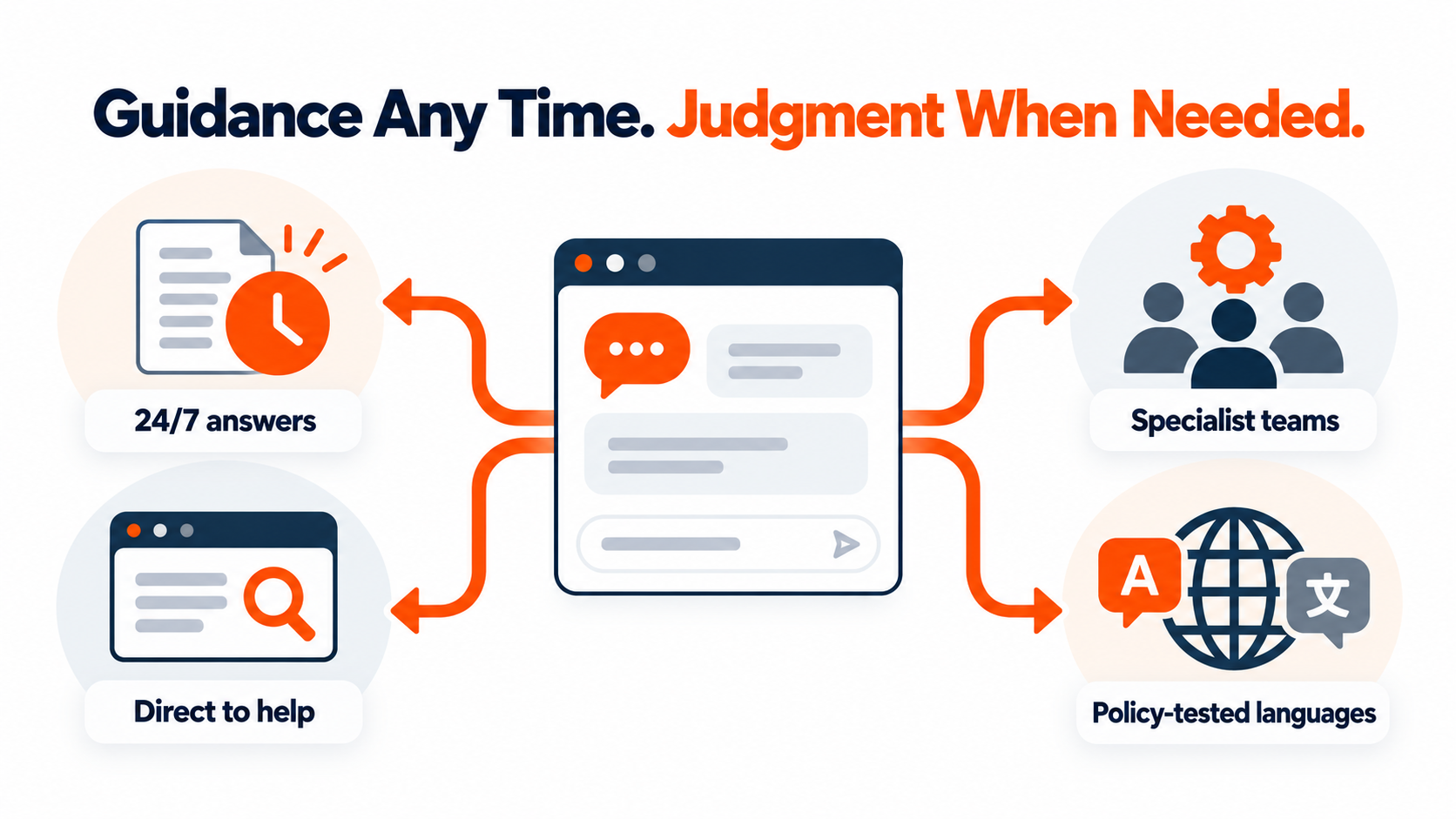
Repeated questions also provide an invaluable operational signal for publishing operations. If authors consistently misunderstand the same submission requirement or policy phrasing, publishers can use conversational interaction data to refine ambiguous instructions or redesign confusing portal interfaces. This proactive continuous feedback loop directly prevents recurring support tickets and elevates the overall author experience.
Context-Aware and Personalized Author Assistance
The appropriate response to an author query frequently depends on manuscript status, article type, contributor role, and previous interactions with the journal. Generic help desk responses often fail because they lack immediate visibility into active editorial records and manuscript context.
Conversational AI streamlines complex publishing requests, such as modifying corresponding authors across pre-submission, peer review, and post-acceptance stages, by accurately determining the manuscript’s current status and securely retrieving relevant details from connected databases. Through platforms like Straive’s aiKira, AI assistants query authoritative system records behind the scenes to deliver precise, context-aware guidance tailored specifically to the user’s role and stage in the workflow.
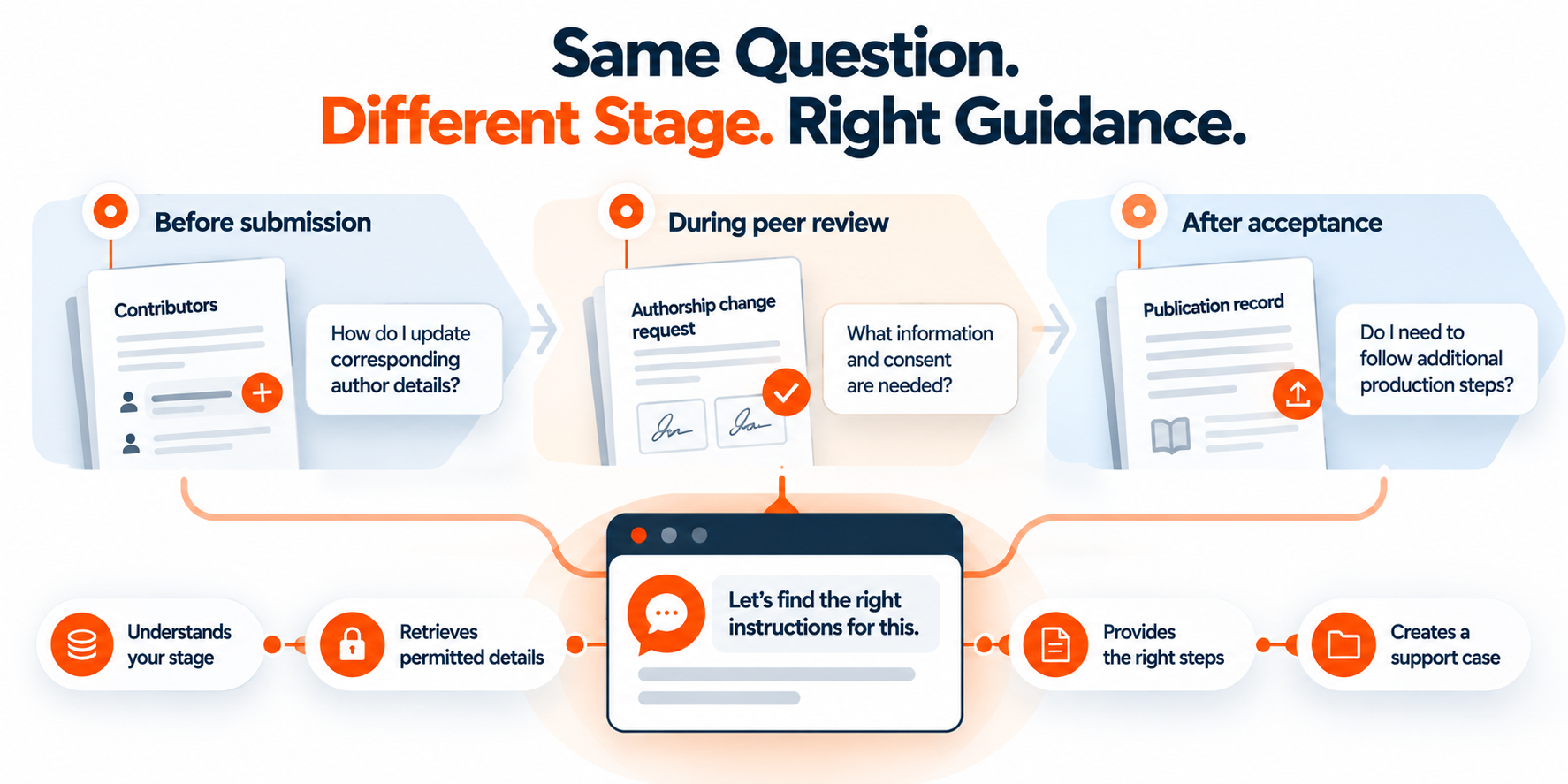
Authentication and authorization require careful, separate treatment to safeguard editorial integrity. An authenticated ORCID iD identifies a researcher within an authorized identity exchange, but it does not grant unrestricted rights over every manuscript associated with that individual. Corresponding authors, verified coauthors, peer reviewers, and journal editors possess distinct operational permissions. AI support systems must respect these access boundaries, ensuring sensitive manuscript data and administrative capabilities are disclosed strictly to authorized parties.
When AI Should Escalate to Human Support
Escalation becomes necessary when an author query requires evidence, judgment, or policy authority beyond an automated assistant’s permitted scope. Conflicting journal policies, unsuccessful identity verification, disputed authorship, unexplained manuscript status discrepancies, formal complaints, and repeated failed automated attempts are clear triggers requiring human intervention.
The exact destination of an escalated query matters greatly for operational efficiency. Technical upload glitches belong with platform support specialists, procedural policy exceptions require handling by editorial administrators, and integrity concerns demand attention from dedicated research ethics teams. Authorship disputes may additionally require institutional notification following established COPE publication ethics procedures.
A seamless handoff protocol automatically records the initial question, verified manuscript identifiers, applied journal guidance, previous chat actions, and the exact unresolved issue. By maintaining a clean distinction between author-asserted statements and backend-verified records, the AI agent provides human teams with a structured, trustworthy case summary.
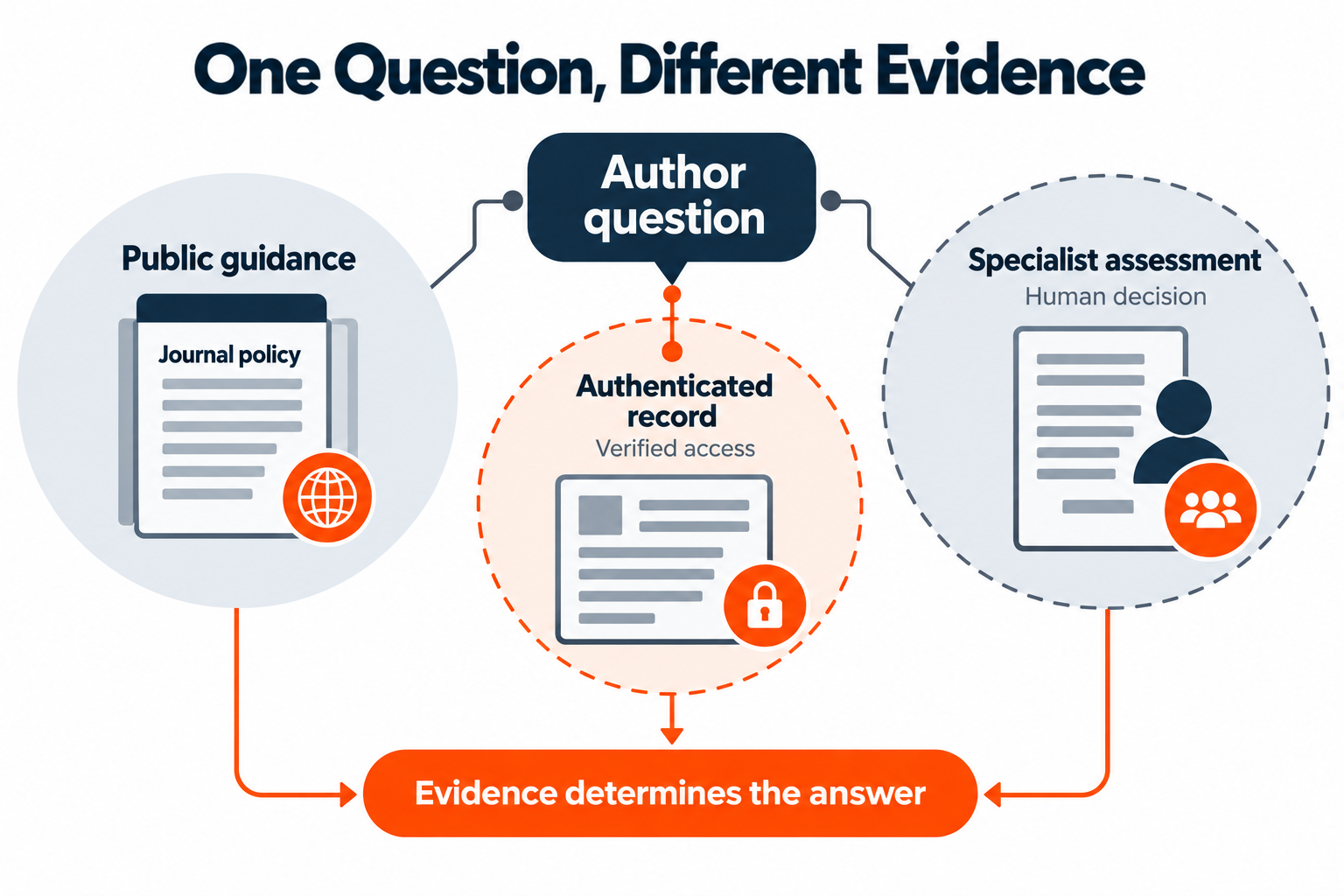
A well-prepared support case spares human specialists several tedious rounds of information gathering and manual investigation. Beyond resolving individual tickets faster, structured handoff data gives publishers clear analytical visibility into recurring system defects, integration gaps, and policy ambiguities that warrant permanent remediation.
AI Chatbots for Submission Intake: From First Query to Submission-Ready Manuscript
Guiding Authors Through Journal Selection and Submission Requirements
Conversational assistants guide researchers through journal selection and specific submission requirements, such as ethical declarations, funding disclosures, and document formatting specifications. By leveraging intelligence modules such as aiKira Scope and Language check, assistants help match manuscripts to appropriate journals based on topic alignment and scope. However, these recommendations remain strictly advisory, ensuring independent editorial oversight and complete author autonomy in final submission choices.
Automating Pre-Submission Checks and Data Collection
Chatbots streamline submission preparation by conversationally gathering structured metadata and verifying draft files before formal system entry. Because conversational data collection differs from authenticated validation, and submission platforms enforce strict integration boundaries, publishers must verify supported system permissions and security protocols before enabling automated intake workflows.
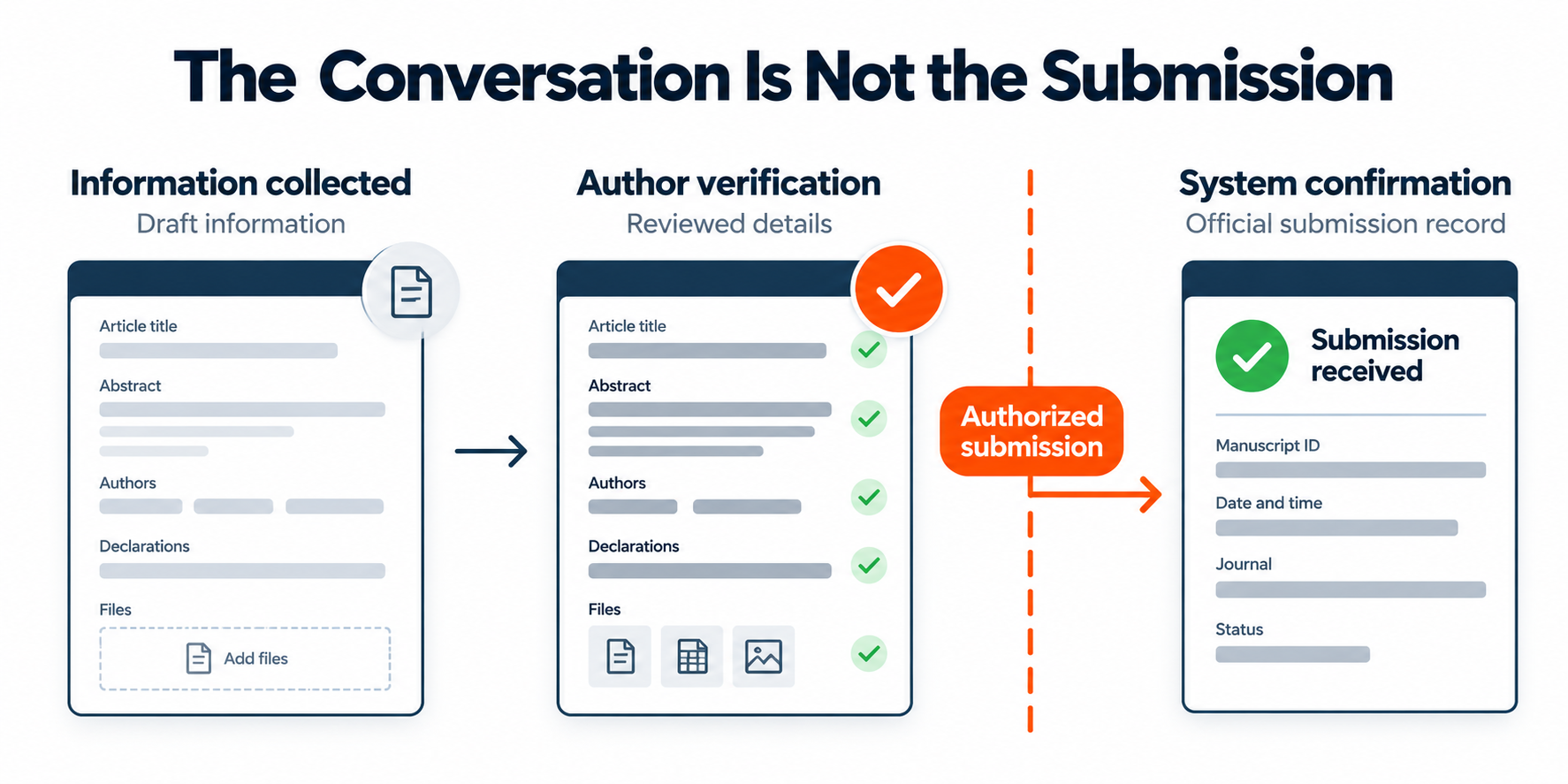
Authors must review all extracted metadata and uploaded files before initiating an authorized submission update. Successful intake requires formal receipt confirmation from the designated peer-review platform, which must be clearly communicated to the author. Publishers must reinforce that administrative completeness does not imply scientific validation, ethical clearance, or guaranteed acceptance for peer review.
Routing Submissions and Queries to the Right Editorial Workflow
Author inquiries frequently span multiple operational boundaries within a publishing organization. An unexpected file upload error may require immediate platform technical support, whereas a post-review authorship amendment demands a formal administrative procedure. Similarly, manuscript transfer requests across journal portfolios involve author consent, scope verification, and receiving-journal guidelines.
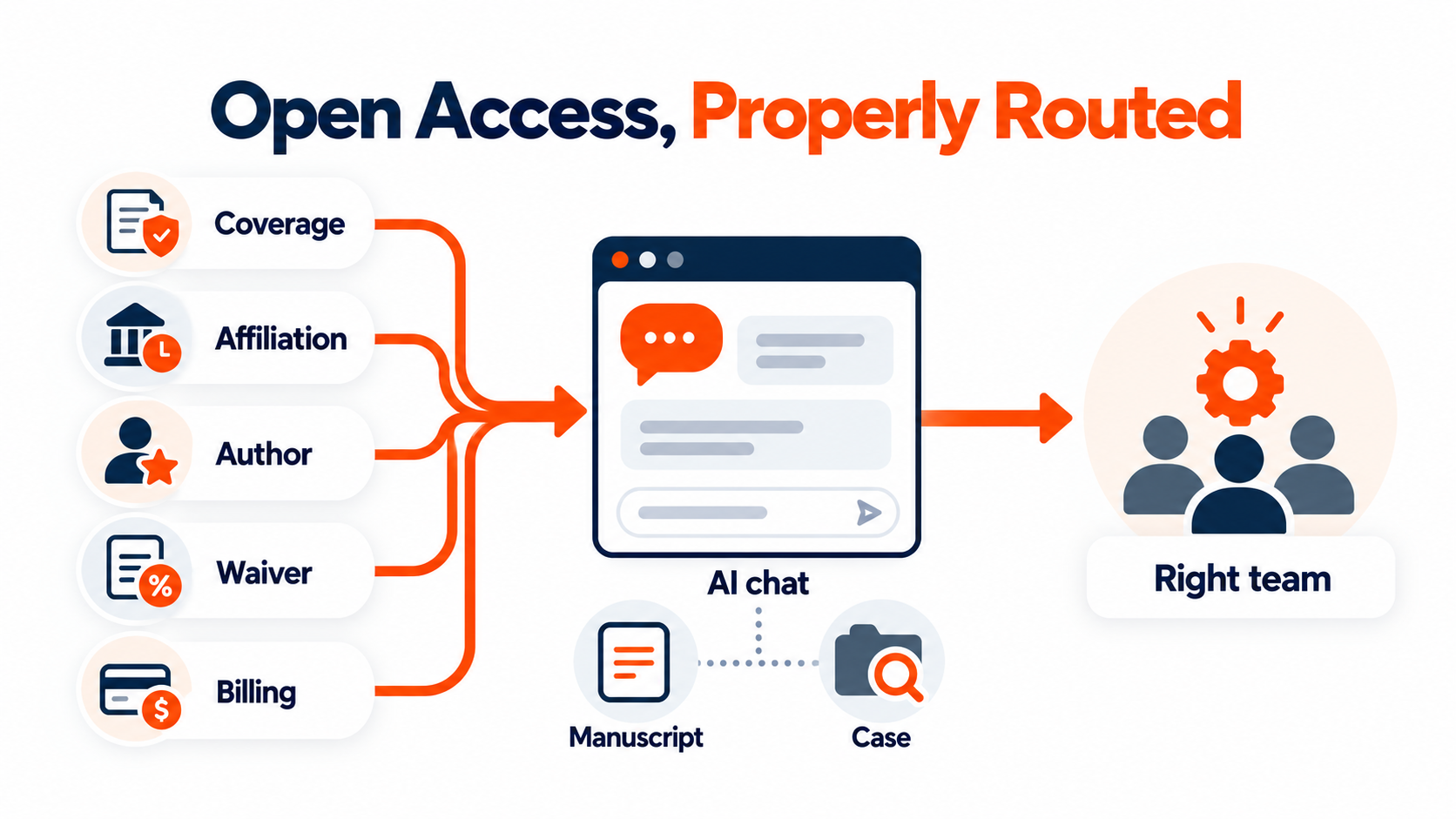
Formal manuscript transfers, withdrawals, and status modifications necessitate the explicit permissions and security protocols of the primary submission system. Identifying the precise editorial workflow and directing the request to the appropriate team constitutes a highly valuable service outcome, even when the conversational agent lacks permission to execute the transaction autonomously.
How AI Chatbots Connect Author Support With Editorial Workflows
From Conversational Support to Editorial Triage
An editorial office receiving a support message such as “My revision will not upload” must typically establish the target journal, manuscript ID, revision stage, file format, and explicit error code before technical teams can investigate. Conversational AI automates this preliminary information gathering, structuring the query into a complete triage case before routing it to specialists.
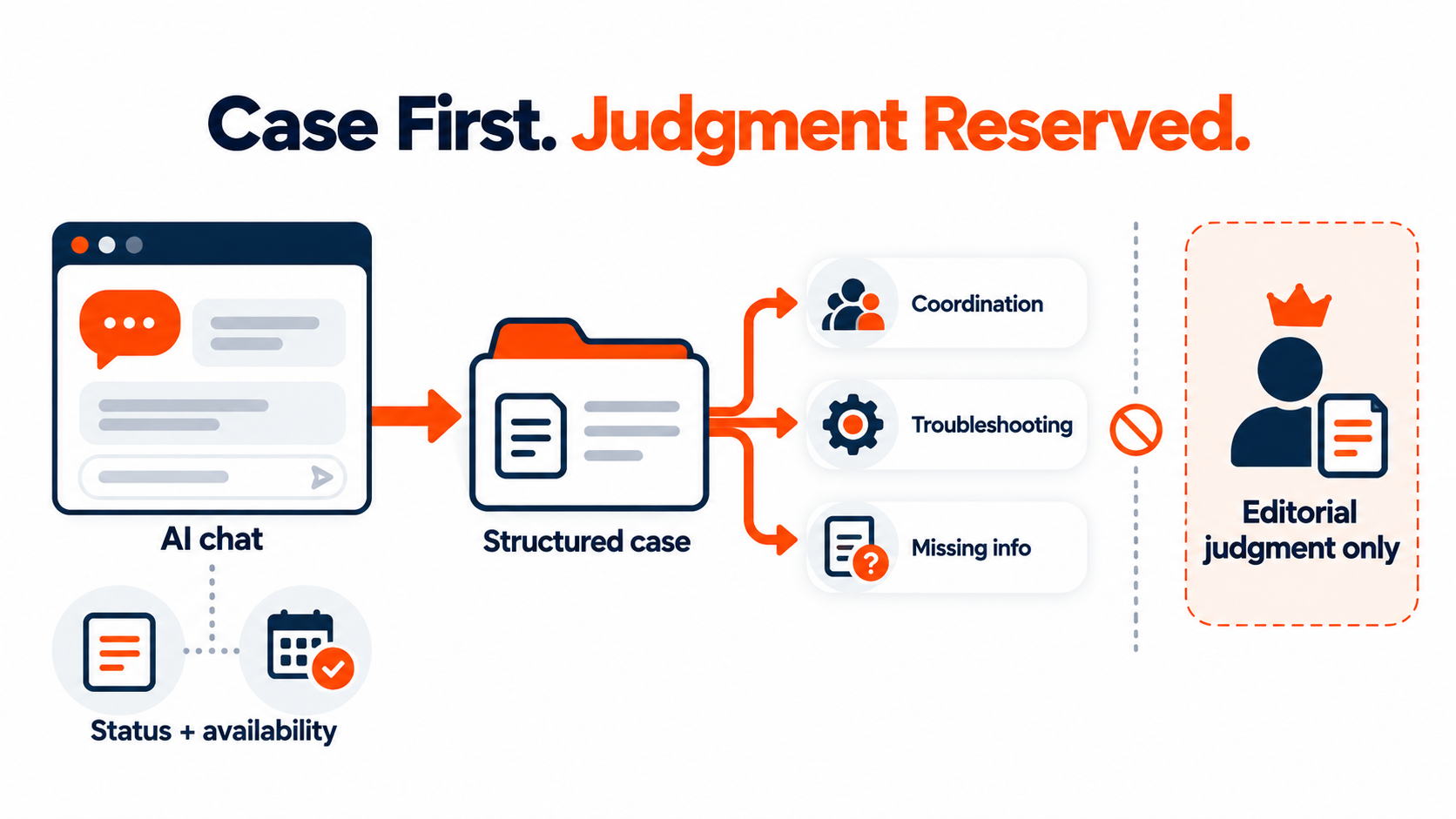
Maintaining strict operational boundaries is essential during triage; automated screening tools must gather diagnostic context without converting preliminary risk indicators into definitive allegations or prematurely disclosing confidential editorial deliberations to authors.
Integrating Author Data Across the Publishing Journey
The author journey extends across multiple platforms—including submission systems, peer review tools, production databases, and customer support helpdesks—that often operate with different data schemas and access rules.
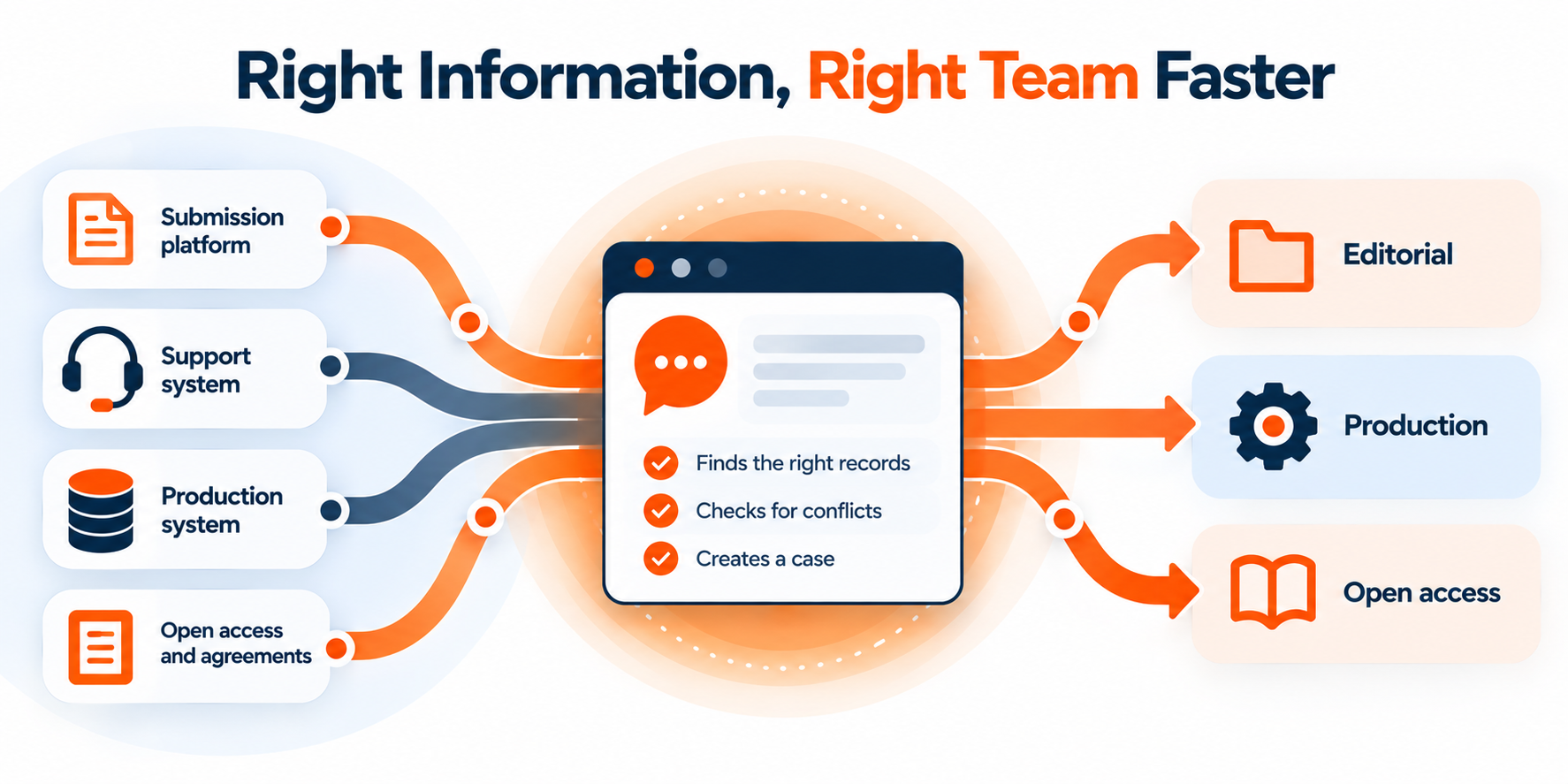
By integrating these disparate systems through Straive’s data architecture, publishers ensure that repeated author inquiries across web chat, email, and portal tickets synchronize seamlessly. This unified context prevents duplicate case creation, avoids conflicting guidance, and ensures administrative tasks are never performed twice.
Key Benefits of AI Chatbots for Publishers and Authors
AI chatbots deliver significant operational advantages by providing fast, clear guidance that reduces time spent searching through lengthy author instruction pages. Automating routine intake queries substantially lowers ticket volumes for support desks, freeing human specialists to concentrate on complex editorial exceptions. Furthermore, platforms like aiKira ensure journal-specific policies are applied consistently across extensive publishing portfolios, though overall success must ultimately be measured by true inquiry resolution and author satisfaction rather than simple deflection metrics.
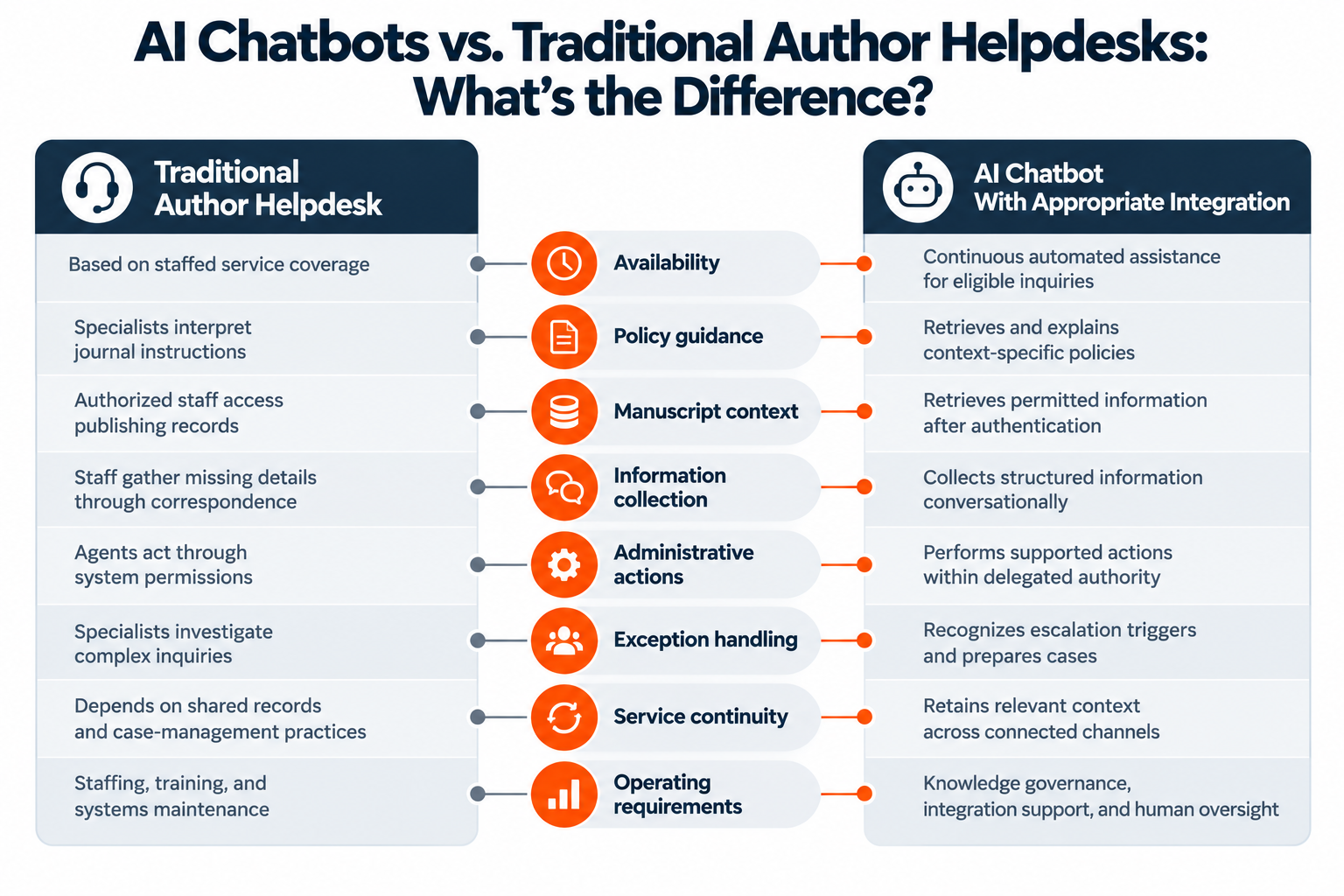
Modern publishing support helpdesks may already offer basic ticketing structure and round-the-clock coverage. AI chatbots should therefore be evaluated against existing operational benchmarks—such as first-contact resolution, data completeness, and turn-around times—rather than against an assumed manual baseline.
Building a Human-in-the-Loop AI Chatbot for Scholarly Publishing
While AI chatbots can autonomously handle procedural questions, routine data collection, and preliminary inquiry triage, essential decisions involving scientific assessment, editorial suitability, manuscript acceptance or rejection, authorship disputes, and integrity investigations strictly require accountable human judgment and structured escalation pathways.
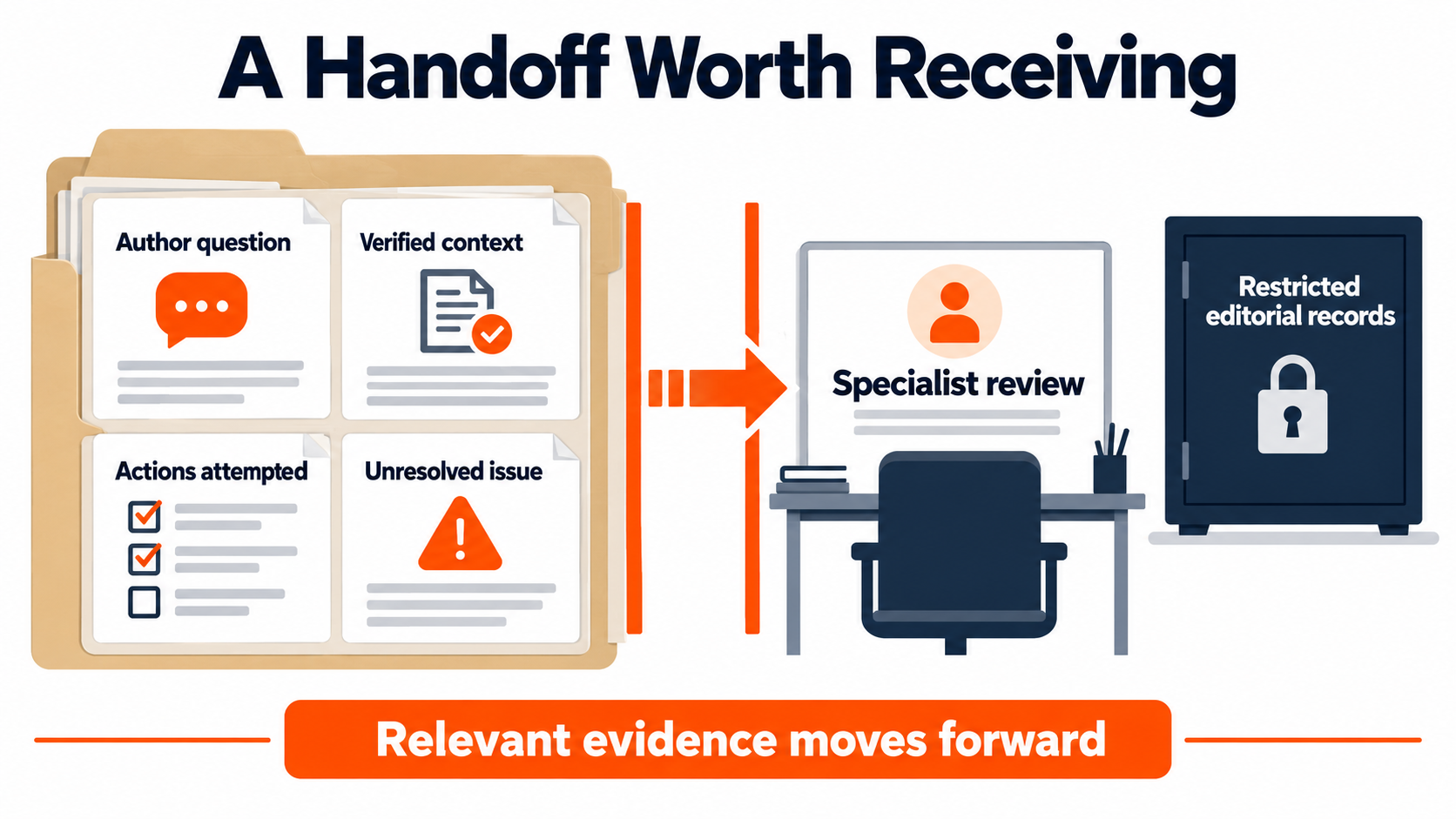
A specialist should receive sufficient verified information to begin resolving the issue without reconstructing the conversation. Where uncertainty remains, the handoff must preserve it. Confidential editorial records should remain subject to their original access restrictions.
Data Privacy, Accuracy, and Governance Considerations
Author-support systems may encounter unpublished manuscripts, personal information, confidential correspondence, and sensitive editorial records. Publishers must determine which information can be processed, where processing occurs, how long records are retained, and whether submitted data may be used for model training.
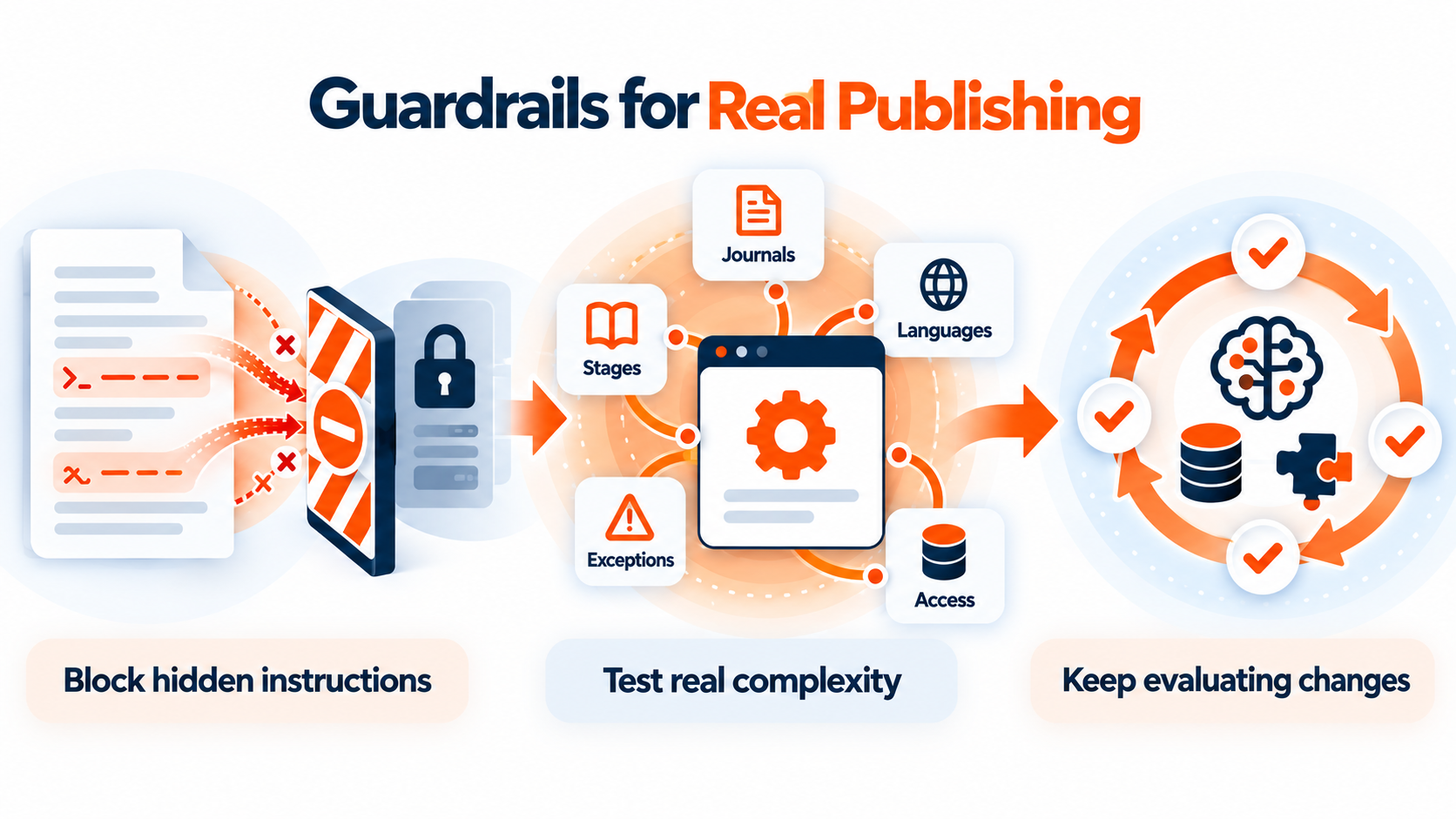
Audit records should make it possible to investigate both an incorrect answer and an unsuccessful or unauthorized system action.
Measuring the Impact of AI Chatbots on Author Support and Submission Intake
Publishers should evaluate chatbot performance across the complete support interaction, beginning with answer accuracy and policy compliance.
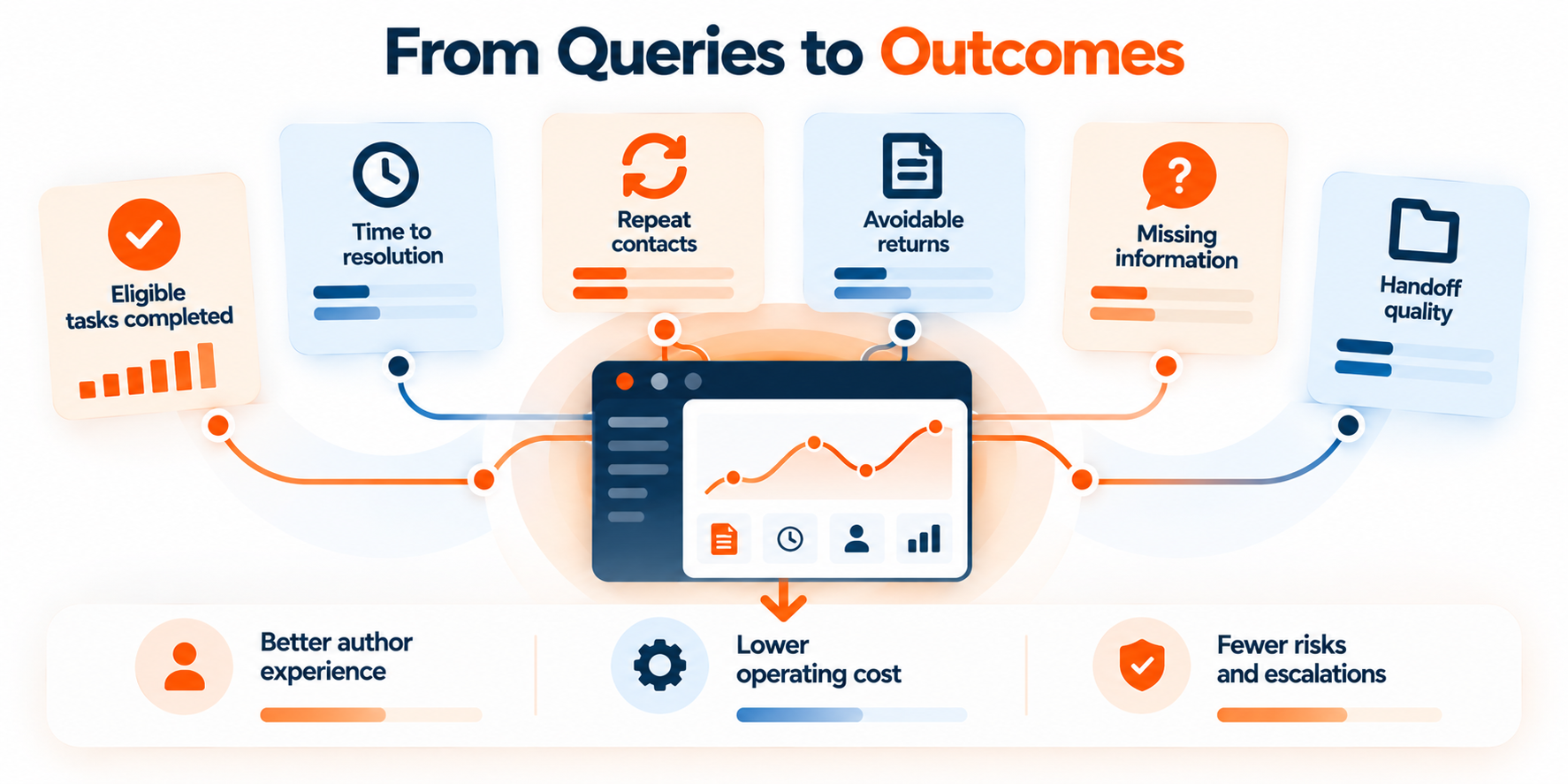
Results should be segmented by inquiry type, journal, language, and case complexity. Publishers must also account for changes in staffing, submission volume, and platform design before attributing operational improvements to conversational AI.
Conclusion: The Future of AI-Powered Author Support and Submission Intake
AI chatbots enhance the author experience by providing reliable guidance, better submission preparation, and efficient specialist handoffs that reduce administrative burdens. Publishers can start with well-defined interactions and scale up over time. Straive offers comprehensive solutions combining self-service, intelligent routing, and expert intervention to support efficient publishing operations.
Connect with Straive to explore how AI-powered author support and submission intake can be integrated into existing publishing operations.

Priya Roy is Vice President, Delivery Leadership at Straive, where she translates ambitious growth strategy into high-performing customer experience and technology operations. With deep expertise in large-scale transformation, she offers a practical leadership perspective on scaling AI, elevating service excellence, and turning operational complexity into lasting enterprise value.


