
Posted on: November 02nd 2026
Introduction: Author Support Backlogs Are an Operational Problem
Even advanced submission portals rarely offer a seamless experience for scholarly authors. Although modern intake pathways guide researchers into editorial platforms for peer review and revisions, the operational mechanics behind the scenes remain fragmented. Support teams constantly bridge separate user accounts, manual handoffs, and disjointed software platforms to keep manuscripts moving.
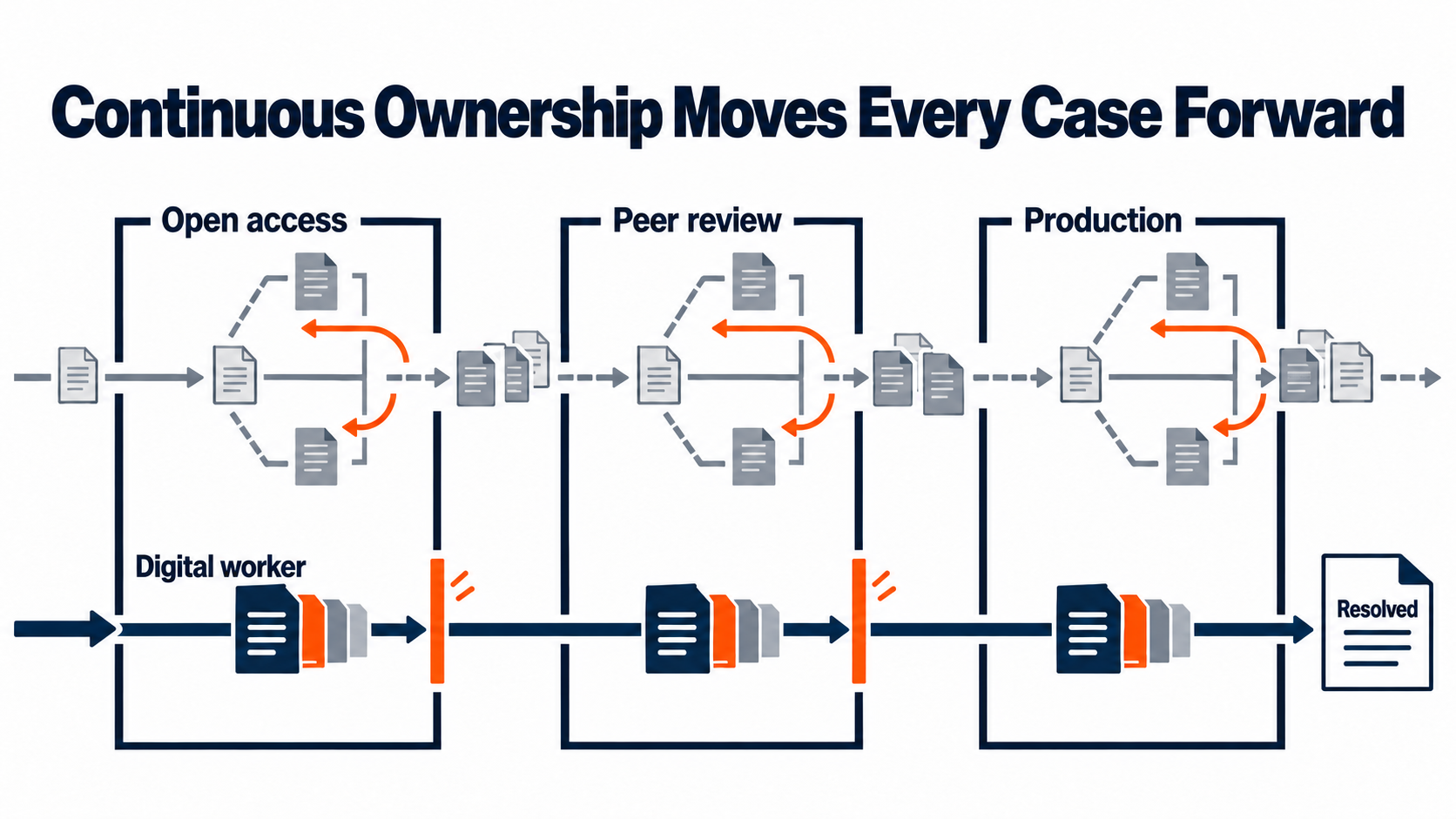
Key Takeaway: Seamless Stage Handoffs
When a manuscript transitions from open-access verification to peer review, automated history retention eliminates redundant status checks, moving cases forward without human administrative delays.
Traditional support workflows break down when cases shift across stages—from open-access verification to peer review and production. Every transition forces authors to re-explain issues and prompts staff to repeat status checks. An integrated AI digital worker connects these three phases, preserving case history and moving manuscripts toward resolution without administrative delays. Linking context across platforms removes operational friction, eliminates duplicate follow-ups, and improves the author experience.
Why Traditional Author Support Models Create Backlogs
Author-support queues pile up mainly because case ownership is split among internal departments and external teams. Submissions waiting for editor assignments, manuscripts lacking files, and open-access funding requests stall in general queues—even when the next action rests with an outside party.
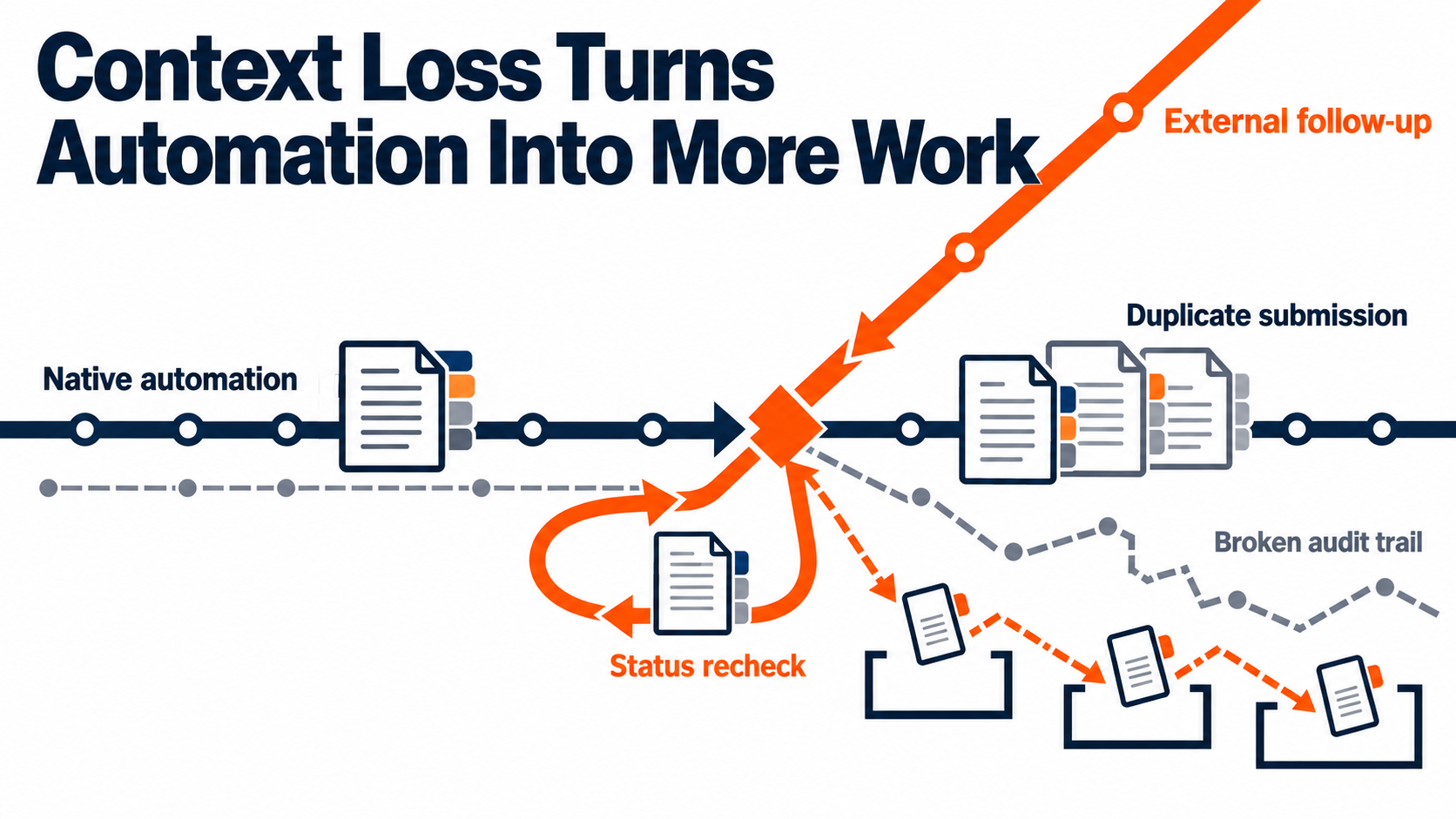
Key Takeaway: The Hidden Cost of Memoryless Automation
Without persistent context, automated status checks fail to update case history, triggering duplicate submissions and increasing external follow-ups rather than clearing queues.
When automated tools operate without shared memory, context quickly disappears. A single unaddressed status query can trigger extra follow-ups, duplicate submissions, and repeated log checks that scramble the audit trail. What starts as a simple query becomes hours of manual rework, proving that superficial automation without persistent memory inflates backlogs instead of clearing them. Without workflow context, basic automation shifts administrative burdens back to editorial teams, creating secondary bottlenecks that overwhelm staff.
A clear backlog-reduction strategy categorizes incoming query volume into distinct groups. New inquiries reflect real incoming work; unaddressed cases linger as stagnant backlogs; and reopened tickets or repetitive status checks inflate metrics without moving work forward.
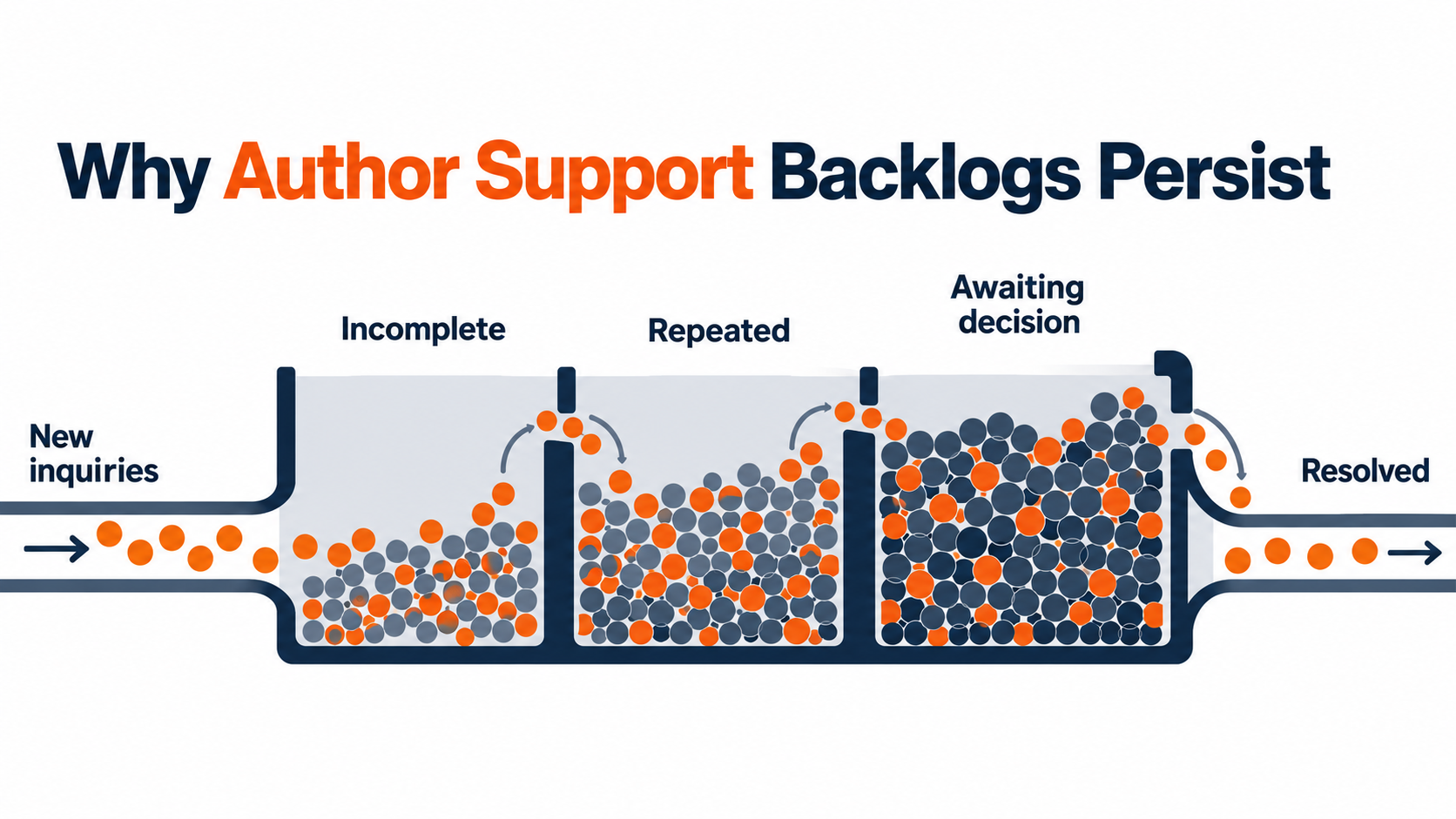
Key Takeaway: Funnel Bottlenecks
Queries stack up at intake due to missing information, compound during review via repetitive follow-ups, and freeze at decision points—requiring targeted intervention at each tier.
What AI Digital Workers Are and What They Are Not
An AI digital worker is a governed software component built to carry out end-to-end tasks using enterprise data, secure system credentials, and clear business rules.
| Sidebar: A 2-Minute Breakdown: Chatbot vs. Digital Worker | |
|---|---|
| Standard Chatbot / Script | AI Digital Worker |
| • Provides static FAQ answers or simple macro responses. | • Executes end-to-end multi-step tasks across enterprise systems. |
| • Operates without context or persistent memory between checks. | • Retains stateful context and audit trails until final resolution. |
| • Escalates unhandled queries to broad queues without background checks. | • Validates parameters, verifies profiles, and prepares evidence packages for human sign-off. |
Standard FAQ chatbots offer static answers, retrieval tools pulling help articles, traditional RPA scripts following rigid macros, and basic single-tool AI agents. In contrast, a true digital worker combines these capabilities into a stateful workflow engine, keeping context intact until resolution or formal escalation.
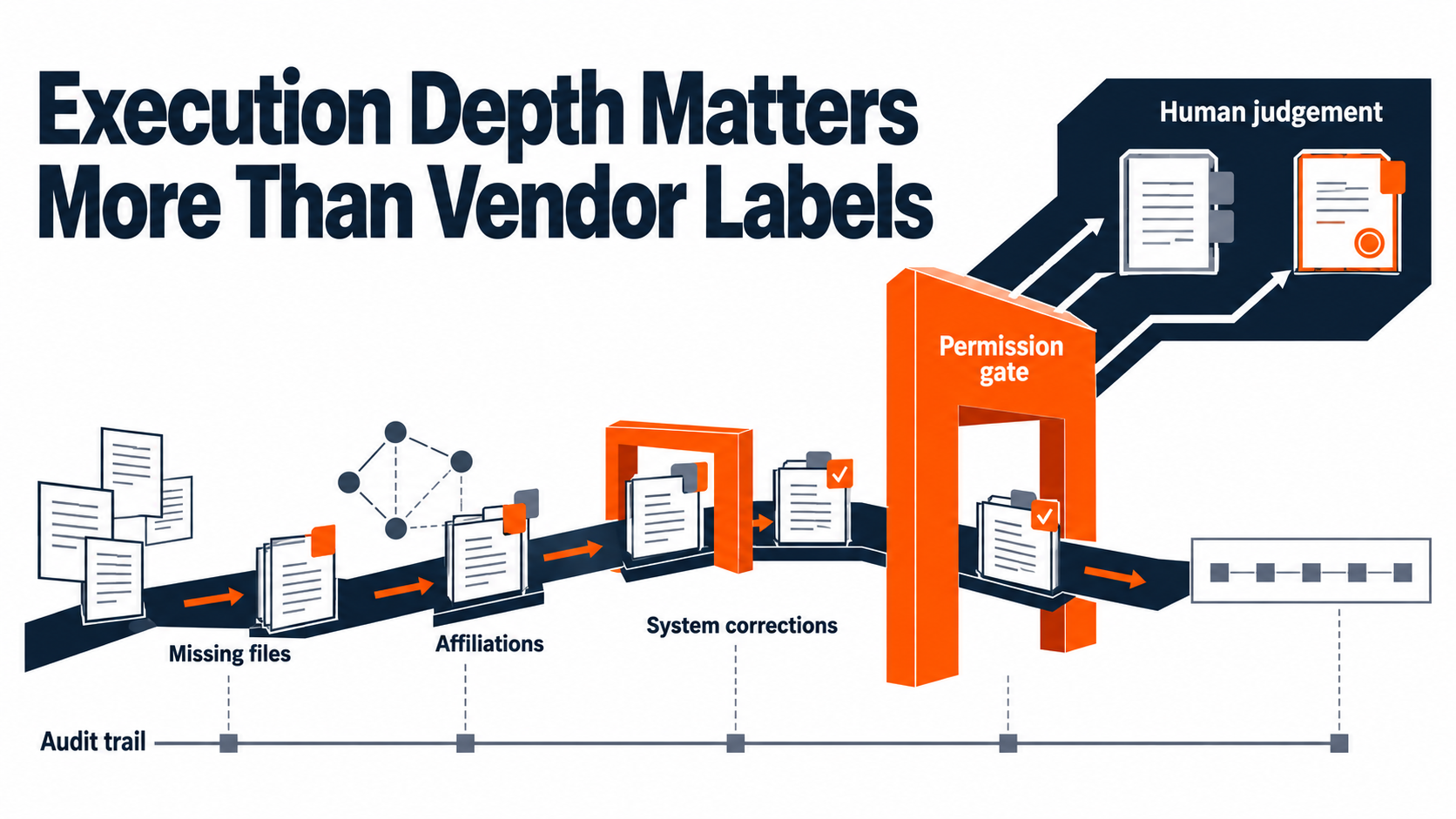
Key Takeaway: Governed Multi-Step Execution
Digital workers automatically execute missing file checks, affiliation verifications, and system corrections, stopping at predefined governance gates whenever human authorization is needed.
Using human-in-the-loop governance lets publishers set strict oversight boundaries while allowing routine administrative tasks to run automatically.
Where AI Digital Workers Reduce Author Query Backlog
Clean Intake First
Incomplete author queries consistently increase handling times. Evaluating missing details automatically upon receipt reduces first-response times for routine queries from 48 hours to under 5 minutes. Researchers often report trouble completing a revision upload but omit essential details like the journal name, manuscript ID, or error message.
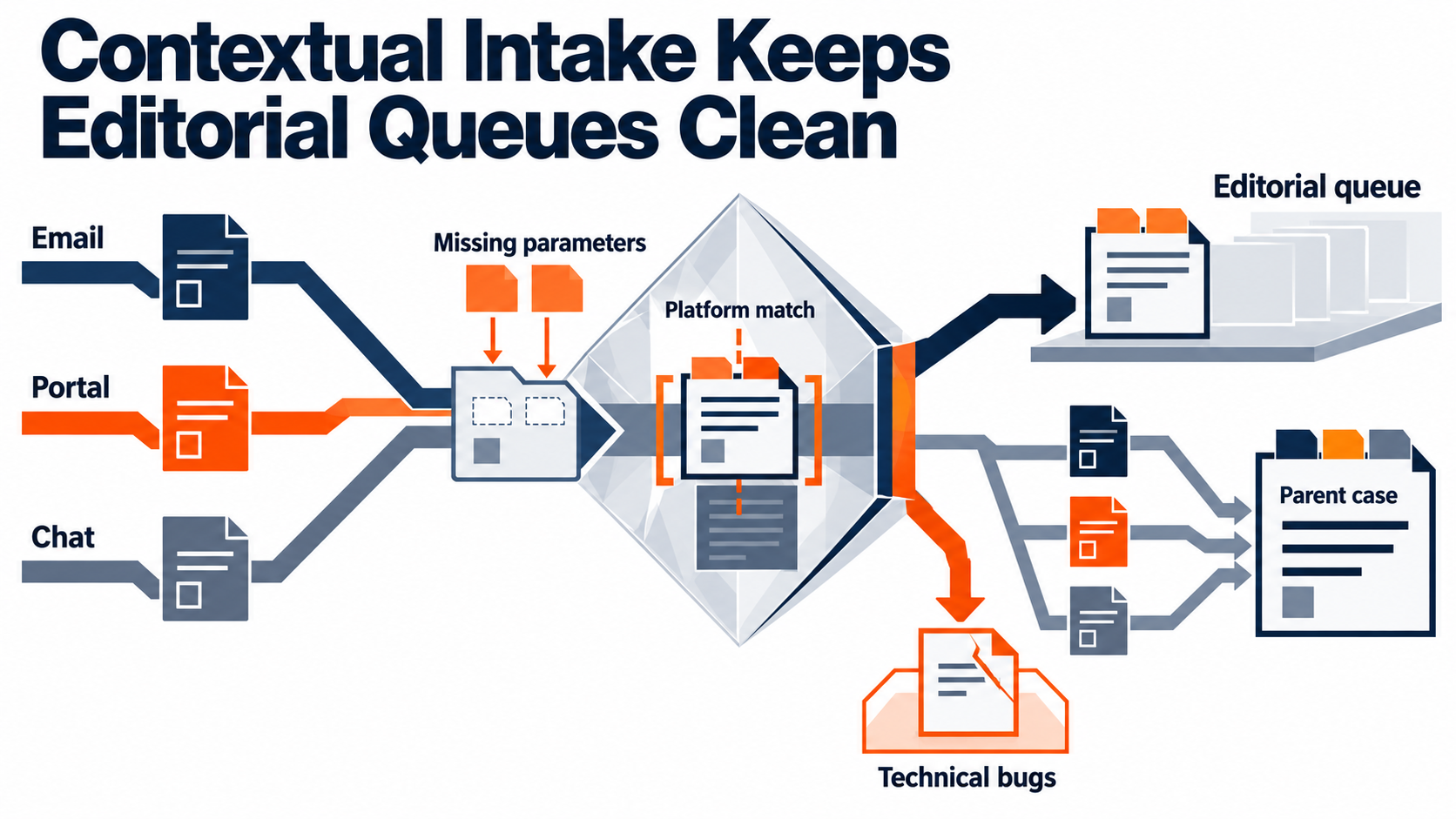
Key Takeaway: Normalization at Entry
By collecting missing parameters across email, portal, and chat channels before creation, digital workers filter technical bugs and group related tickets into single parent cases.
Scenario A: The Missing Revision File
An author emails support stating, “I can’t upload my revised figures.” Instead of a human agent spending 24 hours back-and-forth asking for details, the digital worker immediately queries the user’s active session, detects a format incompatibility (.BMP instead of .TIFF), notifies the author with conversion instructions, and updates the ticket context automatically.
Raw inquiries from email, web portals, and live chat rarely include all the information needed to act. Contextual intake acts as a normalization filter: gathering missing parameters, matching system records, isolating technical bugs, and linking related inquiries to a parent case. This intake pipeline keeps editorial queues organized and ready for action. Resolving missing details upfront eliminates repetitive back-and-forth messaging so teams receive complete tickets.
Effective ticket prioritization relies on clear, journal-specific Service Level Agreements (SLAs). For instance, a proof revision nearing a press deadline needs immediate escalation, while a peer-review status check follows normal queue timing. An author’s self-reported urgency should not override standard routing logic.
Automate Status Tracking
Manuscript platforms operate with strict access permissions and defined stage gates. Querying backend core databases directly deflects 40–60% of tier-1 manuscript status inquiries without human intervention.
Digital workers display clear status summaries, highlight missing author actions, and walk users through allowed steps, ensuring status updates match primary publishing records.
Aligning with core systems is vital when authors assume a manuscript was submitted but the platform lacks a matching record. Digital workers check integration logs directly instead of relying on transient portal data.
Digital workers also uphold peer-review confidentiality. Showing a status like With Editor confirms workflow progress without disclosing editorial comments or reviewer identities.
Streamline Open Access Billing
Managing open-access queries highlights the clear weaknesses of traditional, rule-based automation. Parallel validation of author profiles, institutional affiliations, and funding criteria cuts average handling time (AHT) on complex APC verification by 65%.
Institutional funding rules depend on changing variables: corresponding author roles, institutional affiliations during acceptance, journal tiers, article types, transformative agreement details, and active fund caps. Any shift in these details can change funding availability mid-process.
Fund caps create ongoing operational challenges. In recent years, several major open-access agreements ran out of funds months early while hybrid publishing options remained open. Regional consortium agreements also reach annual caps ahead of schedule.
When authors ask why institutional coverage was denied, tools relying on static policy files often give outdated answers.
Scenario B: Transformative Agreement Cap Reached
When an institutional agreement cap is reached mid-year, an author submits a query asking why APC coverage was refused. The digital worker checks live consortium fund ledger data, identifies the exact exhaustion timestamp, generates an itemized summary of alternative funding pathways, and routes an escalation brief directly to the institutional relations lead for fast review.
Digital workers check acceptance dates, author profiles, article types, and agreement balances at the same time. When cap exceptions occur, they flag the issue and route the ticket to institutional relations teams.
Fee changes, waivers, payment reconciliations, and eligibility appeals require careful oversight. Reliable open-access support depends on live system connections and accurate exception handling.
Accelerate Post-Acceptance Tasks
Production workflows rely on strict sequential steps. Proof corrections wait for file validation, copyright forms sit unsigned, or articles hold provisional DOIs before final release.
Pending DOIs illustrate this complexity. A newly assigned DOI links to a temporary landing page and updates to the final Version of Record only after new metadata is submitted.
Digital workers verify production status, identify missing tasks, and coordinate vendor assignments, maintaining full case context as tickets move among vendors, rights teams, and internal staff.
The goal is to cut manual status updates while making sure official releases receive proper authorization.
AI Digital Worker Author-Support Workflow
Consider an author disputing an open-access Article Processing Charge (APC) while affiliated with an institution under an active transformative agreement.
The digital worker retrieves the manuscript record, checks author credentials, reviews contract terms, verifies recorded affiliations, and determines if a fee adjustment is allowed.
If affiliation details are missing, the worker prompts the author. If an institutional cap limit is reached, it prepares a complete summary—including contract rules, submission dates, and logs—for a human specialist to review.
While awaiting specialist sign-off, the ticket keeps its full history. The digital worker picks up the workflow automatically once a decision is entered, preventing repeat follow-up messages from the author.
Case resolution means checking that system updates are complete and the author’s inquiry is answered. Every system action or pending sign-off stays logged in audit records.
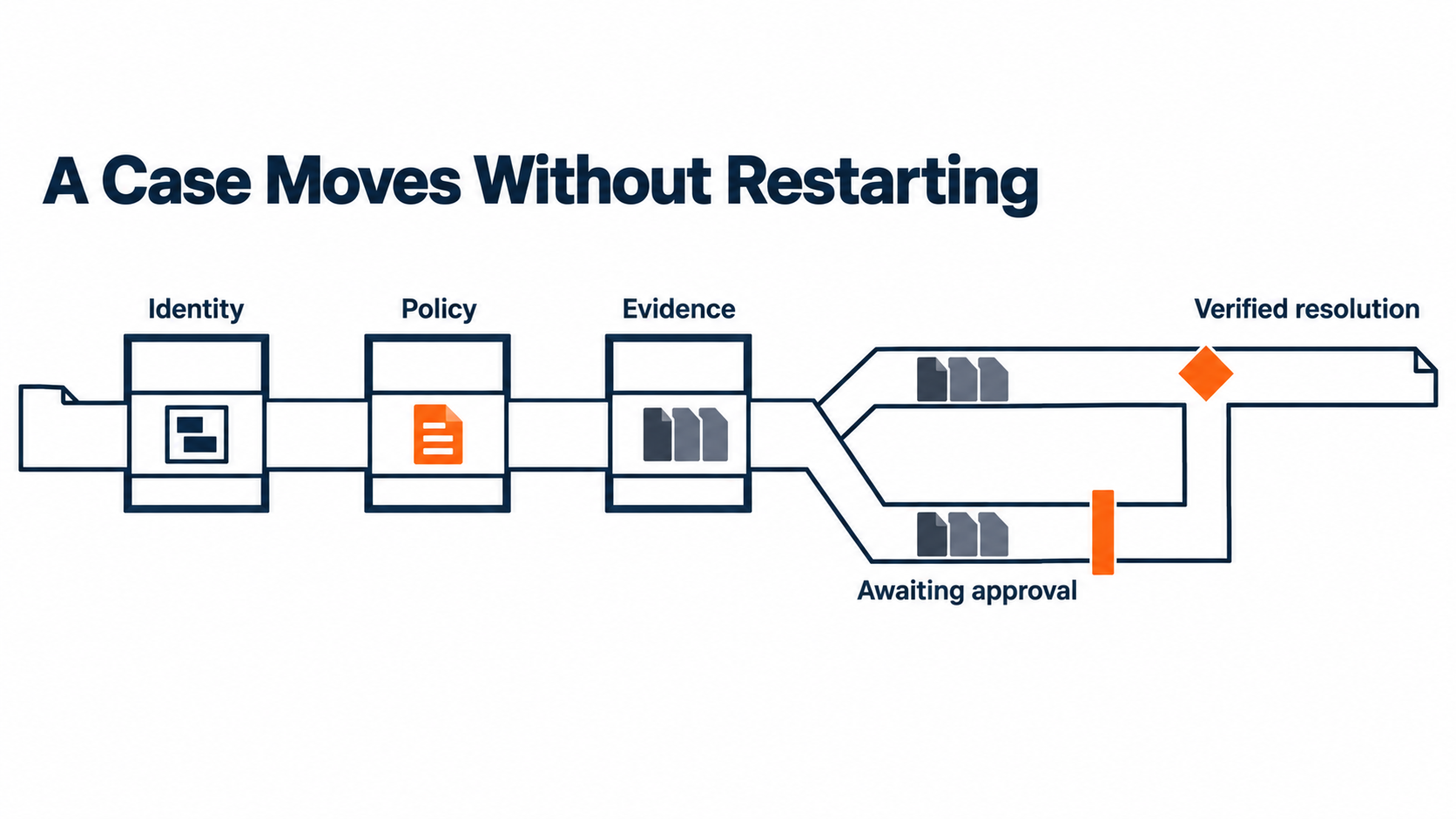
Key Takeaway: Unbroken Workflow Progression
Case context moves sequentially through Identity, Policy, and Evidence stages without losing history, holding position seamlessly if human approval is required before final resolution.
Cost Savings: Where the Economics Come From
Author-support costs depend on three main factors: touchpoints per case, required staff expertise, and the overall time needed to resolve an issue.
Resolving an inquiry in one step costs far less than managing a ticket through multiple status checks and misrouted escalations. Digital workers lower resolution costs by organizing intake, running background research, completing approved tasks, and preparing escalation files for specialists.
Financial analysis should look at the full support process. A chatbot that directs an author to a self-help article might boost basic deflection metrics while increasing work for escalation teams if the guidance is incomplete or inaccurate.
Publishers need to distinguish between reducing manual effort, direct savings, and cost avoidance. Reducing effort creates operational capacity, allowing existing teams to handle higher submission numbers. Direct savings lower operating expenses, while cost avoidance manages future hiring needs.
Using digital workers carries baseline operational costs, including system integrations, API usage, quality control, security checks, maintenance, and monitoring exception cases.
Net operational value = Reduced service costs + Gained capacity benefits − Implementation and running costs.
A sound business case compares similar query types, tracks reopened ticket rates, and measures the complexity of tasks handled by specialists.
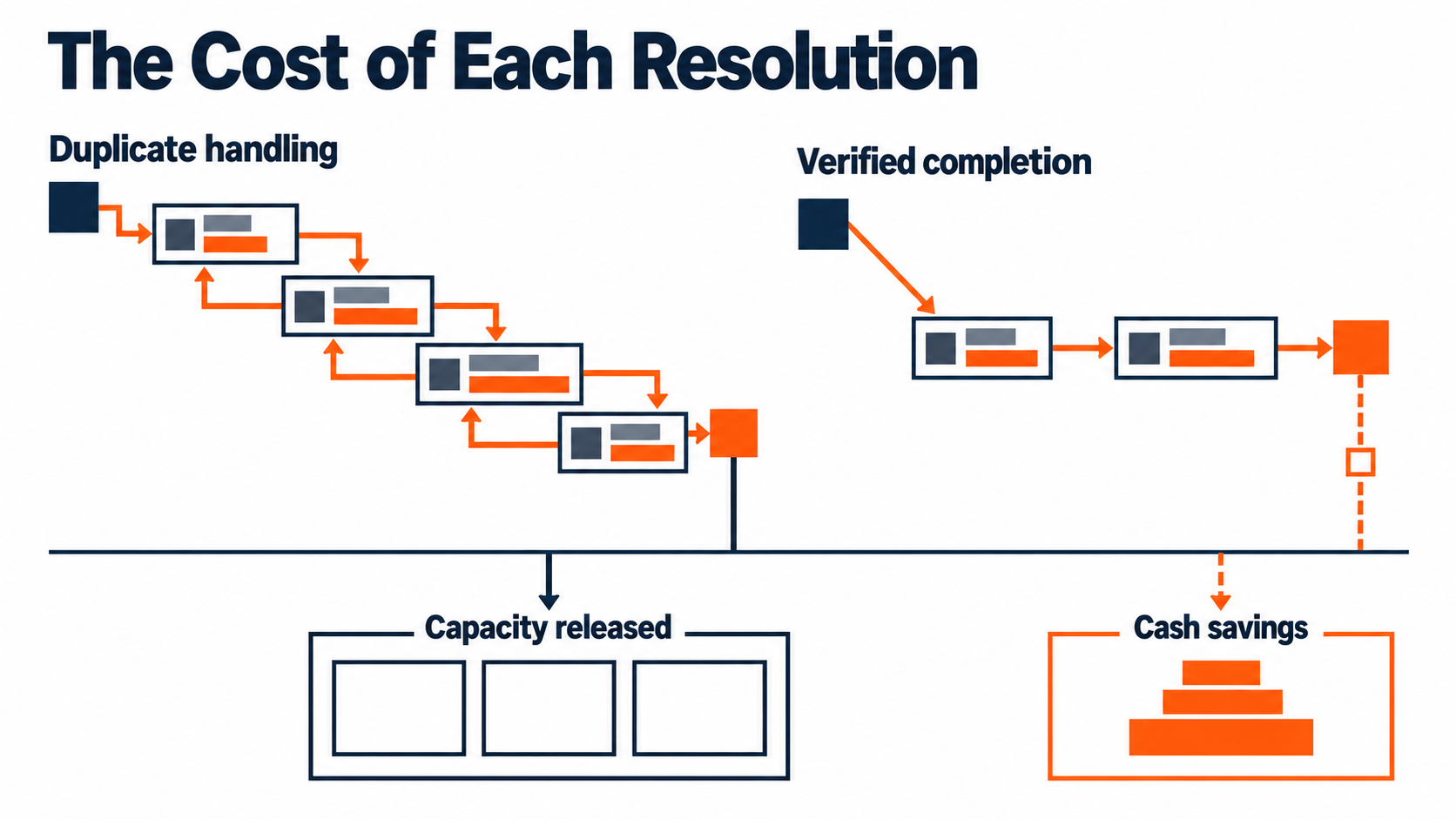
Key Takeaway: Shift to Single-Touch Efficiency
Replacing multi-touch manual handoffs with single-touch verified completion converts redundant agent handling time into direct cash savings and released support capacity.
Analyzing support costs shows a clear contrast between multi-touch handling expenses and single-touch resolution efficiency. Hand-offs and status queries consume valuable specialist hours. Moving inquiries toward single-touch resolutions turns wasted time into usable capacity and direct cost savings. Adopting single-touch models helps scholarly publishers scale support capacity while keeping costs under control.
Operational Efficiency Requires Human-in-the-Loop Design
Author-support tasks should be assigned based on risk levels and required authority.
Collecting metadata and providing routine status updates can run automatically. In contrast, fee adjustments, authorship disputes, reviewer disclosures, and formal editorial choices need strict human review.
Multi-agent setups work well when separate modules handle intent classification, policy searches, system verification, and execution checks. This modular approach improves accuracy and creates clear audit logs.
Validation rules must test real publishing edge cases: conflicting journal guidelines, outdated affiliations, expired credentials, corrupted attachments, and prompt injection attempts in manuscript files.
Digital workers must keep complete audit trails, report errors accurately, and transfer complex cases smoothly to specialists. These capabilities determine whether an automated platform provides real operational value.
Building a Trusted Knowledge and Data Foundation
Enterprise rollout requires a clear data layout covering guidelines, manuscript IDs, user accounts, agreement terms, support tickets, and production systems.
While public help pages outline general rules, internal finance systems determine final funding approvals. Digital workers must check source precedence and recognize when policy pages are outdated.
Author verification requires equal care. An ORCID iD helps distinguish author names, but it does not authenticate account ownership or grant access to private manuscript files.
Publishers need data hierarchy rules, sync schedules, retention policies, secure processing environments, and data privacy clauses for LLM providers. Uploaded documents must serve only as reference context—never as commands that alter system settings.
Strong data controls protect operating margins, as outdated information and unchecked automation lead to costly rework.
Measuring Backlog Reduction and Service Performance
Tracking performance ensures digital workers resolve core bottlenecks rather than moving unresolved tickets into secondary queues.
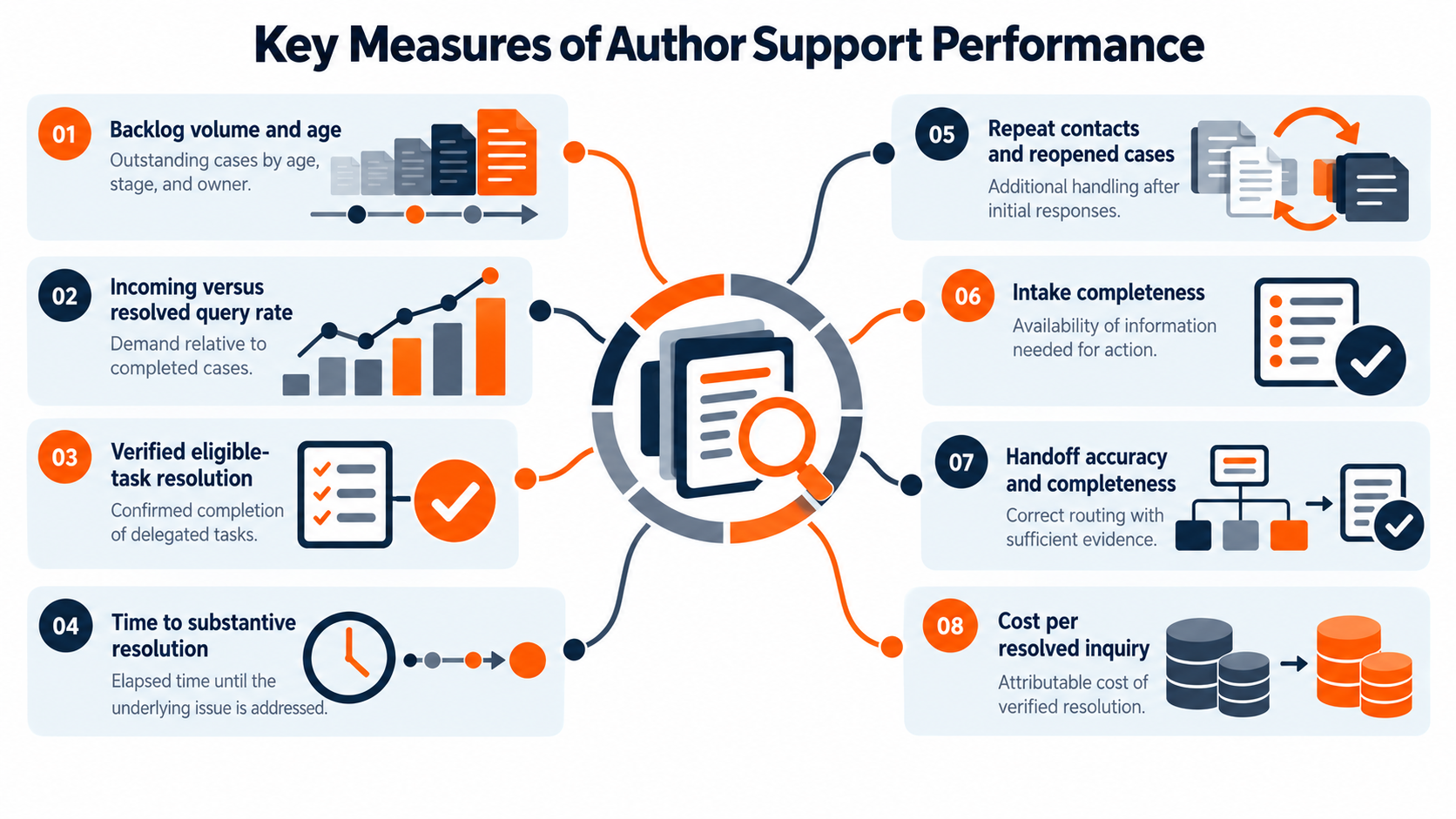
Key Takeaway: Core Metrics Framework
Tracking eight interconnected metrics—from backlog volume/age to handoff accuracy and unit cost—ensures balanced optimization across efficiency, speed, and quality.
Evaluating author support requires balanced metrics covering efficiency, accuracy, and costs. Eight core pillars—such as backlog volume and age, resolution speed, intake completeness, handoff accuracy, and unit cost per query—provide a clear benchmark for measuring progress. Multi-dimensional metrics help publishers find bottlenecks, verify ROI, and optimize operations.
Implementation Roadmap: From Pilot to Scaled Author Support
Target Quick Wins
Review ticket logs to locate high-volume administrative tasks, repeat contacts, unnecessary escalations, and delays caused by missing intake data.
Focus on tasks with clear rules, structured data sources, steady volume, and measurable success criteria. Routine submission questions and status checks are ideal starting points before extending automation into editorial processes.
Set Strict Operational Guardrails
Set clear operational limits, system integrations, login standards, access tiers, and escalation paths for the digital worker.
Test multi-journal rules, workflow state shifts, multi-language handling, policy exceptions, API delays, and invalid inputs. Verify automated actions against the primary publishing system and include rollback options.
Scale on Proven ROI
Expand automation into new query areas as initial task categories show high resolution rates, low exception counts, and clear ROI.
Scaling requires ongoing system management, updated policy files, continuous team training, and regular queue checks. Digital workers should function as core parts of the publisher’s operational structure under active governance.
Conclusion: Use AI Digital Workers to Expand Author Support Capacity
AI digital workers help publishers scale support capacity by taking on routine administrative work, preserving task history across platforms, and freeing specialists to handle complex queries.
Successful adoption pairs publishing domain knowledge with secure integrations, strict access controls, and clear performance tracking.
Modern author-support setups combine digital workers for intake sorting, intelligent routing, expert oversight, and assisted specialist workflows—building a reliable foundation for scalable operations.
Learn how publishers are improving author-support resolution times, team capacity, and overall costs with AI-enabled workflow tools.

SVP, Advanced Digital Solutions


