
Posted on: September 15th 2026
Introduction: Blockchain and Smart Contracts Are Not a Royalty-Operations Strategy
Long before a single royalty dollar moves, back-office operations must untangle complex governing agreements, trace beneficiary updates, verify statement balances, manage holds, and resolve edge cases. Execution is reliable only when these core pillars align seamlessly.
Web3 hype focuses almost entirely on payment delivery. Yet while distributed ledgers provide tamper-resistant record-keeping and smart contracts execute deterministic code, neither can validate an underlying agreement, authenticate a payee’s identity, or fix corrupt accounting data. Automating the final mile yields little value when the upstream data is flawed.
Why Royalty Payouts Fail Long Before Settlement
A transaction can be code-perfect yet operationally reckless to execute. Pending beneficiary updates demand rigorous identity verification, while statement balances require thorough auditing against recoupment schedules, return reserves, tax withholdings, and contractual minimums. For example, in trade book publishing, an author’s statement may show positive net sales, but earned royalties will correctly remain withheld until an unrecouped advance or return reserve threshold is satisfied.
These breakdowns occur well before the payment trigger stage. Accelerating settlement speed does nothing to liberate files trapped in manual reconciliation or stalled awaiting sign-off.
What Blockchain Can Actually Do for Royalty Payments
Distributed ledgers excel at multi-party orchestration, establishing a shared audit trail that helps minimize database silos and powers automated payouts.
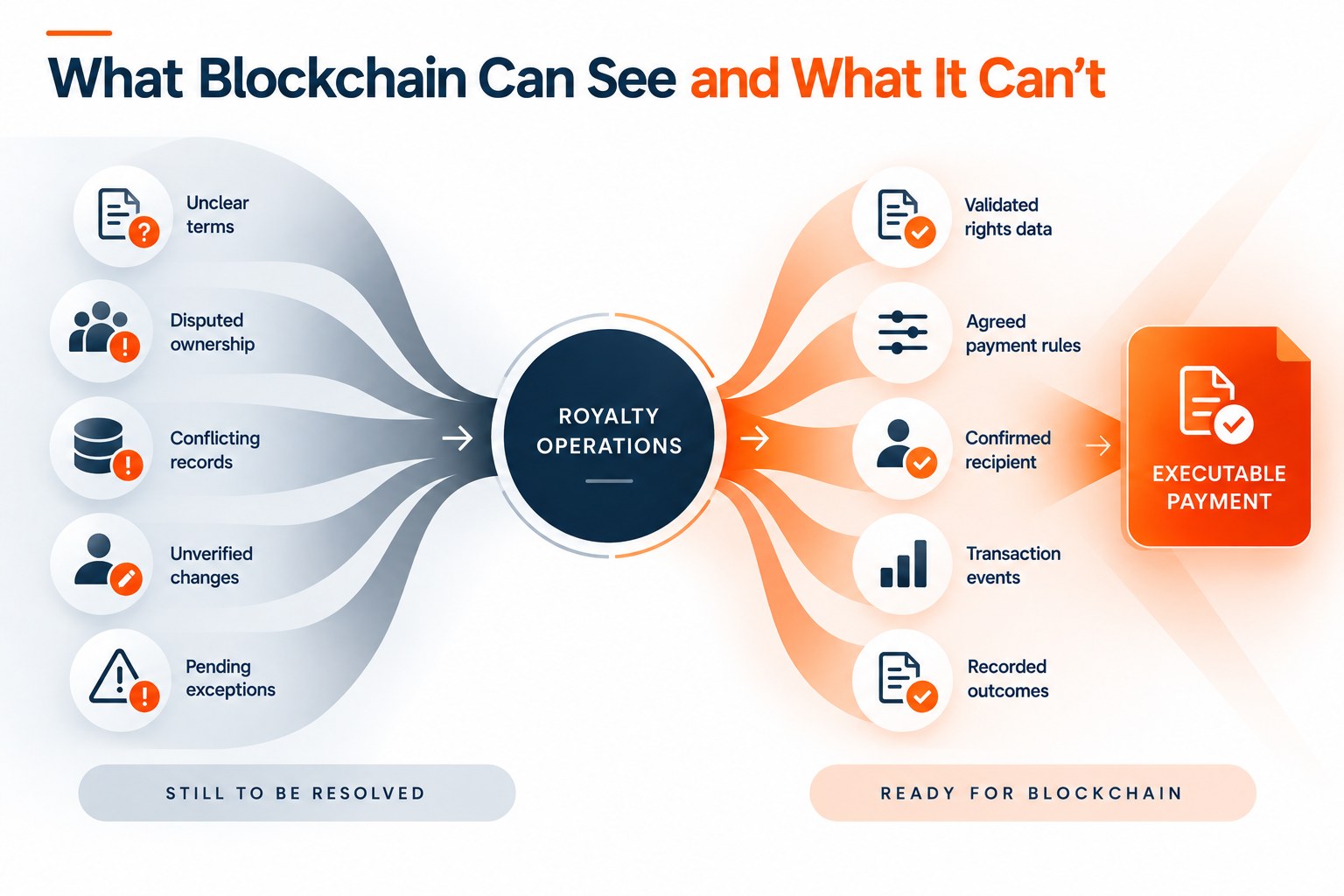
Yet fundamental upstream limitations persist. An immutable ledger cannot untangle conflicting ownership claims or repair corrupted payee records—it simply codifies flawed data permanently.
Smart Contracts Automate Rules—Not Contract Interpretation
Smart contracts seamlessly execute tiered payout rates, revenue thresholds, multi-party splits, territorial constraints, and recoupment triggers—provided the underlying logic is sound. For instance, a smart contract can instantly disburse a contractually fixed 50/50 publishing split between co-writers once revenue hits a target; however, if one writer later claims an unrecorded oral amendment, human intervention must resolve the dispute before code can safely run.
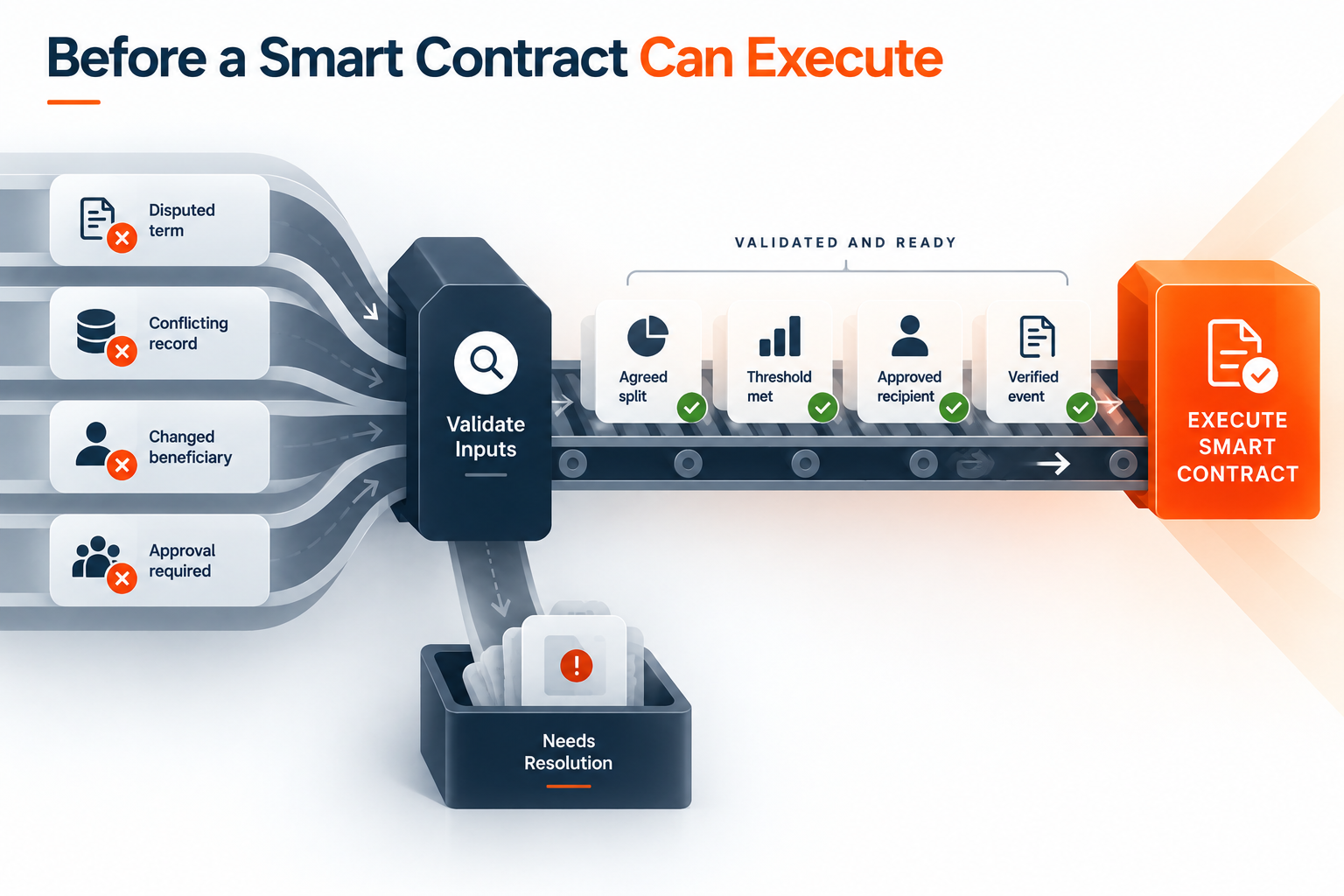
What they cannot navigate is real-world ambiguity: unrecorded side letters, conflicting data feeds, or unmapped edge cases. Smart contracts enforce rules relentlessly, but they cannot interpret intent or reconcile nuance when disputes arise.
The Operational Controls That Elevate Royalty Payouts
1. Contract and statement alignment
Contracts and statement data must maintain absolute parity. Operational excellence demands continuous verification of active terms and rigorous confirmation that reported balances reflect true contractual rights.
2. Payee and master-data integrity
Master data relies on robust verification protocols, effective-date tracking, and comprehensive audit trails. Flawless mathematical calculations mean nothing if funds route to invalid recipient profiles.
3. Comprehensive royalty reconciliation
True reconciliation goes far beyond matching spreadsheet figures. It requires isolating root causes—pinpointing whether variances stem from return reserves, unrecouped balances, reporting lags, or systemic errors. A discrepancy between reported channel sales and payee distributions does not automatically signify an accounting error; it frequently reflects timing lags or contractually authorized reserve withholdings.
4. Structured claims and inquiry management
Operations must instantly distinguish routine statement queries from formal contractual disputes. Investigative workflows need contextual history to eliminate duplicate effort.
5. Exception management and escalation
Escalation tags fail without seamless handoffs. Reviewers require complete visibility into prior audits, open bottlenecks, and targeted actions to prevent files from cycling endlessly through queues.
6. Audit-ready documentation
Every master-data override, supporting record, sign-off, adjustment, and hold requires an airtight audit trail. As processing velocity accelerates, uncompromising auditability becomes essential.
7. Transparent stakeholder communication
Vague status updates regarding missing paperwork, minimum thresholds, or payment rejections create friction. Granular status tracking reduces inquiry volume and establishes clear expectations.
The Role of AI in Modern Royalty Operations
Royalty workflows depend heavily on data ingestion, statement cross-referencing, case history retrieval, and exception reporting. Artificial intelligence provides the ideal engine to streamline these labor-intensive processes.
By deploying AI across contract retrieval, inquiry classification, history summarization, and automated reconciliation, operational teams can resolve complex edge cases with unprecedented speed.
Where Blockchain and Smart Contracts Provide True Value
Blockchain delivers significant value when autonomous organizations require a common repository for rights metadata. However, these architectures must also accommodate post-settlement adjustments, granular permissions, and strict data privacy.
Comprehensive rights metadata enables automated execution by reducing manual verification at payout. Shared ledgers add value primarily when solving complex multi-party coordination challenges.
A Roadmap to Modernizing Royalty Payouts
Phase 1: Diagnose the process, not just the technology
Audit delayed and escalated files across statements, payee master data, contracts, and interaction histories to pinpoint root causes within operational handoffs.
Phase 2: Strengthen foundational controls
Establish authoritative data sources, validation rules, exception categories, and clear sign-off chains to eliminate interdepartmental friction.
Phase 3: Automate, reconcile, and scale
Deploy targeted automation to document ingestion, validation, matching, and routing wherever rules and inputs are standardized.
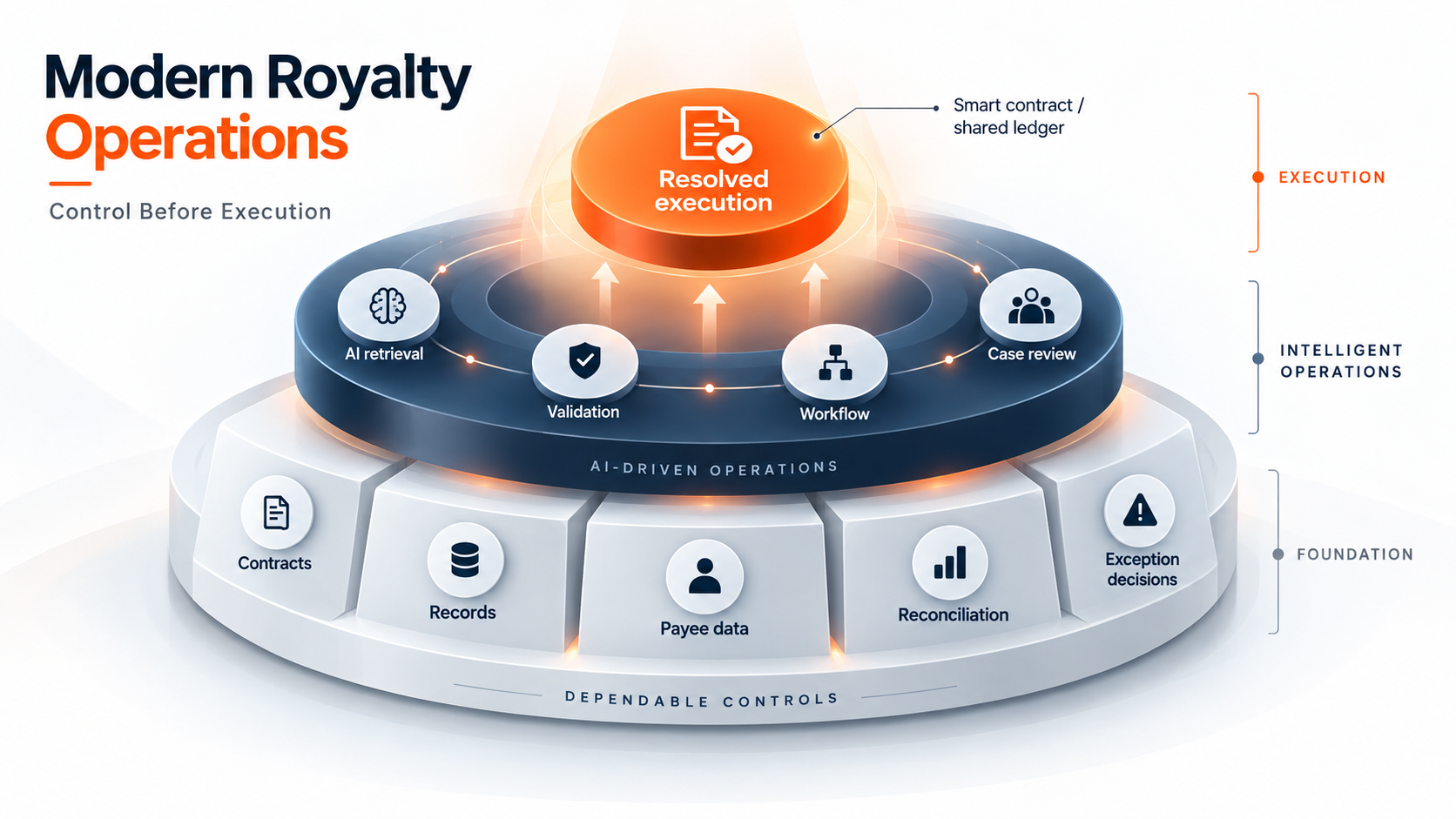
Deploy smart contracts or distributed ledgers selectively where they directly enhance settlement speed and transparency.
Conclusion: Fix the Operating Model Before Automating the Payout
Automated payouts demand an operating model that seamlessly handles contractual terms, payee identities, balance mechanics, and exception governance. Once core controls are established, blockchain and smart contracts can elevate execution and transparency without amplifying operational flaws.
Straive helps publishers and rights organizations establish dependable royalty operations. From handling complex artist inquiries and reviewing governing agreements to executing rigorous multi-system reconciliations and managing exceptions, Straive delivers SLA-governed operational support that ensures accuracy and audit-readiness across every payout cycle.

SVP, Advanced Digital Solutions


