
Posted on: December 15th 2025
See how AI and UX design are making transport systems faster, safer, and more reliable than ever before.
Deliveries must navigate busy cities, unpredictable road conditions, last-minute order changes, and rising demands for transparency, all while maintaining speed and efficiency to stay competitive. This is why modern logistics is turning to AI-powered routing and simple, human-friendly UX design. When these two come together, the entire logistics journey becomes smoother, safer, and faster, almost as if the system is anticipating challenges and guiding the team through them with ease.
The Complex Reality of Modern Logistics
Today’s logistics teams face an impossible equation: deliver faster across longer distances, navigate unpredictable road conditions and heavy traffic, monitor vehicle health in real-time, and meet rising customer expectations, all while keeping costs down and maintaining safety standards.
Key Challenges are:
- Road Traffic: Congestion changes by the minute, turning efficient routes into costly delays
- Road Conditions: Weather, construction, and accidents create unpredictable obstacles
- Vehicle Health: Breakdowns can halt operations, but issues go unnoticed until too late
- Long Distance: Extended routes mean more variables, fatigue risks, and coordination challenges
Additional Pressures:
- Zero tolerance for delays
- Real-time tracking demands
- Fluctuating fuel costs
- Safety & driver wellbeing
The Critical Question
Can we deliver on time, every time, across long distances while managing unpredictable traffic, monitoring vehicle health, adapting to varying road conditions, and ensuring operations remain safe and efficient?
This is where AI and UX step in.
The Pressure on Today’s Logistics Systems
Every day, logistics teams face a world that refuses to stand still. Roads get crowded faster than predicted, weather shifts unexpectedly, pickup or delivery timings change on short notice, and unexpected delays become part of the routine. A single traffic jam during the morning peak can impact deliveries throughout the whole day, affecting ETAs across multiple routes. A blocked road, often caused by events such as construction, parades, or accidents, can disrupt an entire schedule that looked perfect just an hour earlier.
What makes this more challenging is that many Transport Management Systems still rely on outdated tools that haven’t evolved to meet the new demands of the industry. Dashboards are filled with endless numbers, confusing icons, and complicated charts that make it difficult for managers to quickly understand what’s happening. Driver apps often have tiny text, too many steps, and poor navigation, forcing drivers to waste time tapping through screens instead of focusing on the road. Instead of supporting workers, these systems often act as obstacles that slow down operations.
Managers often say, “We know our plan, but we don’t know what’s happening on the road.”
This lack of visibility means small problems grow silently until they become big issues, often too late for preventive action.
To fix this, logistics doesn’t need more data; it needs clearer, cleaner, and more meaningful data, presented in a way that helps people make decisions instantly.
How AI Starts Solving Road Problems
AI brings a new kind of intelligence to logistics. Instead of waiting for issues to arise, AI can predict them early by identifying patterns that humans often overlook. It studies:
- Real-time traffic from multiple data layers
- Weather conditions that may affect speed
- Road closures, construction activities, or diversions
- Vehicle load and its impact on route efficiency
- Past trip patterns to predict future behaviour
- Driver behaviour, speed consistency, and stop durations
- Delivery urgency and customer priority levels
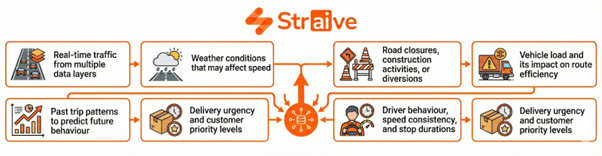
Using all this information, AI creates the most intelligent possible route, one that balances distance, safety, time, fuel efficiency, and real-time conditions. And unlike traditional systems, AI keeps adjusting the route throughout the trip.
If a road starts getting crowded, the app warns the driver before they reach it. If an accident happens nearby, the system instantly searches for alternate paths and recalculates ETAs. If the trip might be delayed due to heavy traffic, managers get an alert so they can call customers, adjust allocation, or plan recoveries early.
AI enables routing that is traffic-free, short, fuel-efficient, and on-time, thereby reducing operational stress and improving consistency. It transforms chaos into calm planning, something logistics teams have always wanted but never had access to.
The Role of UX: Making Smart Systems Feel Simple
Even the smartest AI is useless if people find it difficult to use. That is why UX design plays a powerful role in modern logistics systems — it translates complex intelligence into simple, everyday actions.
For Drivers: A Clear, Stress-Free App
Drivers spend most of their day on the road, often under pressure to meet deadlines, navigate unknown routes, and deal with real-world disruptions. A confusing app can slow them down or even create safety risks.
A clean UX gives them:
- A bold, easy-to-read map designed for quick glances
- Large buttons that they can tap instantly, even with gloves
- A clean step-by-step task flow that reduces mental load
- Simple scanning and photo uploads that save time at stops
- Clear routing and voice instructions for hands-free navigation
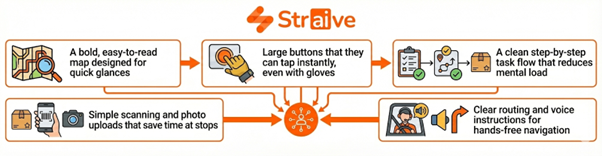
This makes drivers feel supported instead of overwhelmed. It reduces errors, speeds up operations, improves safety, and gives drivers the confidence to perform better on every trip.
For Managers: A Dashboard That Brings Calm
Operations managers make hundreds of decisions every day, ranging from addressing real-time incidents to responding to customer calls.
UX helps by turning complex data into a calm, readable workspace:
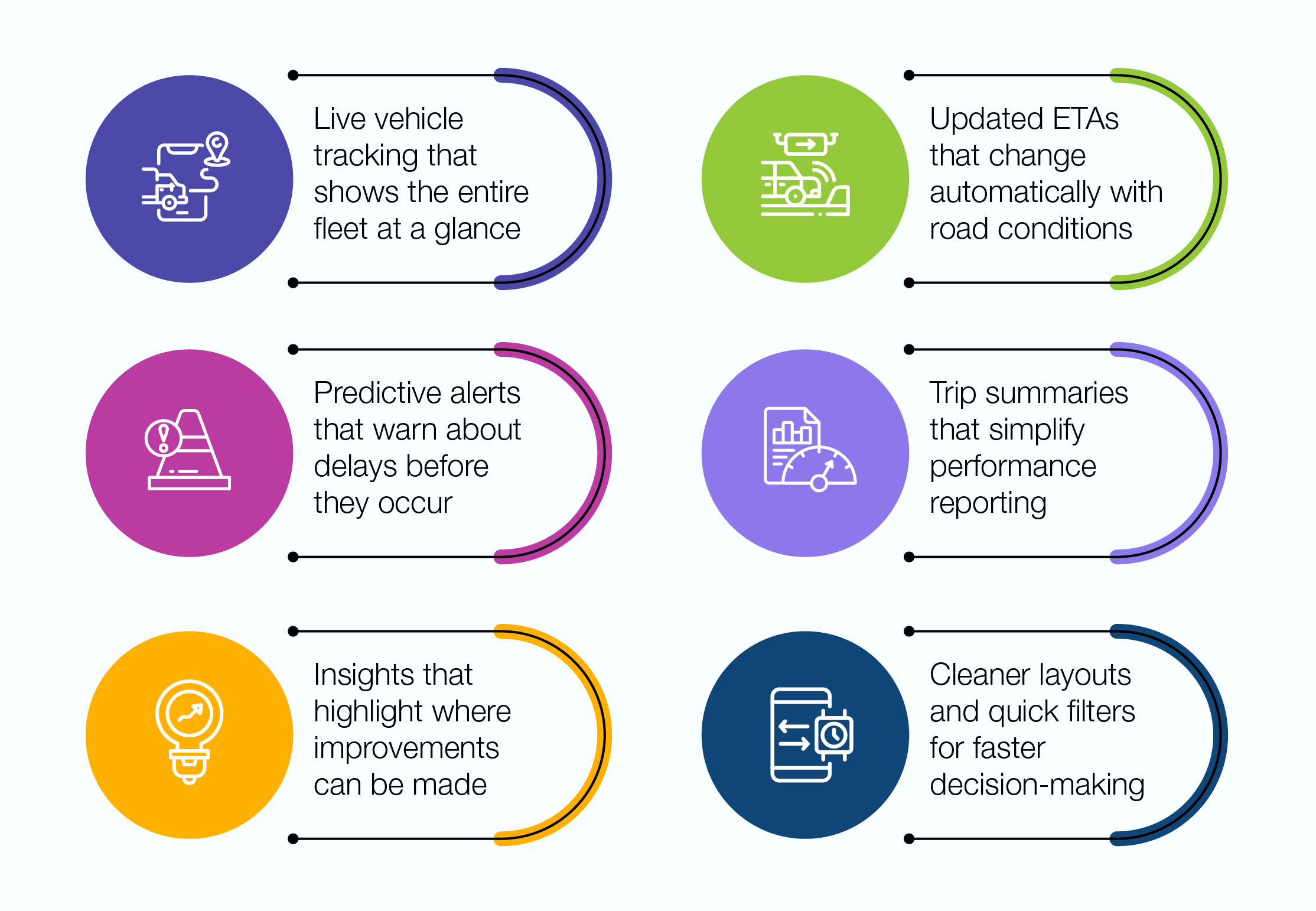
Managers don’t have to dig through clutter. They can finally focus on what really matters, understanding what’s happening and responding at the right time.
When AI does the thinking, and UX makes everything clear, logistics becomes beautifully simple.
How We Solve Logistics Problems with AI + UX
Our Transportation Management System (TMS) combines the intelligence of AI with the clarity of UX to solve real logistics challenges. The system is built to understand real-world movement, not just theoretical planning.
Drivers begin their day by logging into the app, checking their trip, and starting the route designed just for them. From the first minute, they get:
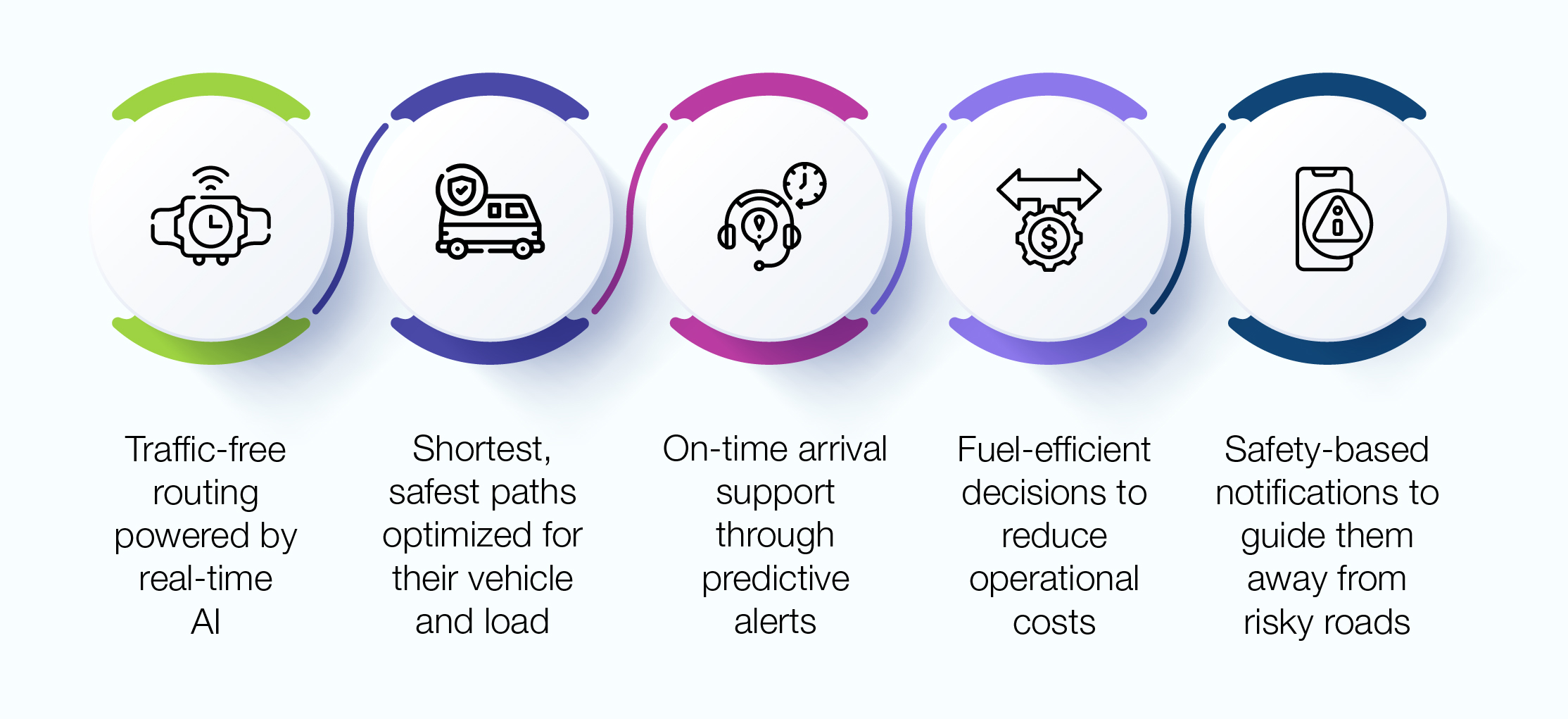
As the day progresses, the app continues to evolve. If something unexpected happens, like rain, slowdowns, breakdowns, or roadblocks, the route updates instantly to maintain speed, safety, and accuracy.
This helps not only the driver but the entire logistics network. Managers get cleaner planning. Customers get reliable delivery. Companies save money on time, fuel, and manpower. The entire system begins to function like a single, connected unit rather than isolated parts trying to stay in sync.
A Day in the Life: How UX + AI Work Together
Imagine a typical day.
A driver starts the app in the morning. The system instantly shows the best route, clean, short, and free from known trouble areas, such as school zones, accident-prone stretches, or morning bottlenecks. As they drive, the app silently tracks their speed, updates conditions, and adjusts directions based on the environment around them, without requiring the driver to think or switch between apps. Everything they need is right there.
On the operations dashboard, managers watch trips unfold live. They see vehicle locations, upcoming stops, predicted delays, abnormal behaviour, or route deviations. If the system detects a potential issue, such as an unexpected slowdown or a shift in ETA, it alerts managers promptly, allowing them sufficient time to communicate, adjust, or intervene.
When the day ends, the TMS creates a clean summary of everything that happened:
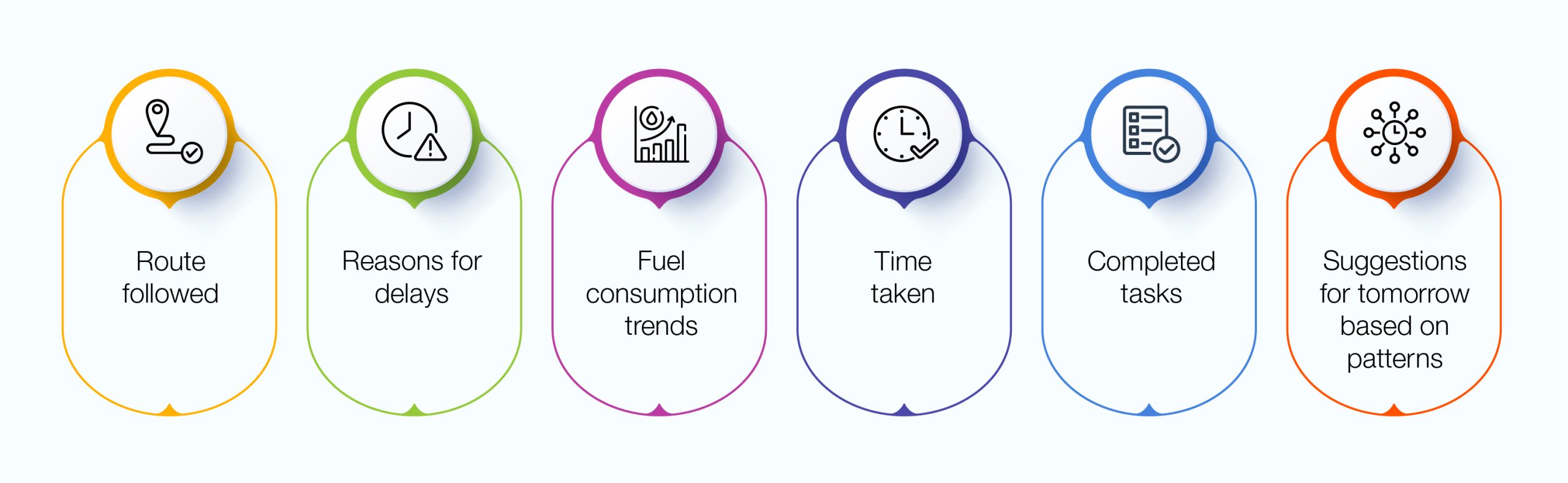
No more paperwork. No more manual calculations. No more guessing. Just clean insights that help everyone improve.
This is logistics with confidence, clarity, and control.
The Future of Logistics: Smarter, Safer, and Predictable
The next generation of logistics will be built on intelligent systems that are intuitive and easy to use. AI gives the power to predict. UX gives the ability to understand. Together, they create a more connected, more controlled, and more reliable logistics world.
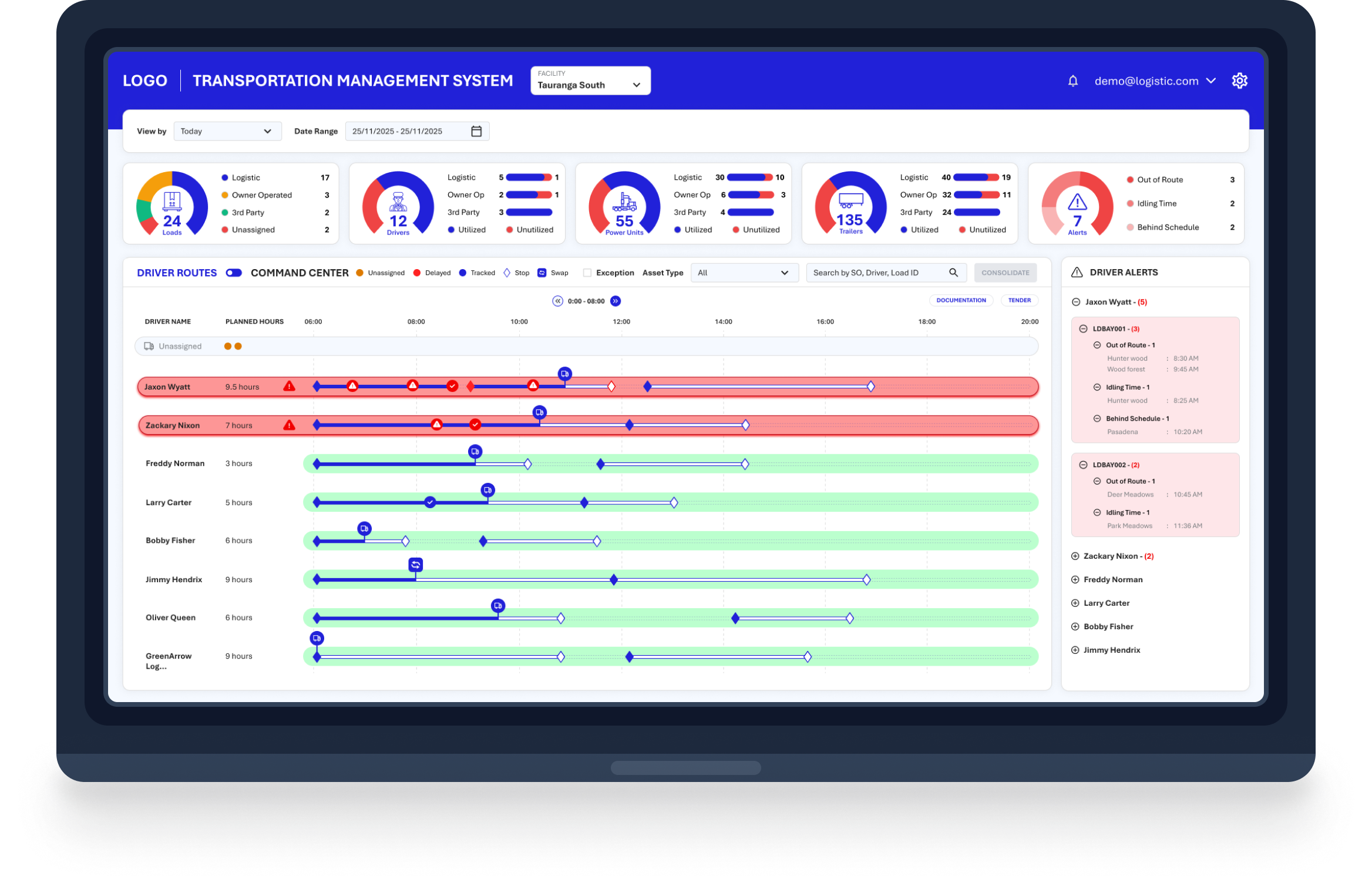
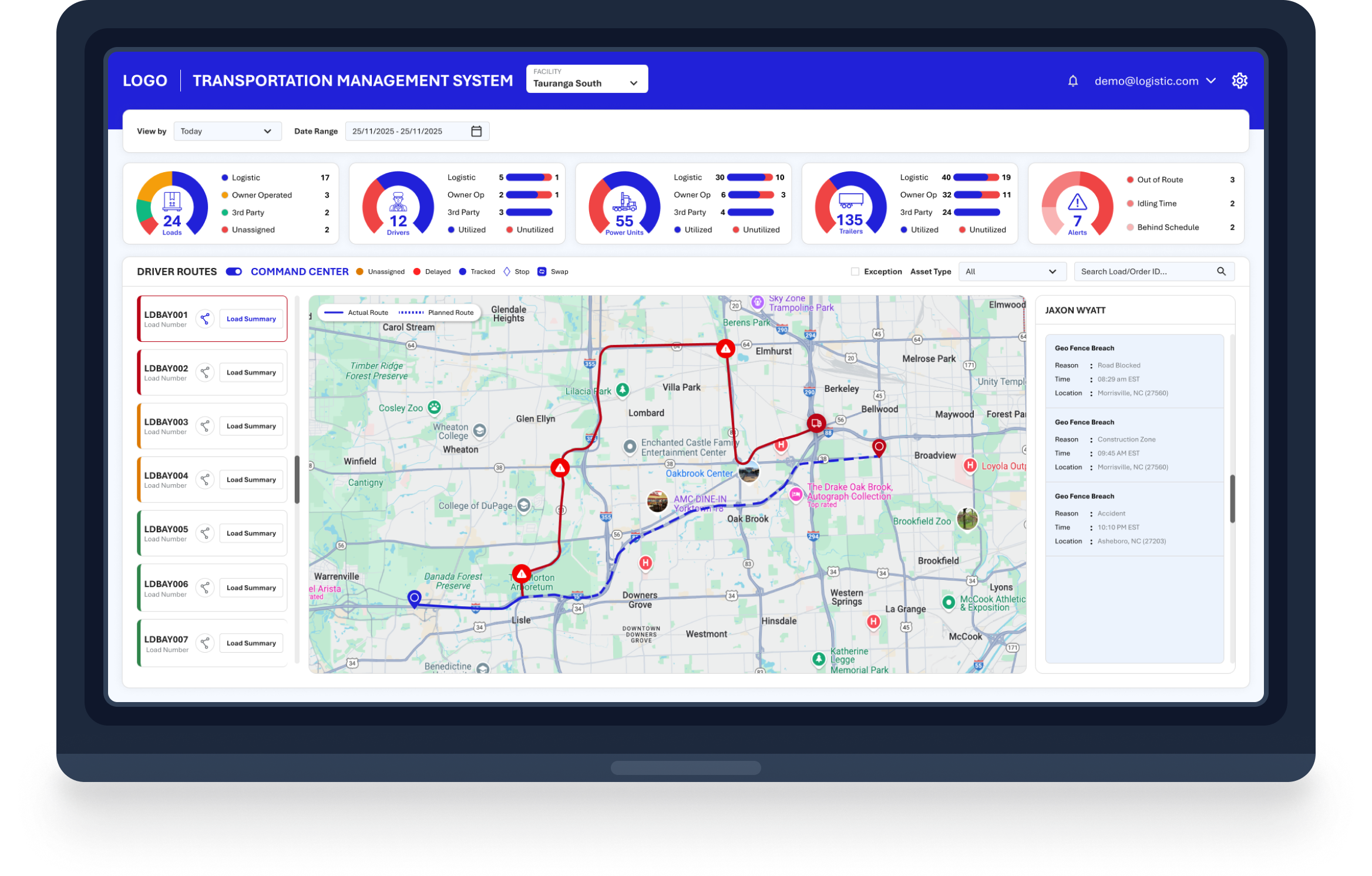
In this future:
- Routes avoid traffic before traffic appears through early prediction
- Trips stay consistently on time despite unpredictable cities
- Drivers feel supported, not pressured, with guidance at every step
- Managers make decisions with full clarity, backed by real-time insights
- Companies save fuel, time, and money through smarter automation
- Customers enjoy accurate, dependable service that builds trust
Our Vision
Make logistics fast, safe, and predictable by blending AI intelligence with UX simplicity. This is the new face of Transport Management Systems. This is the future of logistics.
Our Design Approach: The Double Diamond Framework
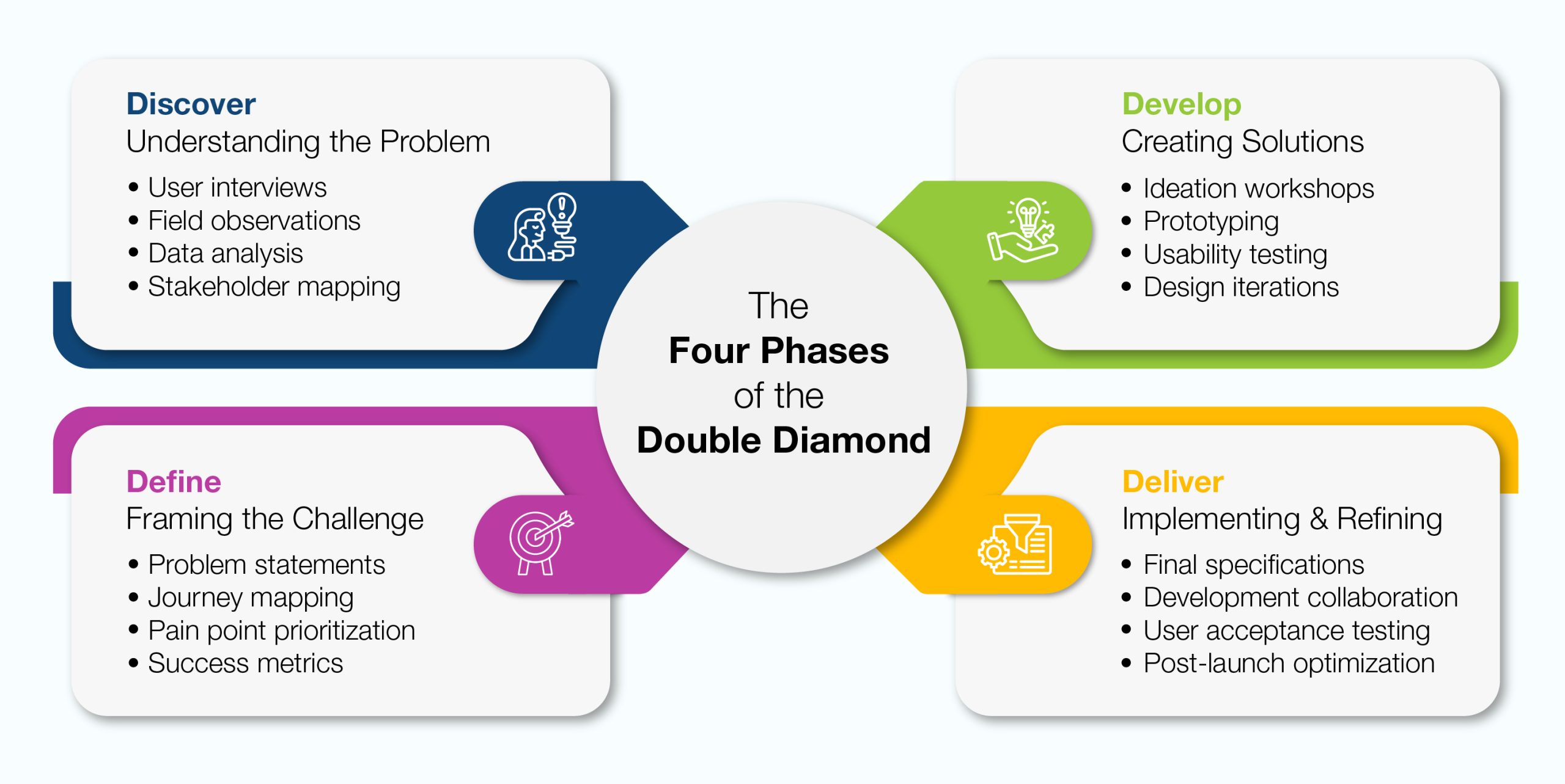
At the core of our approach to designing Transport Management Systems lies the Double Diamond Framework, a structured yet flexible design thinking methodology that ensures we build solutions that truly address the complex challenges of modern logistics operations.
The Four Phases of the Double Diamond:
Why Double Diamond for Logistics?
The Double Diamond framework ensures we don’t jump to solutions before fully understanding the problem. In logistics, where operations are complex and stakeholders are diverse, this disciplined approach prevents costly mistakes.
The first diamond focuses on exploring and defining the right problem. The second diamond is about exploring and delivering the right solution, testing multiple concepts, and launching features that truly work in the field.

Mohmad Jakeer Hussain is a UX & AI Specialist and Lead UX Designer at Straive, with a decade of experience crafting data-driven, user-centric solutions for global clients. He specializes in transforming complex supply chain and logistics systems into intuitive, high-impact experiences through strategic information design, advanced data visualizations, and scalable design systems


