
Posted on: September 29th 2026
For COOs, publishing operations leaders, and transformation teams, an increasing number of content assets to process and publish, create a coordination challenge. Each asset may need to move through multiple systems, meet different quality requirements, and reach several distribution channels. Automating individual tasks helps, but manual handoffs and repeated corrections can still slow the overall workflow.
Traditional automation works well when inputs and rules remain consistent. When metadata structures, file formats, or delivery requirements change, teams may need to update scripts or intervene manually. AI-native content platforms are introducing agents that support content audits, metadata updates, and coordination across systems. By reducing manual checks and handoffs, these agents can help content move through production faster while following established permissions and approval requirements
As AI begins coordinating tasks across the publishing workflow, organizations need clear boundaries to prevent errors from passing unchecked from one stage to the next. Teams must define which tasks AI can complete independently, which decisions require human review, and how they will assess whether the workflow improves speed and quality.
From Automated Tasks to Coordinated Workflows
Rule-based automation follows predefined instructions. For example, a manuscript with an unfamiliar metadata field may be routed to a manual queue because the system has no rule for processing it. An AI agent can interpret an unfamiliar metadata field, suggest the corresponding standard field, and flag cases it cannot confidently resolve for human review.
Agentic orchestration brings specialized AI agents together to classify content, validate metadata, and prepare files for distribution. The orchestration layer manages how these tasks proceed: independent tasks can run simultaneously, while dependent tasks wait for the necessary inputs and checks. It also routes exceptions for human review.
AI agents can adapt how they process content, but they still need clear rules for when work can proceed. Deterministic orchestration for multi-agent workflows keeps those rules explicit. For example, an agent may suggest how to correct incomplete metadata, but the workflow must still enforce required validation and approval steps before the content moves to publication.
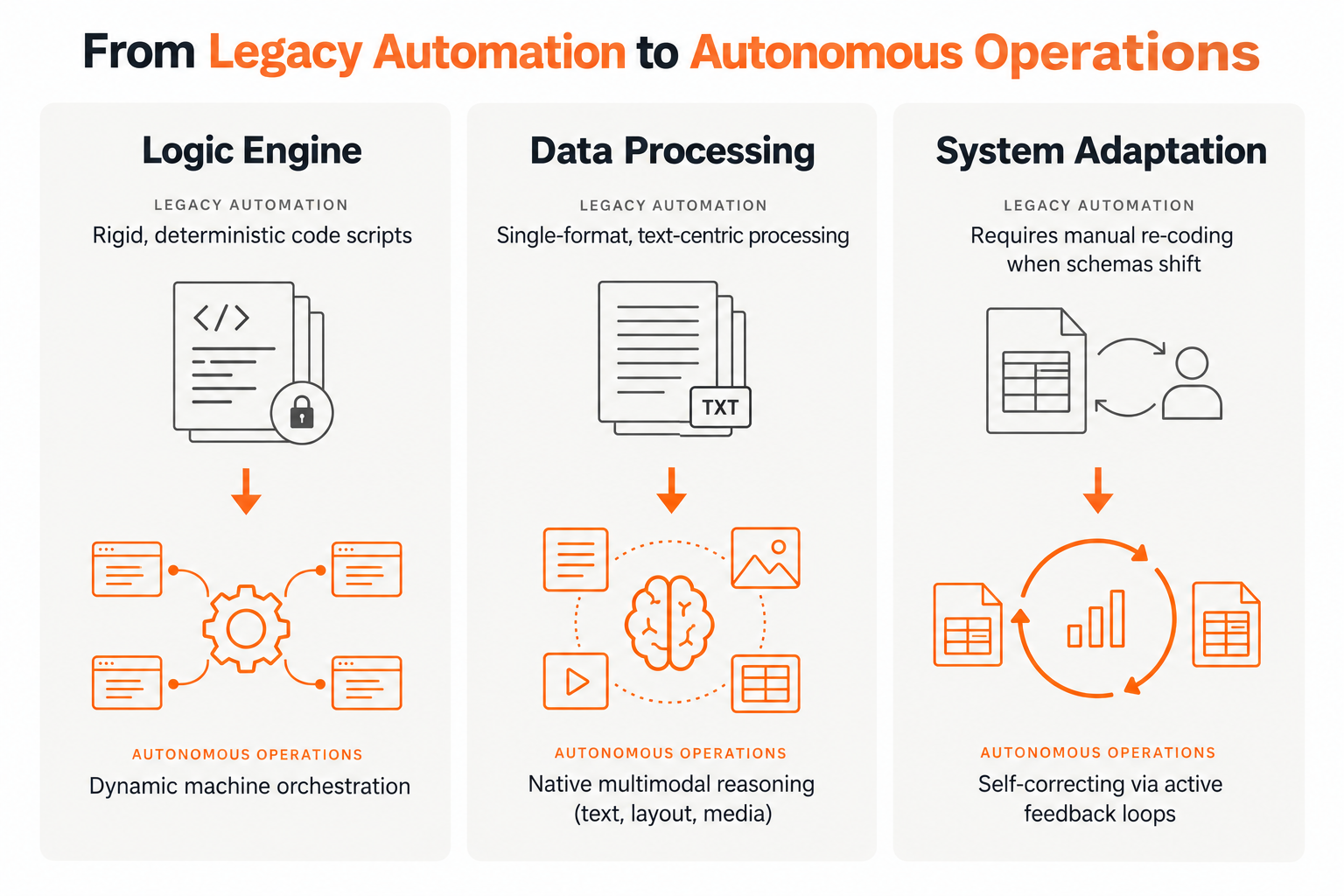
Figure 1. How rule-based automation and agentic workflows differ in handling content variations, coordinating tasks, and escalating exceptions.
The business opportunity extends beyond individual task improvements. Straive’s science and research publishing solutions report 50% faster time to market and 30–40% lower operating costs. These results reflect the broader publishing solution, which combines AI, automation, workflow redesign, and domain expertise.
How an AI-Orchestrated Publishing Workflow Works
A coordinated workflow takes content from initial submission through metadata tagging, quality checks, and preparation for publication across channels. Human review is built into stages where errors could affect accuracy, usage rights, or publication quality. The following stages illustrate how this can work.
1. Content Ingestion and Structuring
When new content enters the workflow, AI models can identify its structure, extract key information, and suggest descriptive metadata. For documents containing tables and figures, multimodal models can also interpret these visual elements alongside the text to capture information that text-only processing may miss.
The system then classifies the content using an approved taxonomy, or set of categories. Validation checks identify missing fields and inconsistent labels, while uncertain classifications go to specialists for review. This prepares content for downstream processing and reduces repetitive indexing work.
2. Preparation for Search and AI Discovery
Once content is structured, the workflow can check whether search systems can interpret it clearly. Checks may cover heading hierarchy, descriptive metadata, references, and the relationship between text and supporting visuals.
As part of generative engine optimization (GEO), agents can identify missing metadata, unclear headings, and other structural issues that make content harder for AI search systems to interpret. Correcting these issues can support discoverability, though it does not guarantee inclusion in AI-generated answers.
3. Channel Preparation and Delivery
After the required approvals, the workflow can create versions for different platforms, convert files, and check outputs against channel requirements.
Accessibility support can also be incorporated into production. For example, Straive’s SPACE Platform supports AI-powered alt-text generation. Generated descriptions should be reviewed for accuracy and context, particularly when visuals convey complex information.
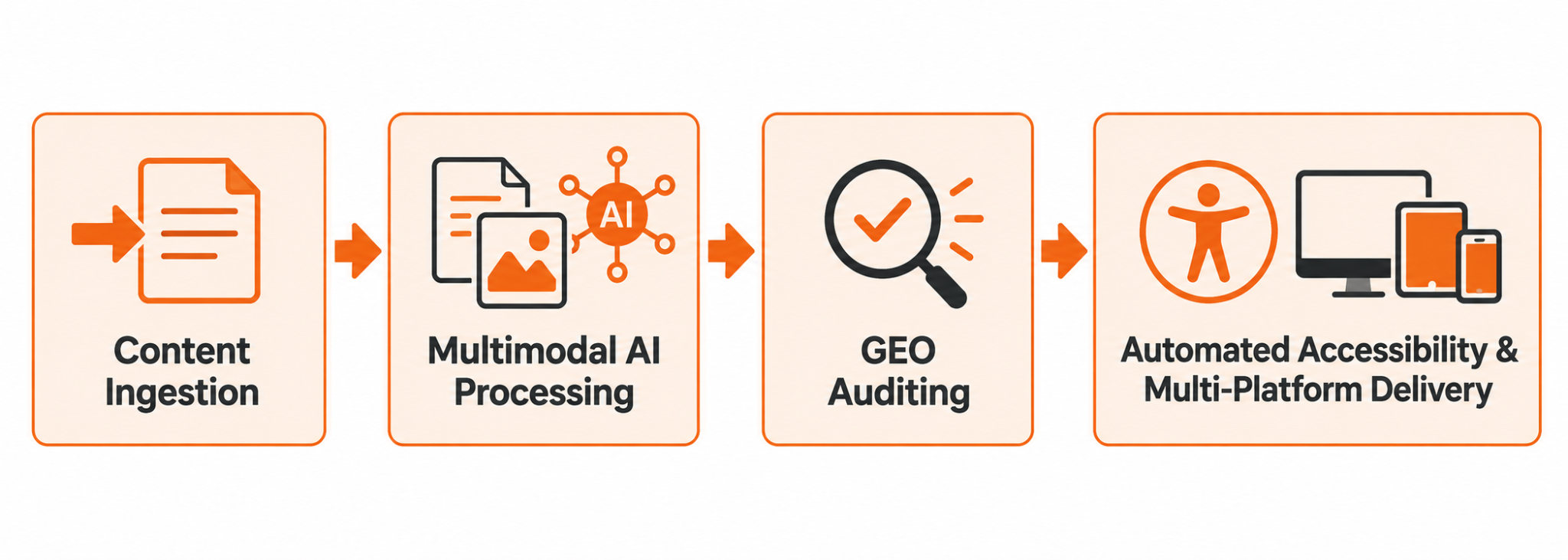
Figure 2. An AI-supported publishing workflow connects content ingestion, enrichment, validation, and preparation for delivery across channels.
Keeping Human Judgment and Accountability in the Workflow
As AI takes on more operational tasks, teams need clear control over content quality and publication decisions. A human-in-the-loop framework defines which activities can proceed automatically, which require approval, and which must be escalated.
Domain expertise helps establish those boundaries. Straive’s perspective on AI in publishing workflows emphasizes adapting AI to publishing-specific requirements while retaining editorial judgment.
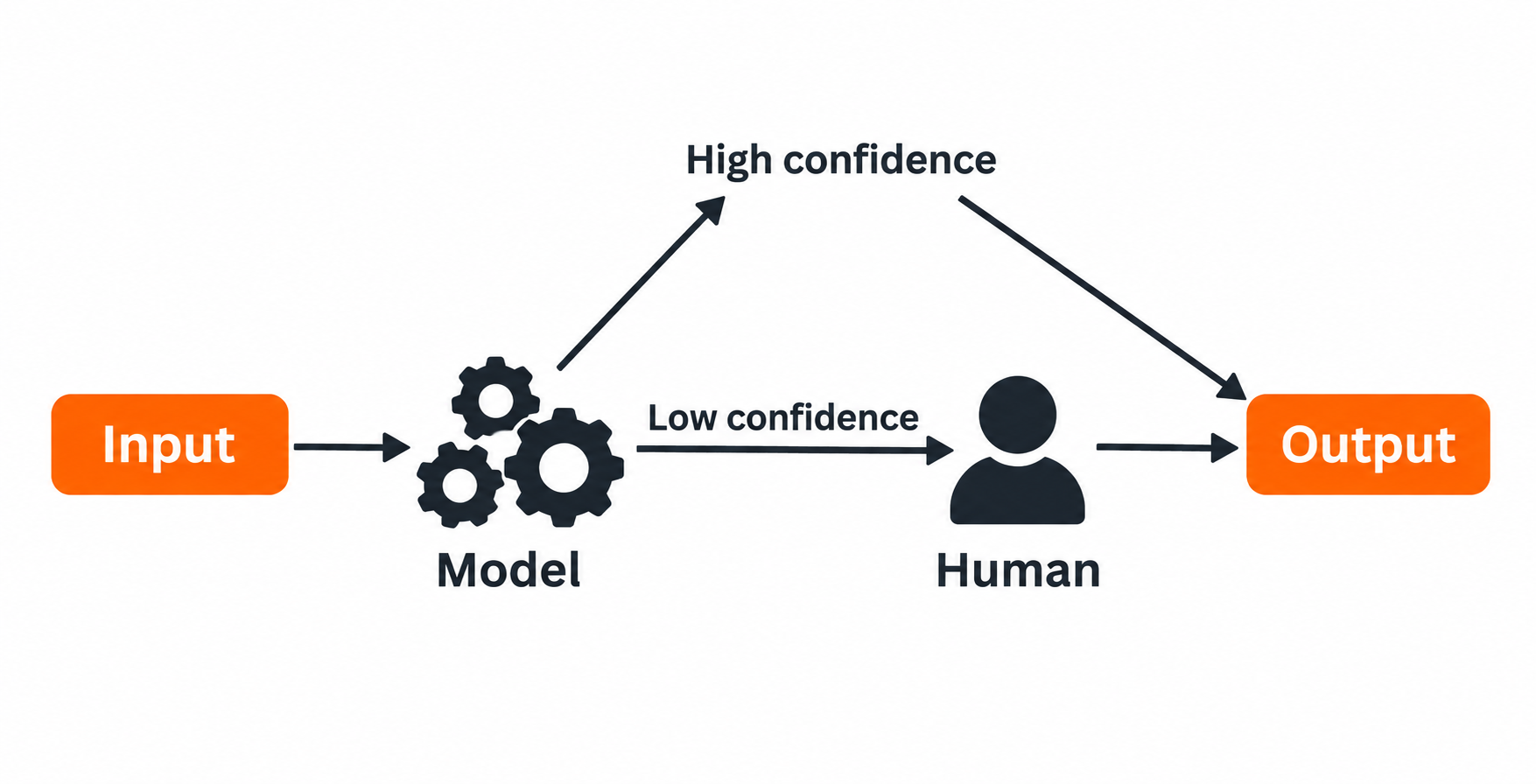
Figure 3. Human review checkpoints define where AI-supported processing can continue and where expert approval is required.
In practice, agents should have defined roles and permissions that limit their access and actions. Audit logs should capture changes, checks, and approvals so teams can trace how an asset moved through production.
For example, routine formatting may proceed automatically after validation. A potential plagiarism concern or unclear usage right should pause the affected asset and route it to the appropriate specialist. Reviewers can then approve, correct, or reject the proposed next step.
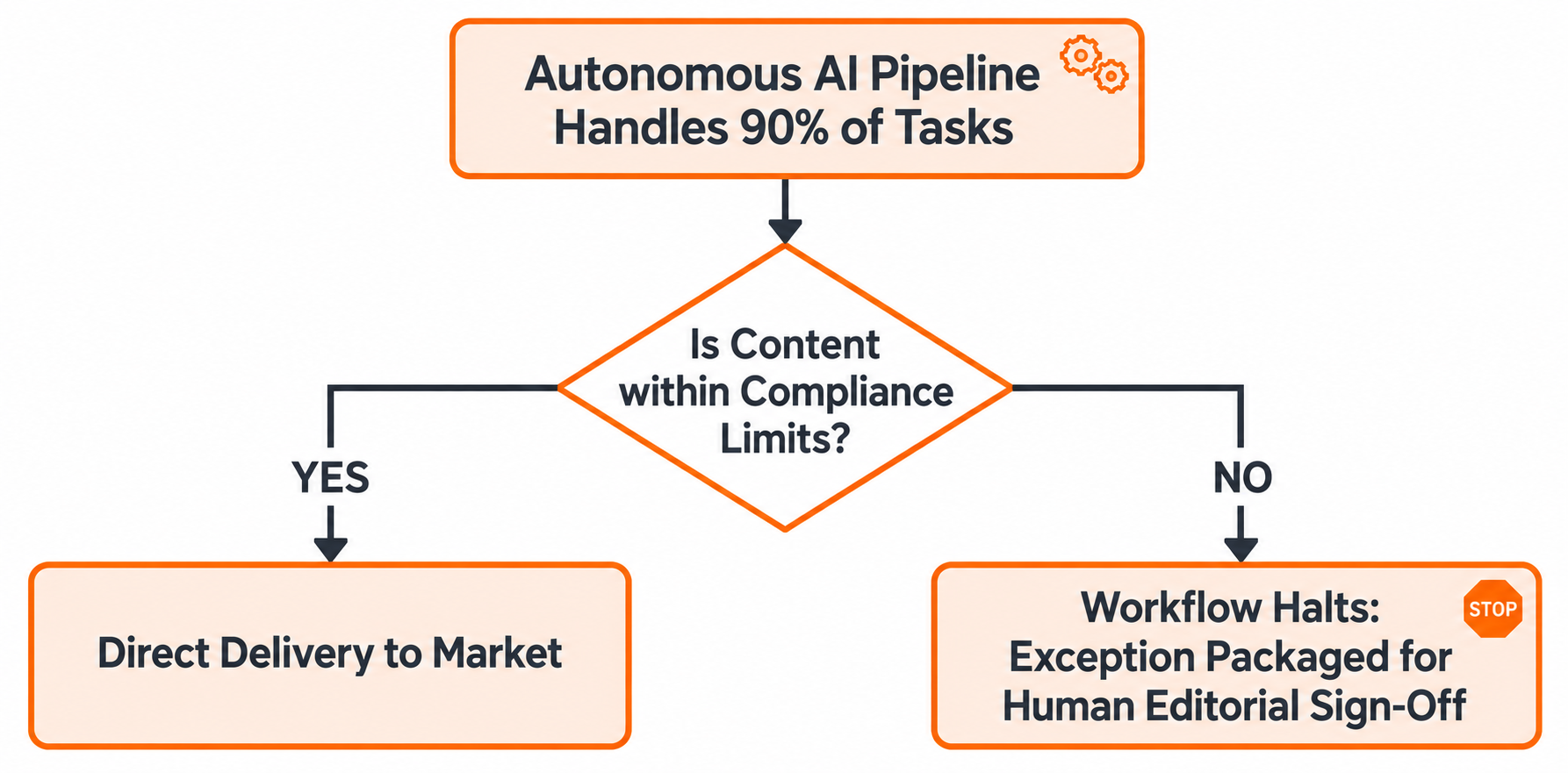
Figure 4. Routine tasks proceed through automated checks, while flagged issues are routed to specialists before processing continues.
Teams can use errors identified during human review to update editorial guidelines and automated checks, helping prevent the same mistakes from recurring.
The Business Impact for COOs
With these controls in place, intelligent content operations can improve capacity, delivery speed, and the use of specialist expertise:
- Greater capacity: Process more content and serve more distribution channels without increasing staffing at the same rate.
- Faster delivery: Reduce manual handoffs and repetitive corrections that extend production timelines.
- Better use of expertise: Give editors and specialists more time for content quality, research integrity, and original work.
To assess whether these benefits are materializing, publishing operations teams should track production cycle time, cost per asset, rework rates, and the number of cases requiring human intervention.Higher throughput is valuable only if quality remains consistent and review demands stay manageable.
Operationalize AI One Workflow at a Time
To scale publishing operations, improvements in specific tasks must help content move faster through the entire workflow, from submission to delivery.
For example, faster metadata tagging may not lead to earlier publication if content still faces long waits for formatting or approval. Agentic orchestration can help reduce avoidable delays by passing content between systems, triggering the next task when its inputs are ready, and routing approval requests to the appropriate reviewers.
To put this approach into practice, publishing operations teams should start with one workflow where delays and repetitive tasks are clearly identified. Define which tasks agents can perform, where human review is required, and how success will be measured. Compare performance with the current process, then extend the approach to other workflows once it delivers consistent improvements in speed, cost, and quality.
Explore Straive’s AI Operationalization Solutions to identify a priority publishing workflow and build a practical path from isolated automation to coordinated, measurable operations.

Straive helps clients operationalize the data> insights> knowledge> AI value chain. Straive’s clients extend across Financial & Information Services, Insurance, Healthcare & Life Sciences, Scientific Research, EdTech, and Logistics.


