
Posted on: July 31st 2026
The Manuscript That Looked Ready for Review
The manuscript appeared credible. Its abstract was polished, its structure met the journal’s requirements, and its references cited established research. Under a conventional editorial process, it might have proceeded directly to peer review.
An automated integrity screen, however, identified several concerns. Portions of the manuscript exhibited patterns associated with synthetic text. Two figures contained potentially duplicated image regions, while the citations were unusually concentrated around a small group of authors. The methods described also appeared inconsistent with the reported results.
The journal referred the submission to its research integrity team before assigning external reviewers. Human investigation determined that the concerns required further clarification, and the manuscript did not progress.
This intervention prevented unnecessary reviewer effort and reduced the possibility of a lengthy investigation, correction, or retraction after publication.
This anonymized composite example, based on Straive’s experience, reflects patterns observed across the scholarly publishing industry.
The case is significant not because of any single warning sign, but because the concerns were identified at the submission stage—before substantial editorial and peer-review resources were committed.
That timing is becoming critical.
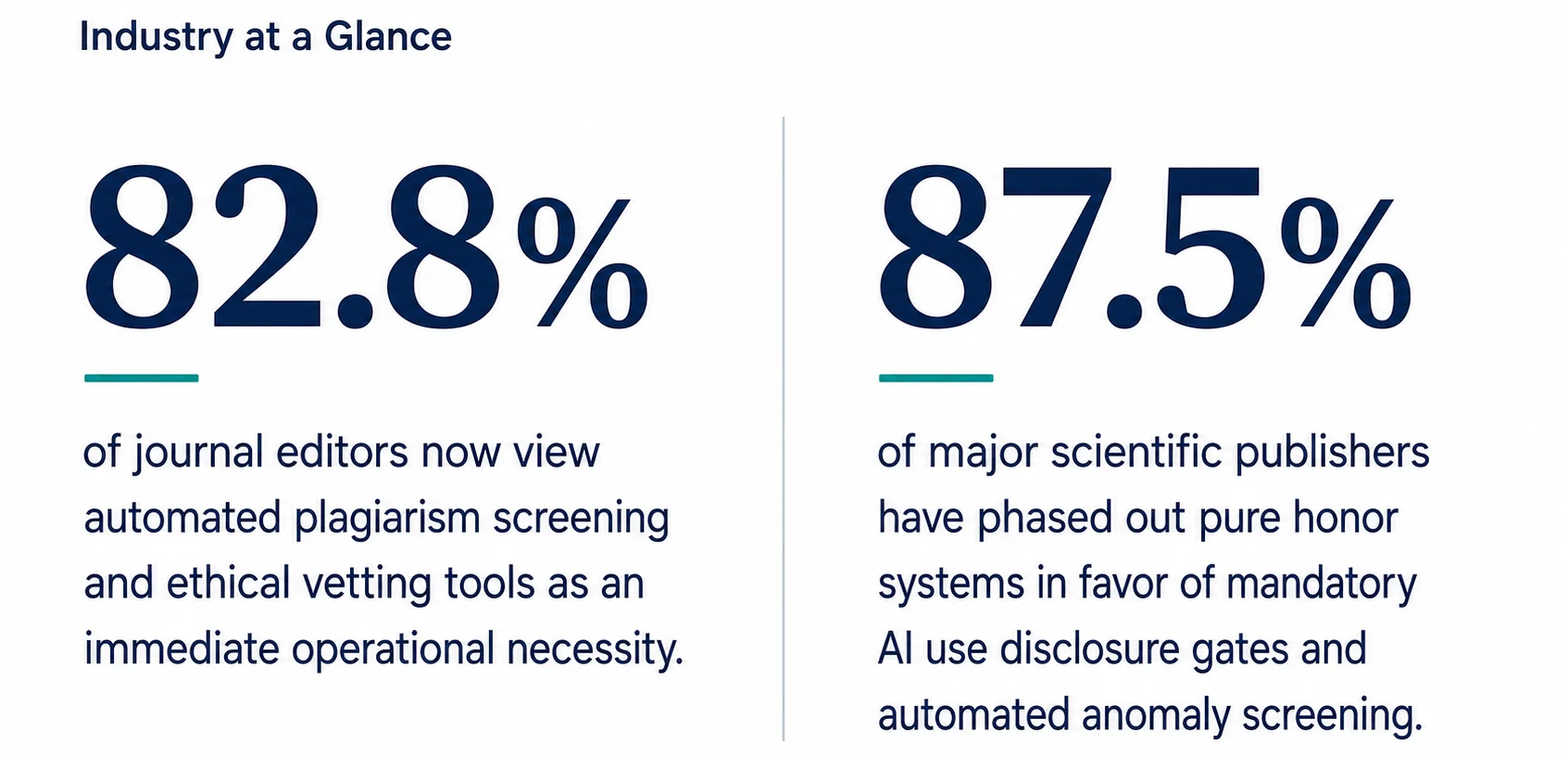
Figure 1: Key market indicators demonstrating the institutional shift toward dedicated research integrity capabilities.
From Isolated Misconduct to Industrial-Scale Manipulation
Scholarly publishing was designed to assess manuscripts individually, based on the presumption that they were submitted in good faith. Integrity checks therefore concentrated on identifiable problems within a paper, such as copied text, reused figures, incomplete disclosures, or unsupported claims.
Publishers now face coordinated operations that can fabricate manuscripts, generate synthetic data, manipulate images and authorship records, and interfere with peer review. Generative AI makes this material faster to produce and harder to distinguish from legitimate research, while paper mills can circulate related submissions across multiple journals.
The industry’s response indicates the magnitude of the problem. A study by Research Consulting and the STM Association found that publishers are investing millions in detection technology and specialist expertise. Some now employ research integrity teams of more than 100 people to screen millions of submissions annually.
Individual editorial judgement remains essential, but it cannot independently detect patterns distributed across manuscripts, journals, and submission networks. The immediate threat is no longer simply misconduct concealed within a paper—it is synthetic science constructed to appear credible.
The Threat of Synthetic Science
Synthetic science is difficult to detect because its individual components can appear legitimate. The prose may be polished, the citations may reference real studies, and the figures may look technically credible. Concerns often become visible only when signals across the manuscript—its language, data, images, authorship, citations, and submission metadata—are examined together.
Two types of submission illustrate the challenge:
- Paper-mill manuscripts: Coordinated operations generate or assemble papers using fabricated data, manipulated images, false authorship information, and repeated structural templates. Variations may then be submitted across multiple journals to avoid detection.
- Plausible but unreliable manuscripts: Generative AI can produce coherent arguments, realistic abstracts, and authentic-looking references that conceal methodological gaps, unsupported conclusions, invented findings, or citations that do not support the claims made.
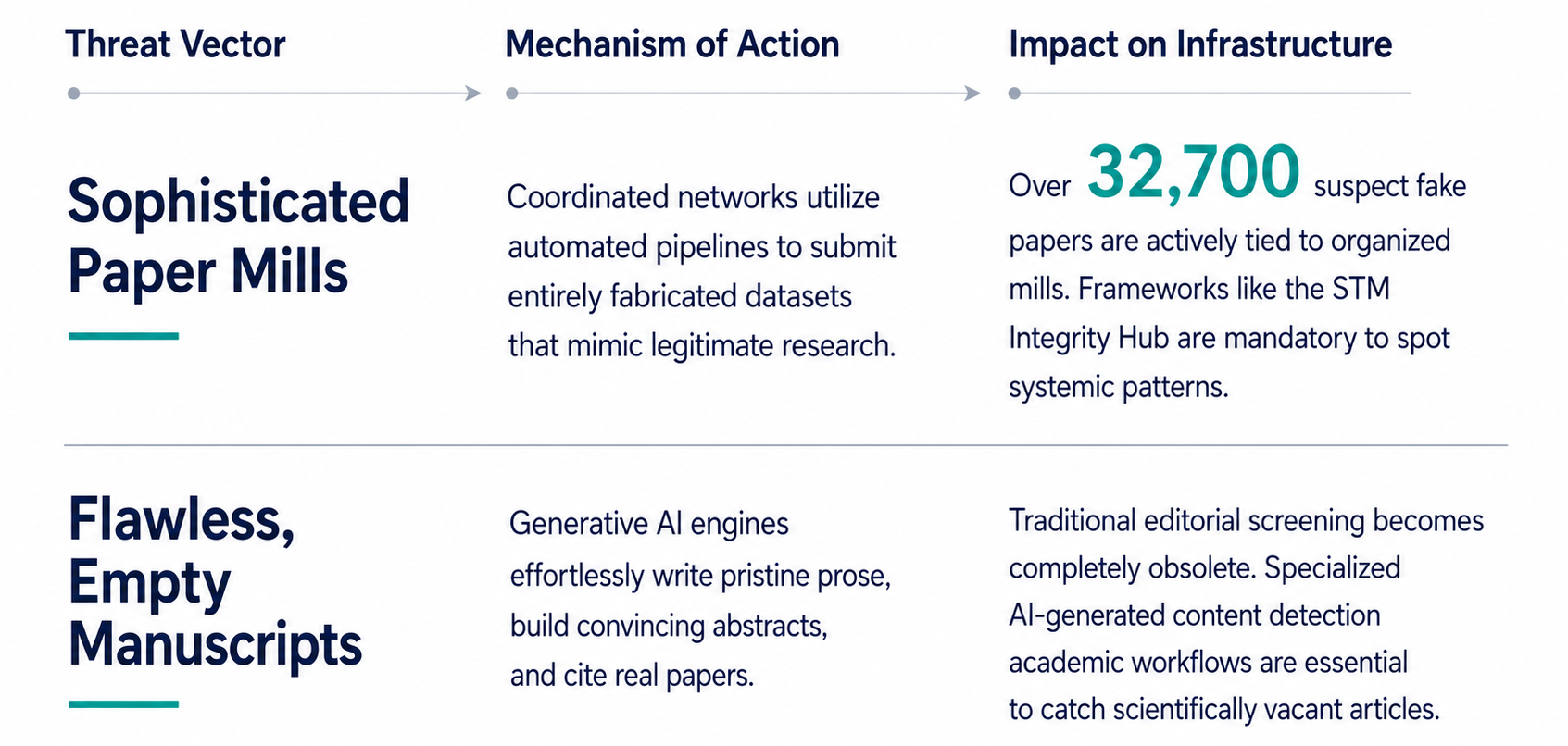
Figure 2: Comparison of synthetic-science threat vectors, their mechanisms, and their operational effects.
Neither type necessarily presents an obvious warning sign during a conventional editorial review. A manuscript may therefore consume editor and reviewer time before its inconsistencies are recognized. If published, it can lead to institutional inquiries, corrections, retractions, legal review, and damage to the journal’s credibility.
The opening example shows why detection cannot depend on a single plagiarism check or an individual editor noticing an anomaly. Identifying synthetic science requires multiple signals to be assessed at the points where manuscripts enter and move through the editorial process. This makes the design of the workflow—not simply the choice of a screening tool—the next priority.
Integrity Must Be Built into the Workflow
Retractions correct the scholarly record only after unreliable findings may have been cited, shared, or used in subsequent research. Integrity controls must therefore operate at three stages:
- Intake: Assess authorship, metadata, language, and known paper-mill indicators.
- Peer-review preparation: Examine images, methods, citations, and supporting evidence before assigning reviewers.
- Pre-publication: Check for duplicate, simultaneous, or closely related submissions across journals.
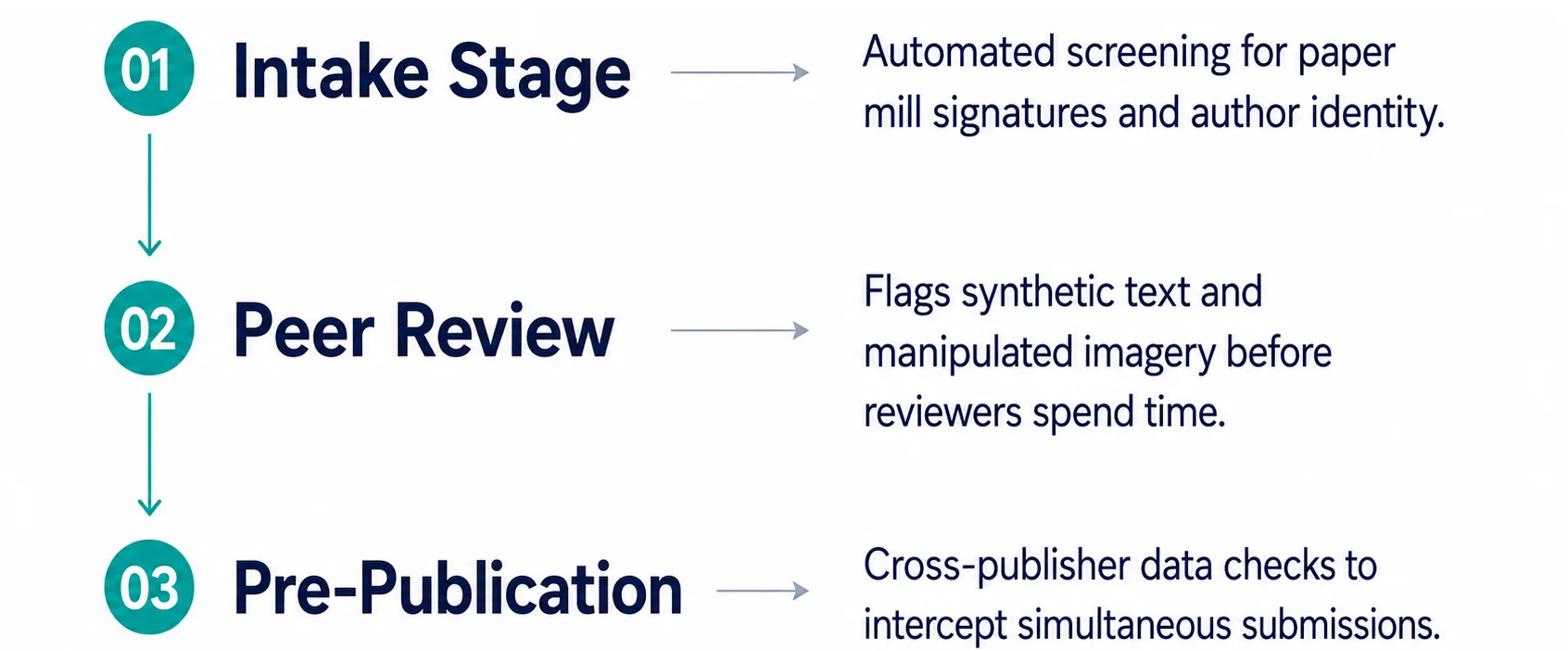
Figure 3: Automated research integrity checkpoints across intake, peer review, and pre-publication.
Industry initiatives show the value of coordinated screening: an estimated 2.5% to 4.25% of submissions are flagged for further investigation as potentially fraudulent, near-duplicate, or simultaneous.
Technology brings related indicators together and prioritizes cases for specialist assessment, while human experts retain editorial authority. Straive supports this model by integrating AI-led content validation and research integrity capabilities across editorial workflows.
Applying these controls early reduces unnecessary reviews and costly post-publication investigations while safeguarding credibility, operational capacity, and revenue.
Protecting Reputation and Revenue
For Scholarly Societies
A society’s authority and financial stability depend heavily on the standing of its journals. A significant integrity failure can weaken member confidence, deter reputable authors, and strain relationships with libraries and institutional partners.
With more than 10,000 retractions recorded globally in some recent years, research integrity can no longer be treated as an exceptional issue. It has become central to protecting a society’s reputation, relevance, and revenue.
For Publishers and Integrity Teams
Early screening enables specialists to focus on submissions that warrant closer examination before editors and reviewers invest substantial time.
By detecting compromised data, synthetic content, image manipulation, and coordinated submission activity, publishers can manage rising volumes more efficiently and reduce their dependence on manual review.
The Cost of Inaction
Research integrity failures can have a measurable commercial impact. As Wiley addressed paper-mill activity and compromised peer review across its Hindawi portfolio, the company reported an $18 million year-over-year quarterly revenue decline and projected a $35–$40 million reduction for fiscal 2024.
Although this case does not establish an industry-wide average, it demonstrates how integrity failures can affect revenue, journal portfolios, editorial operations, and brand credibility. Identifying concerns before publication limits both the operational disruption and the potential commercial consequences.
From Principle to Practice
Research integrity cannot depend on identifying problems after publication. It requires technology that can examine submissions early, connect multiple risk signals, and direct questionable manuscripts to qualified specialists.
aiKira, Straive’s proprietary AI ecosystem, helps operationalize this approach across editorial workflows. The aiKira Editorial Desk supports submission triage and peer-review operations, while Straive’s Research Integrity Engine provides AI-led content validation. Together with expert oversight, these capabilities help publishers investigate higher-risk submissions before committing reviewer resources or admitting unreliable research into the scholarly record.
For publishers and societies, the priority is now clear: integrate verification into routine editorial operations and intervene when the cost and consequences remain manageable.
Publishers and societies should therefore evaluate whether their submission systems can identify emerging risks when intervention is most effective. The question is no longer whether they can afford to strengthen their research integrity capabilities, but whether they can afford to discover compromised research only after publication.

Balamuraly K is an AI strategist and 25-year Straive veteran who transforms academic publishing workflows through Agentic AI. His work focuses on digital accessibility, content transformation, and leveraging data-driven AI models to ensure ethics in peer review. A lifelong learner, he holds advanced certifications in AI and disruptive tech from HBS Online and multiple IIMs.


