
Posted on: May 5th 2026
The Department of Justice (DOJ) just issued an Interim Final Rule that officially extends the compliance deadlines for web and mobile accessibility.1. For state and local governments, public universities, and the publishers that serve them, the message from the DOJ is clear. This is an interim period for achieving effective compliance by ensuring physical and digital, including website accessibility. With over 5,000 digital accessibility lawsuits filed in 2025 2, the risk of non-compliance is being ratcheted up to an all-time high.
Viewing the Extension as a Strategic Window
If you are just now addressing your digital backlog, you aren’t alone—but you are in the crosshairs. The April 20, 2026, Interim Final Rule marks a pivotal shift, extending the compliance deadlines by one year to account for the technical and resource hurdles entities are facing. While the new deadline for large jurisdictions is April 26, 2027, this extension is limited solely to the timeline. The core pillars of the rule—the scope of coverage, the technical standards, and the narrow exceptions—remain unchanged from the April 2024 adoption 3.
The Risk of the Status Quo
- Legal Liability: Under the new DOJ regulations, non-compliance after the 2027/2028 deadline is “presumptively unlawful” 4.
- Funding Risks: For academic institutions, failing to meet Title II standards can jeopardize federal funding and impact enrollment.
- Market Access: Publishers who cannot provide accessible courseware or PDFs will find themselves locked out of state and local procurement contracts.
- The Inclusivity Gap: Beyond legalities, inaccessible content excludes the 1 in 4 adults 4 in the U.S. living with a disability.
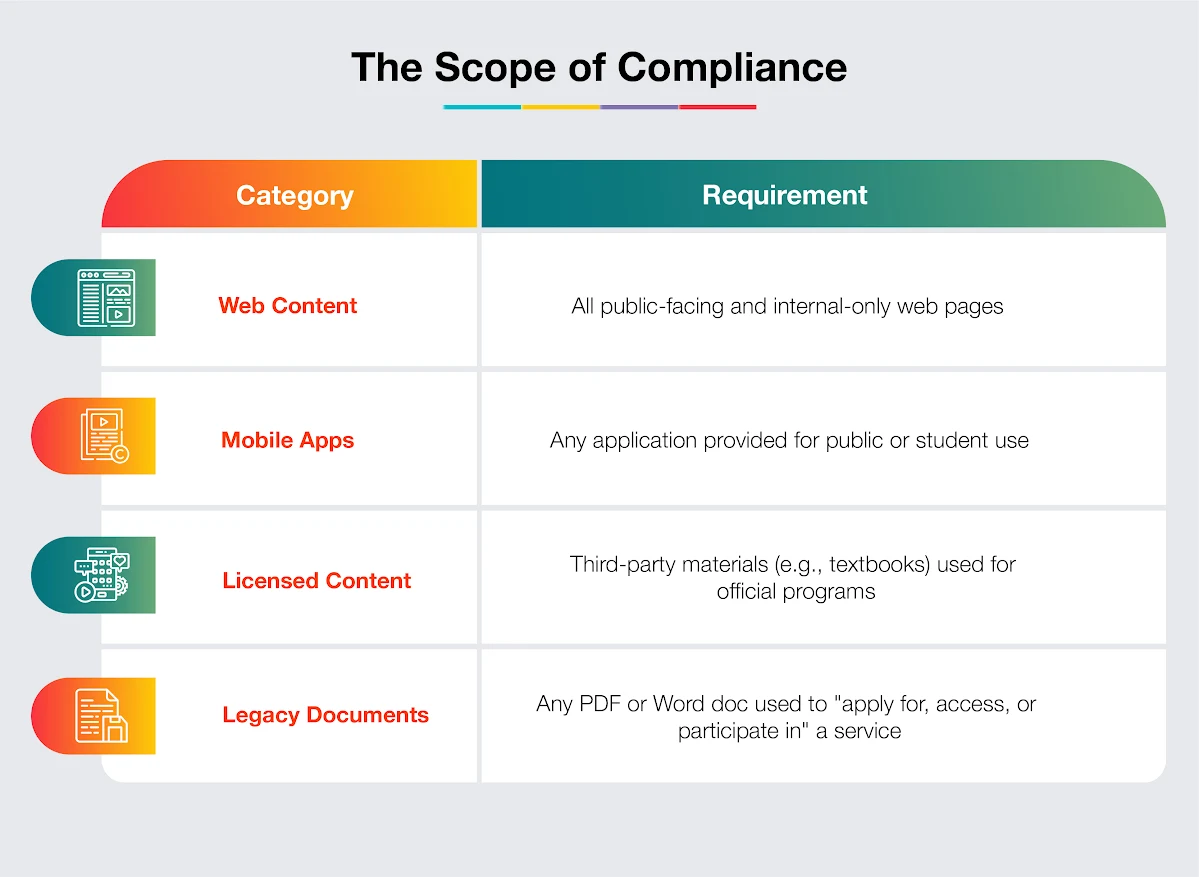
ADA Title II applies to all public entities, including state and local governments and public educational institutions. The rule mandates that web content and mobile apps meet WCAG 2.1 Level AA standards. This includes everything from digital textbooks to the “active” PDFs sitting in your archives and portal interfaces.
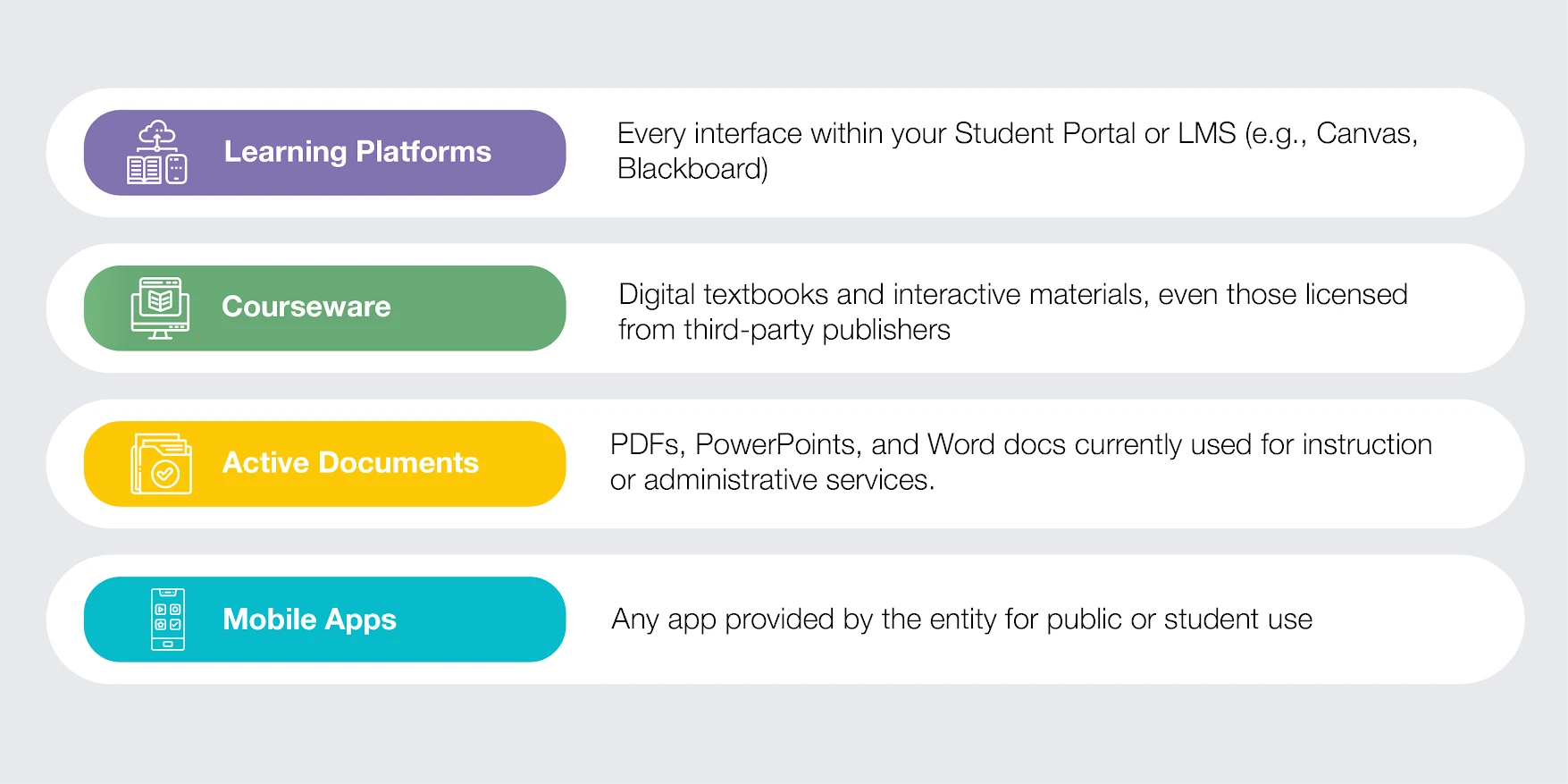
Complying with Title II Requirements
To meet the standard, your content must adhere to the four POUR 5 principles:
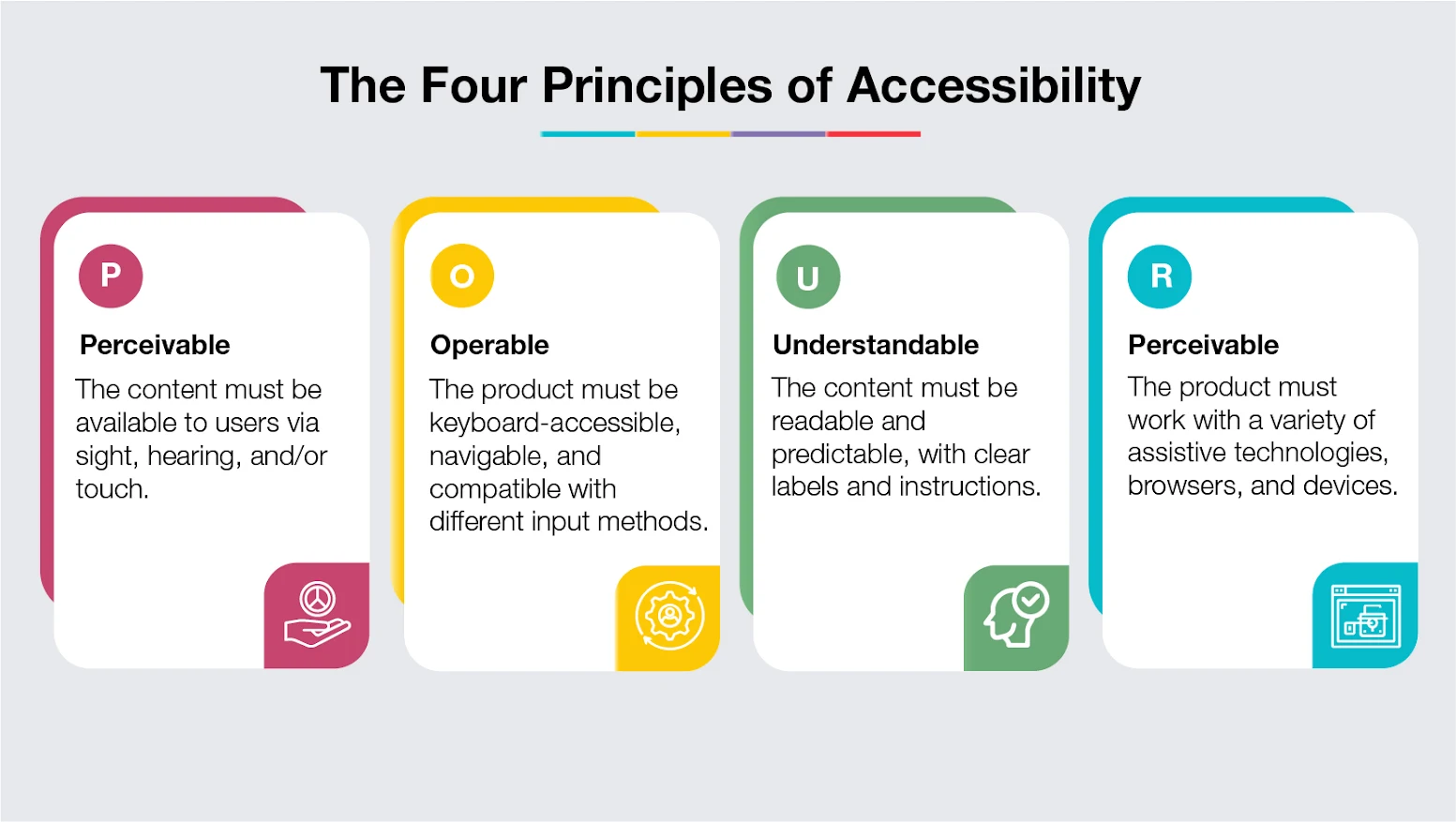
By adhering to these principles, institutions move beyond legal safety and into a space of universal design 6, where content is usable by everyone, regardless of their physical or cognitive abilities.
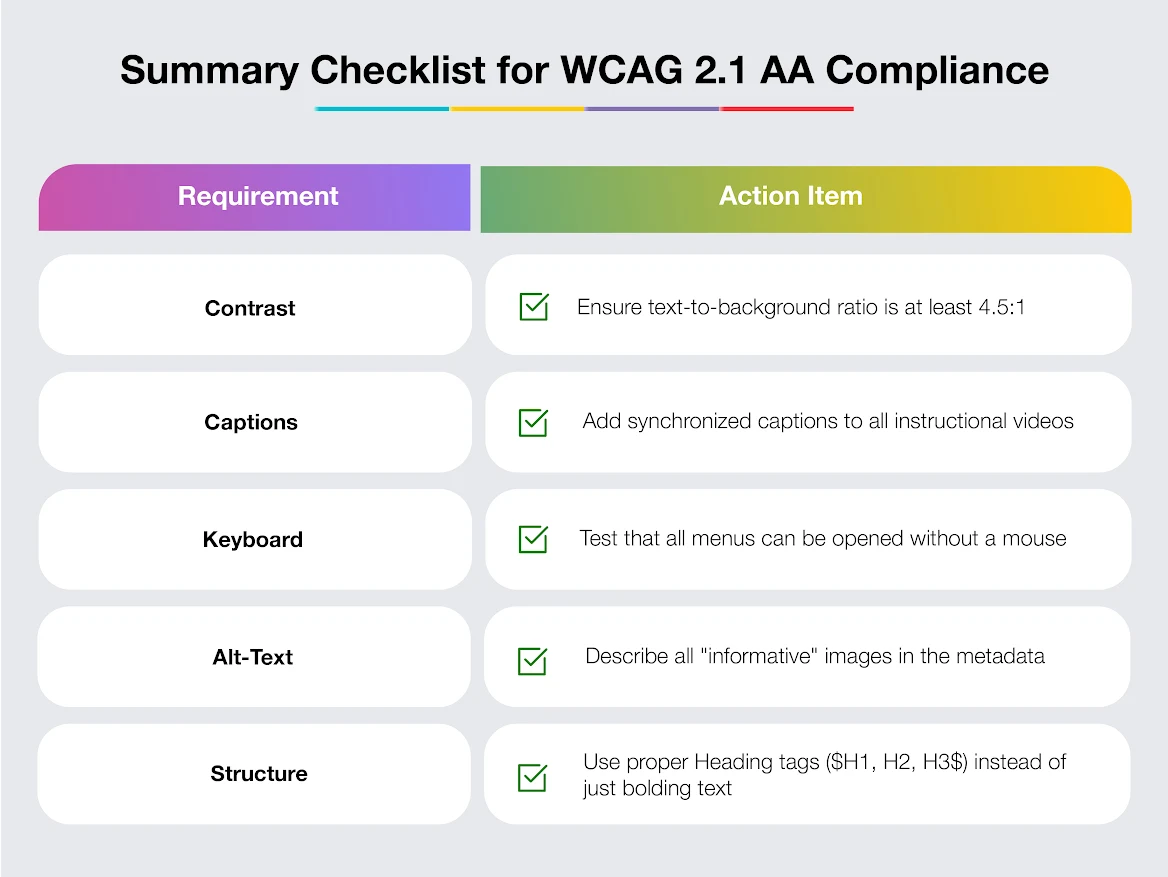
Employing a Defensive Strategic Triage
If you are currently non-compliant, you are operating in a high-risk window. While the enforcement date has moved, the DOJ historically prioritizes entities that show negligence over those with a clear, documented path to compliance 7.
In an audit or investigation, your greatest defense is evidence of momentum. Use this four-step triage to mitigate your immediate legal risk and secure your digital borders.
Four-Step Risk Mitigation Triage
- Execute a Comprehensive Gap Analysis You cannot fix what you haven’t measured. Conduct a baseline audit using a mix of automated scanning and manual testing to identify your most critical WCAG 2.1 AA failures.
- Formalize Your Accessibility Roadmap Draft and adopt an official “Accessibility Transition Plan.” By documenting specific milestones leading to 2027/2028, you demonstrate a “good faith effort” that can be vital during federal inquiries.
- Prioritize “High-Impact” User Journeys Focus remediation on essential services first—such as payment portals, registration forms, and emergency alerts. Fixing the areas with the highest traffic significantly reduces the likelihood of a formal complaint.
- Establish an Interim Accommodation Loop Ensure every page has a clear “Accessibility Feedback” link. Providing users with a way to request alternative formats (like a tagged PDF or a phone consultation) creates an immediate safety valve for those currently excluded by your digital backlog.
- The Compliance Reality: > The DOJ doesn’t just look for a perfect website; they look for institutional intent. A documented plan started today is your best defense against a “presumptively unlawful” finding tomorrow.
Streamlining the Creation of Accessible Assets
Remediating thousands of pages of legacy content and complex academic imagery is a herculean task that manual workflows can no longer sustain. In the post-2027 regulatory landscape, public entities must move beyond “one-time fixes” toward sustainable, automated infrastructure.
This is where a specialized smart publishing and accessibility content ecosystem, such as Straive SPACE, transforms compliance from a hurdle into a strategic asset. By integrating advanced AI with expert human-in-the-loop validation, these ecosystems enable institutions to scale their accessibility programs without compromising on technical accuracy 7.
In the context of the ADA Title II reset, the DOJ has provided this window specifically so organizations can integrate these platforms directly into their content pipelines. The goal is “born-accessible” publishing—where every document, video, and image is compliant the moment it is created.
Platform Core Capabilities
Smart ecosystems like SPACE are designed to replace time-consuming manual tasks with high-volume, automated solutions:
- Document Remediation: Rapidly converts massive backlogs of PDFs, ePubs, and Microsoft Office files into fully accessible, tagged formats.
- AI Alt Text Generation: Uses machine learning to generate precise descriptions for complex imagery, including intricate STEM charts and diagrams.
- Video & Audio Support: Automates captioning and provides a framework for professional audio descriptions.
- Human-in-the-Loop Validation: Combines AI speed with expert review to ensure that high-stakes educational content meets the rigorous context requirements of WCAG 2.1 AA.
- SaaS Workflow Integration: Provides a centralized dashboard to track quality scores, project status, and compliance progress across large, decentralized teams.
Choosing the Right Accessibility Partner
Compliance isn’t a destination; it is a standard of operation. In the post-2027 landscape, a “quick fix” is a long-term liability. When evaluating a partner to safeguard your institution or publishing house, prioritize these three critical criteria:
- Deep Pedagogical & Editorial Expertise True compliance goes beyond code—it requires subject matter expertise. Your partner must distinguish between a decorative image and a complex pedagogical diagram. Look for teams capable of writing nuanced Alt-text for STEM content, formatting intricate data tables, and ensuring that digital textbooks remain fully navigable for screen-reader users.
- Proven Scalability for Massive Backlogs While many vendors can handle a standard website, few can remediate a 20,000-title backlist. Select a partner with a dedicated ecosystem—like Straive SPACE—that leverages AI to automate structural heavy lifting. This allows you to process thousands of legacy PDFs and ePubs in months, rather than years.
- The “Human-in-the-Loop” Mandate Pure AI is fast, but often context-blind. Because “automated-only” solutions frequently fail WCAG 2.1 AA standards, your partner must utilize a hybrid approach. By bridging AI speed with expert human verification, you ensure your content is more than just “scannable”—it becomes truly usable and legally defensible.
Conclusion
By 2028, new accessibility mandates will have fundamentally redefined digital rights for over 70 million Americans with disabilities. With deadlines of April 26, 2027, for large entities and April 26, 2028, for smaller ones, the shift toward online equity is no longer optional—it is the new standard of excellence.
While these legal requirements are pressing, they offer a deeper opportunity to move beyond “check-the-box” compliance. By embracing universal design, public universities, government agencies, and publishers can ensure that information is accessible to everyone, regardless of how they interact with technology.
The transition to an inclusive digital future is a journey. It begins with a single, decisive step, and that step must be taken today.
Ready to secure your digital future? Contact Straive today to see how our SPACE platform can bring your library into full WCAG 2.1 AA compliance.

Straive helps clients operationalize the data> insights> knowledge> AI value chain. Straive’s clients extend across Financial & Information Services, Insurance, Healthcare & Life Sciences, Scientific Research, EdTech, and Logistics.


