
Posted on: June 8th 2026
Imagine two publishers with identical Accounts Receivable (AR) books.
One relies on manual workflows, generic dunning templates, and a shared inbox checked inconsistently by rotating staff. The other operates a structured collections center powered by AI-assisted account prioritization, automated workflows, and real-time visibility into payment risk.
Twelve months later, the DSO numbers tell the story.
The gap between “getting by” and “high-performing” collections operations is no longer operational—it is financial. According to a Forbes Finance Council article, 99% of companies using AI in AR reduced their average Days Sales Outstanding (DSO), with 75% achieving reductions of at least six days.
In publishing, the challenge is especially complex. Collections teams are not simply recovering overdue invoices; they are managing relationships with the same institutions responsible for renewals, subscriptions, and long-term revenue growth. A poorly handled collections interaction can damage years of relationship equity.
That is why leading publishers are rebuilding collections operations around predictive intelligence, renewal-safe communication, and integrated AR visibility.
Why Traditional Collections Operations Break Down
Modern B2B collections environments are defined by operational complexity. What once worked as a reminder-based workflow now struggles against fragmented systems, global account structures, and increasingly sensitive institutional relationships.
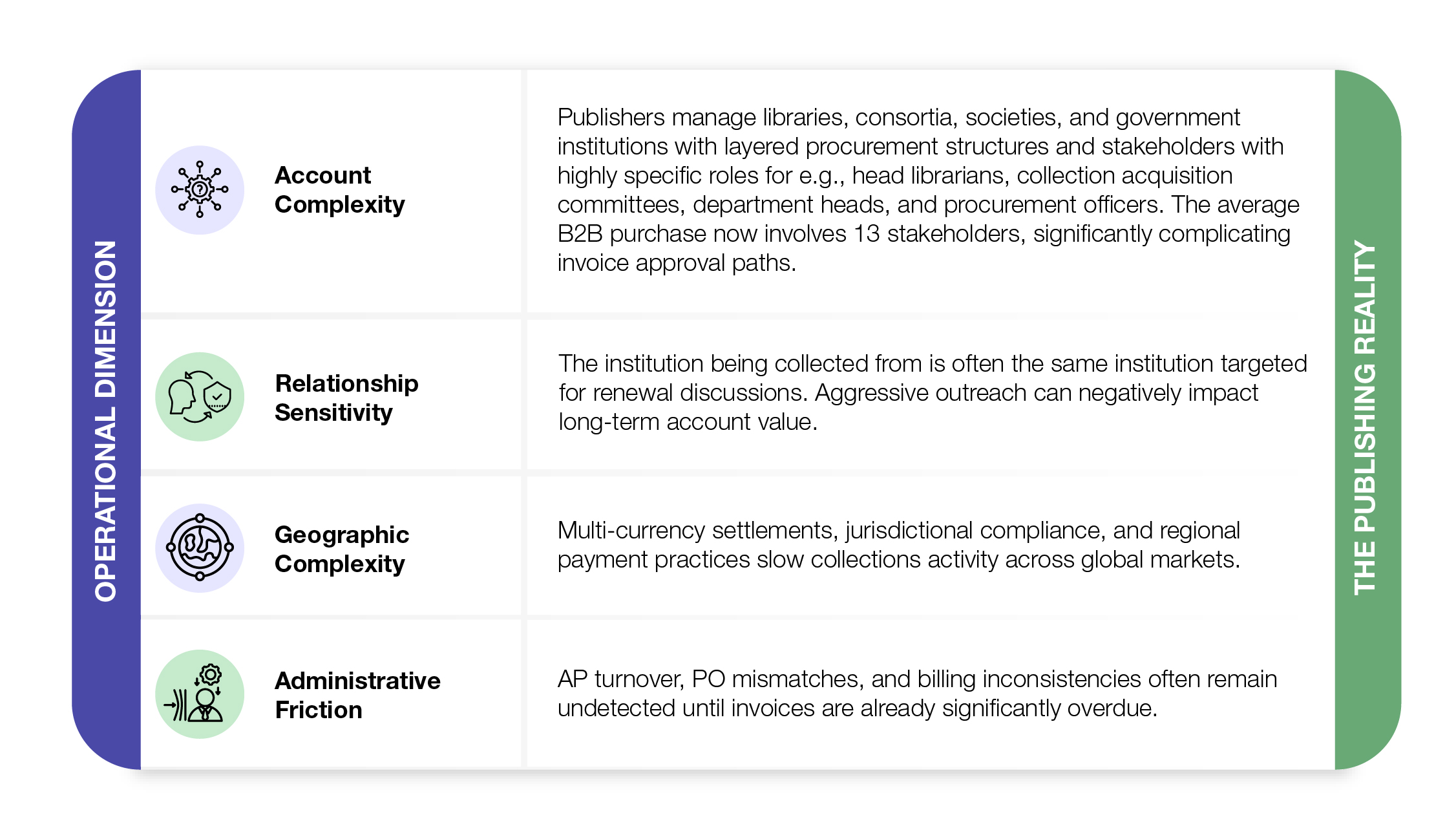
In many organizations, these issues remain hidden inside disconnected ERP, CRM, and billing systems. The result is a reactive collections process where problems are discovered only after invoices age into risk.
Why 2026 Demands a Rebuild — Not Another Patch
The biggest shift in collections operations is not automation alone. It is the transition from reactive recovery to predictive intervention.
Traditional collections teams focus on identifying overdue accounts after delinquency occurs. High-performing collections centers identify payment friction before accounts deteriorate.
The operational advantage comes from eliminating what many finance leaders now call the “60-day blind spot” — the period where administrative issues remain unresolved while invoices quietly age.
Modern collections operations reduce this gap through three capabilities:
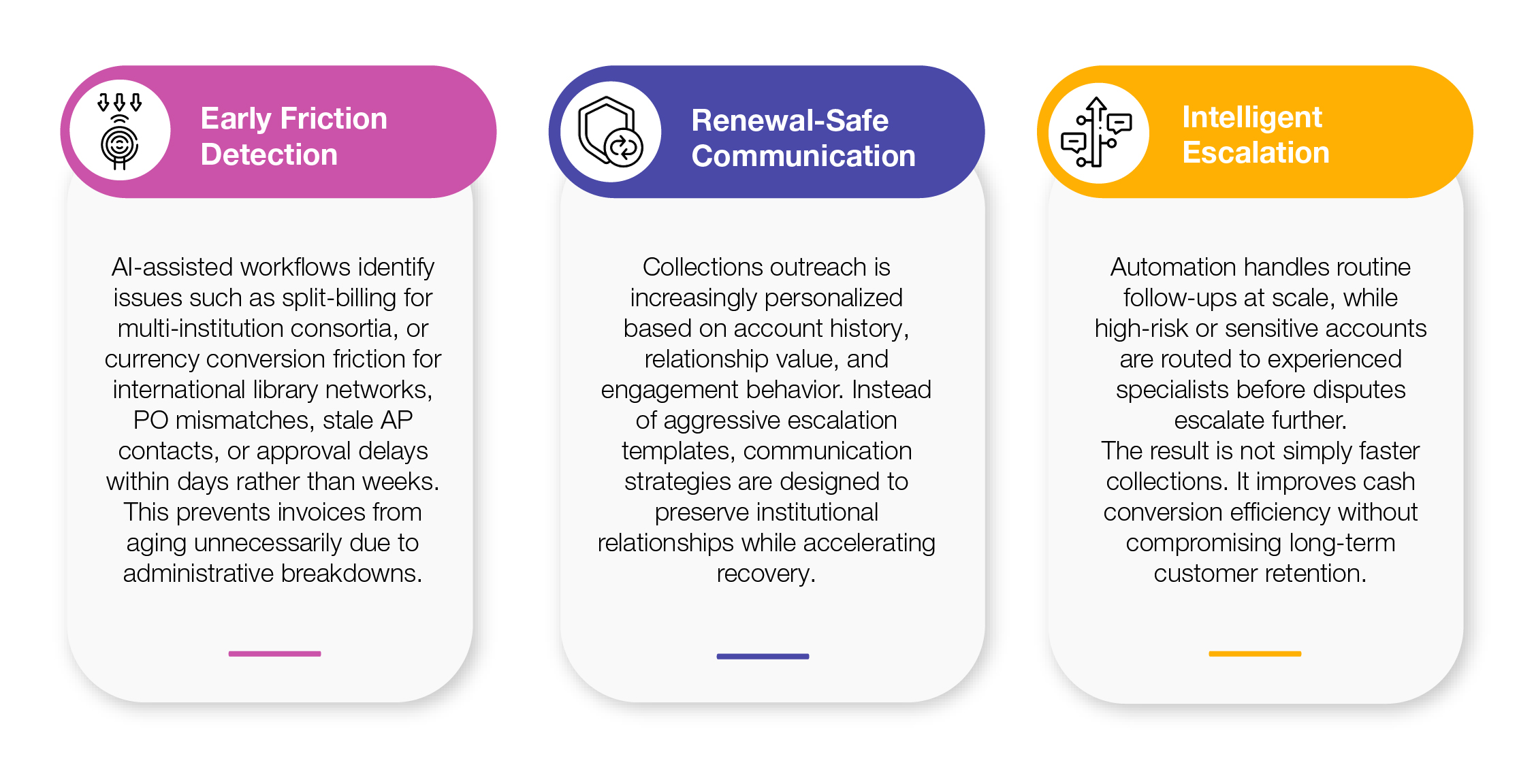
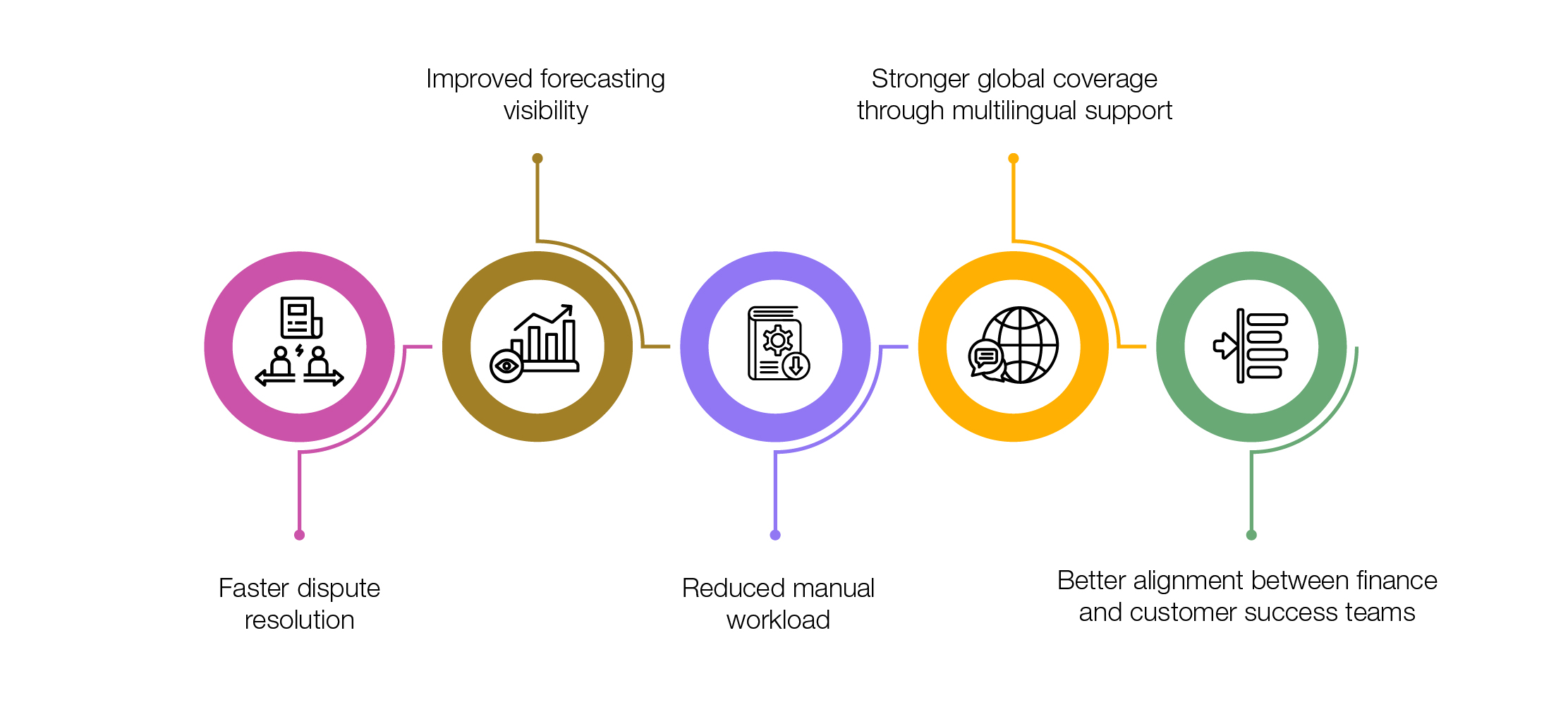
The result is not simply faster collections. It improves cash conversion efficiency without compromising long-term customer retention.
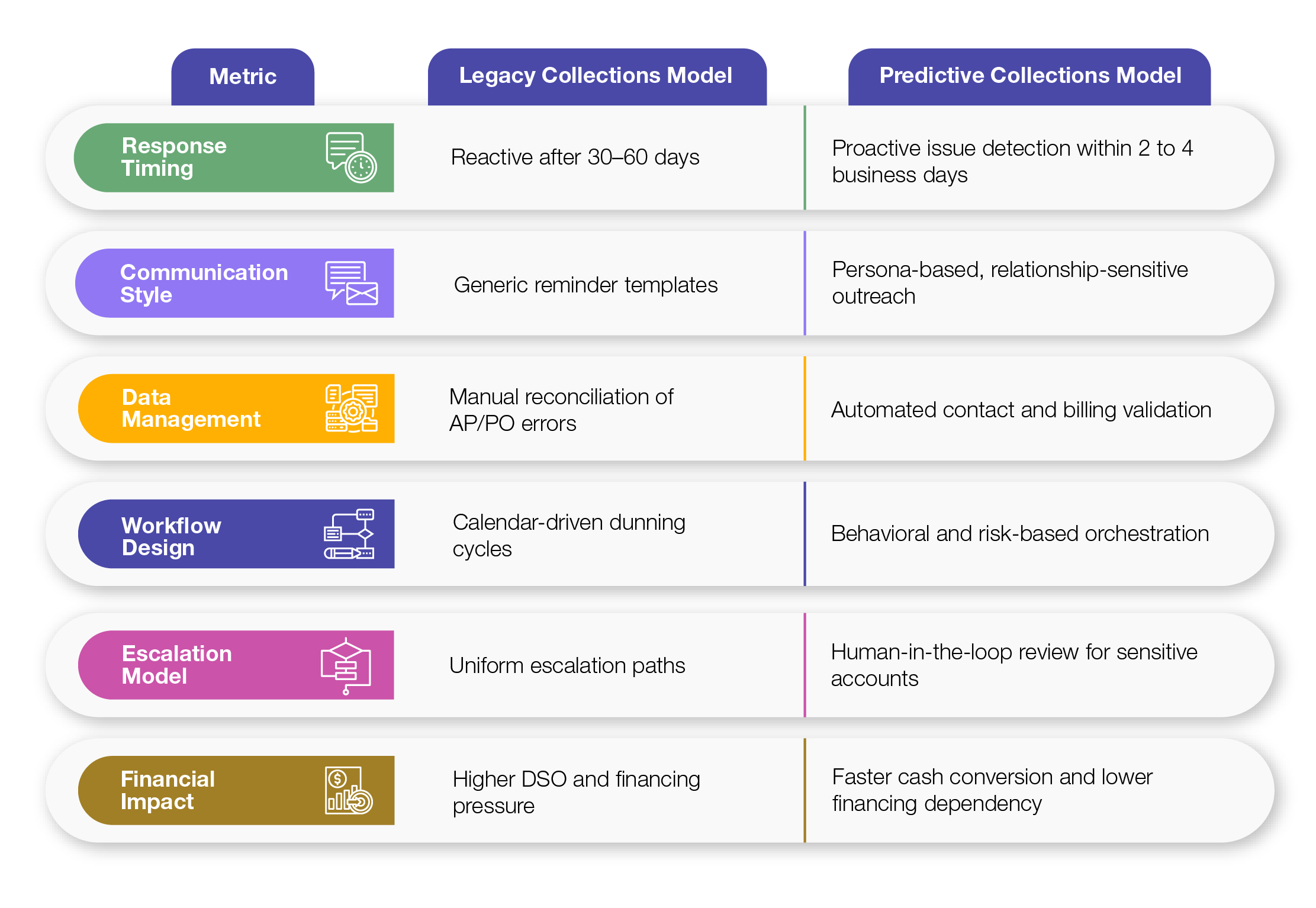
The Framework Behind High-Performance Collections
Leading publishers are increasingly adopting AI-driven collections frameworks designed to align financial recovery with customer retention. These frameworks typically focus on five operational pillars:
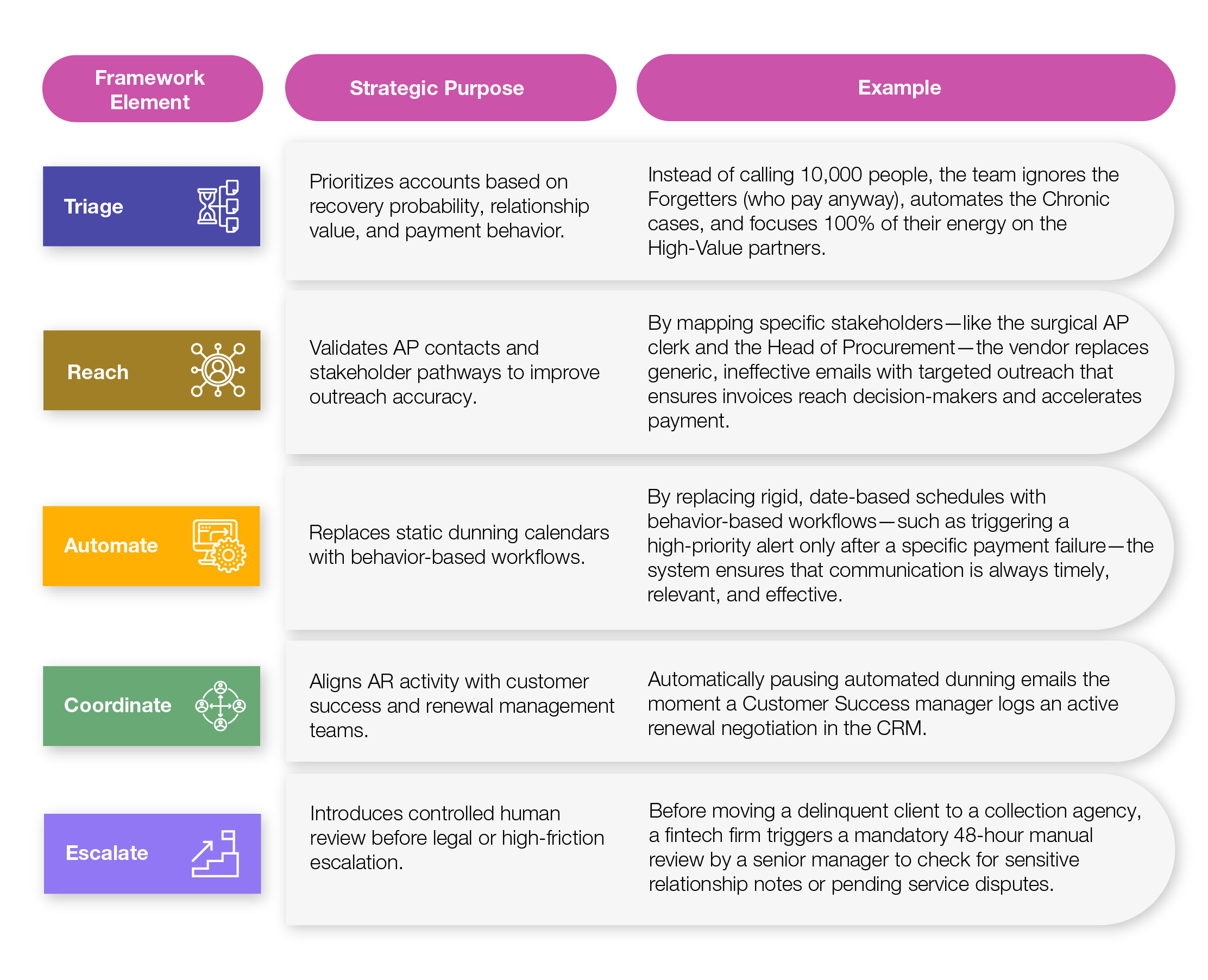
This structure allows organizations to scale collections activity without sacrificing account experience.
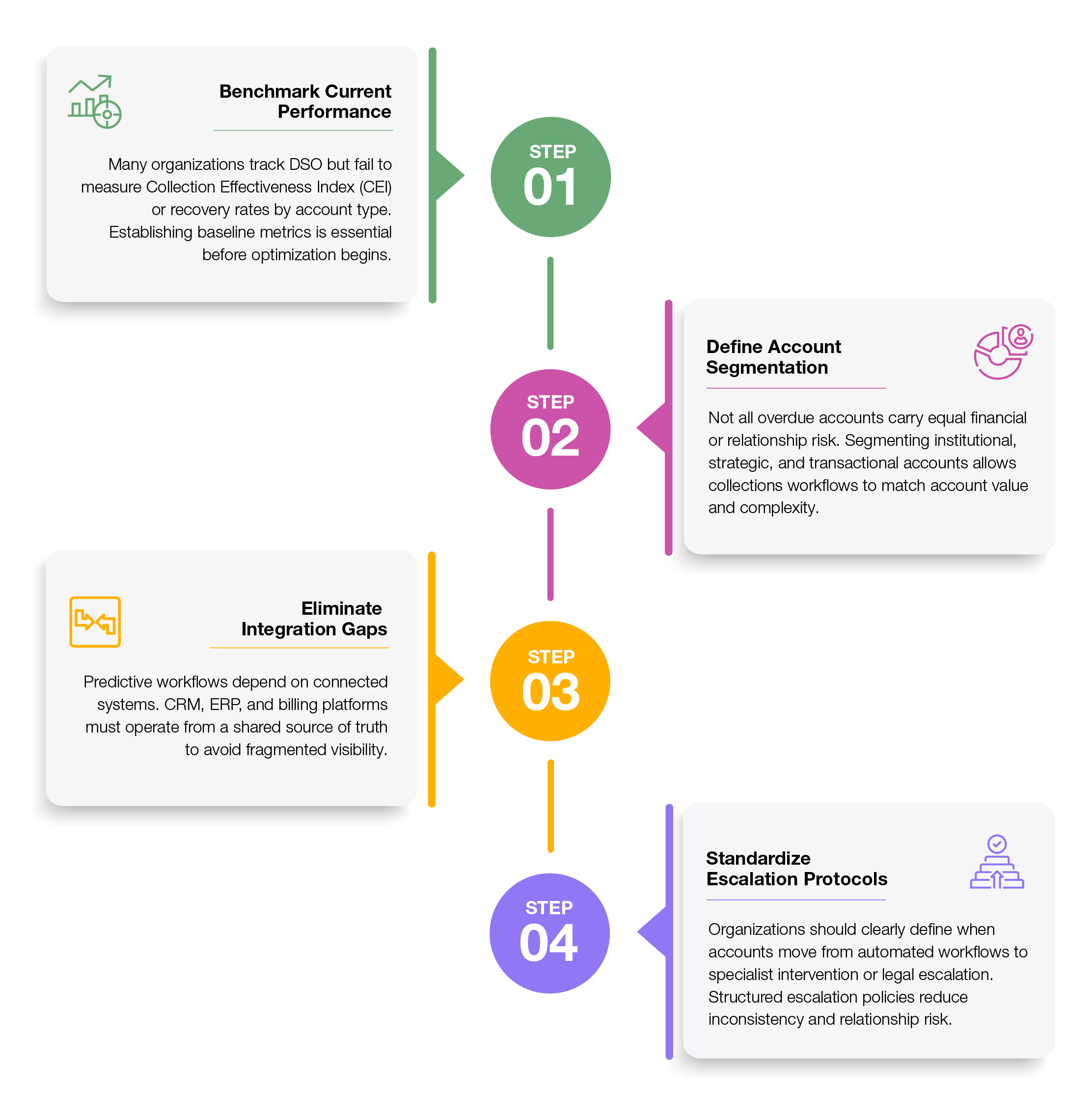
Four Steps to Operational Readiness
Three Non-Negotiables in a B2B Collections Partner
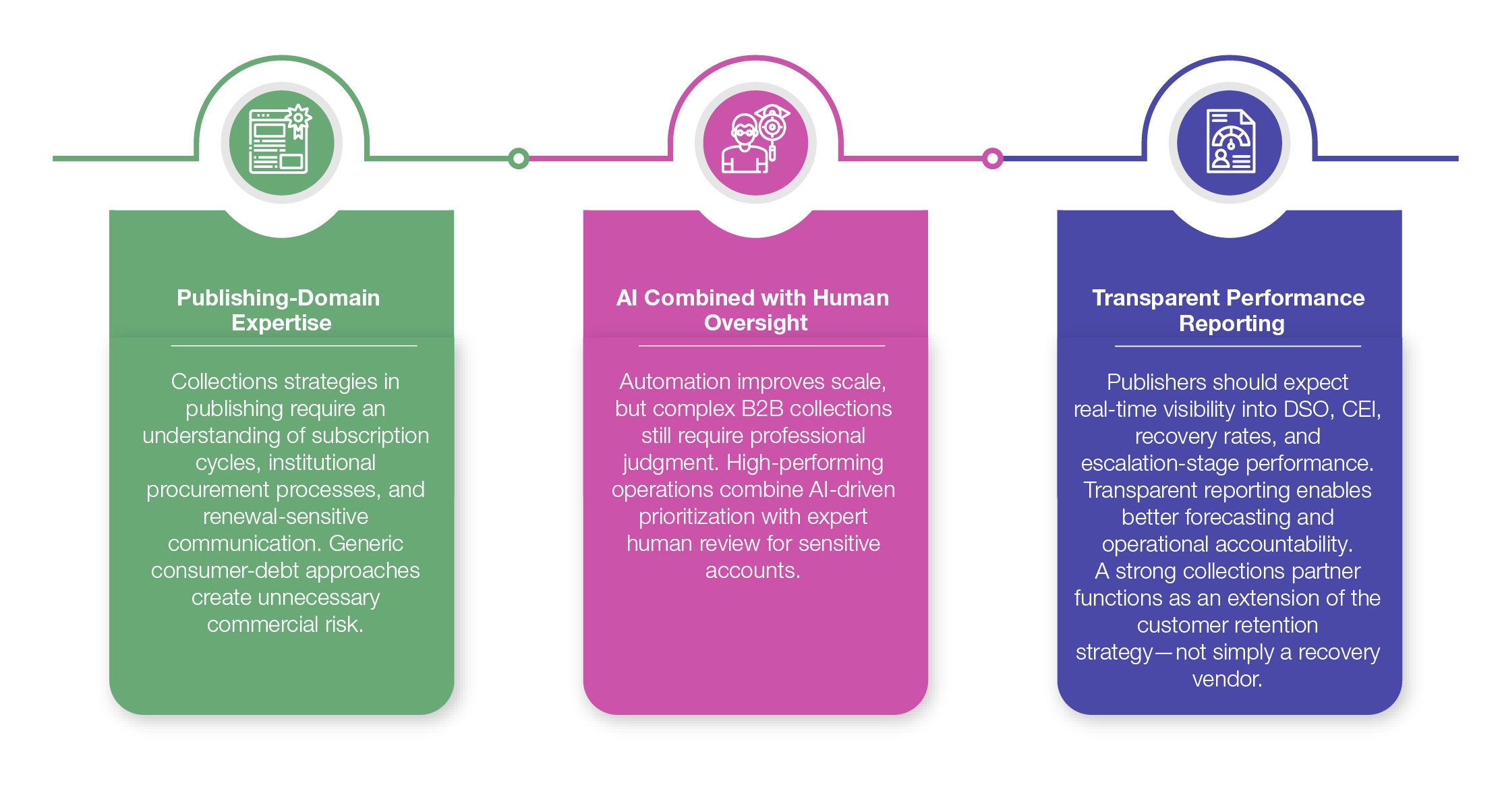
Selecting the wrong collections partner can damage both recovery performance and customer retention. Publishers evaluating external support should prioritize three capabilities.
Publishing-Domain Expertise
Collections strategies in publishing require an understanding of subscription cycles, institutional procurement processes, and renewal-sensitive communication. Generic consumer-debt approaches create unnecessary commercial risk.
AI Combined with Human Oversight
Automation improves scale, but complex B2B collections still require professional judgment. High-performing operations combine AI-driven prioritization with expert human review for sensitive accounts.
Transparent Performance Reporting
Publishers should expect real-time visibility into DSO, CEI, recovery rates, and escalation-stage performance. Transparent reporting enables better forecasting and operational accountability.
A strong collections partner functions as an extension of the customer retention strategy—not simply a recovery vendor.
Conclusion: Collections Performance is now a Growth Metric
In 2026, collections performance has become more than a finance function. It is a measurable indicator of operational maturity, customer relationship health, and working capital efficiency.
The organizations outperforming in AR are not necessarily collecting harder. They are collecting smarter — identifying friction earlier, coordinating outreach more effectively, and aligning collections operations with long-term institutional growth.
For publishers, the strategic question is no longer whether collections operations should evolve. It is whether current systems are capable of supporting the speed, precision, and relationship intelligence modern AR environments now require.


Associate VP, Account Management


