
Posted on: June 16th 2026
An overdue invoice does not always mean the customer is refusing to pay.
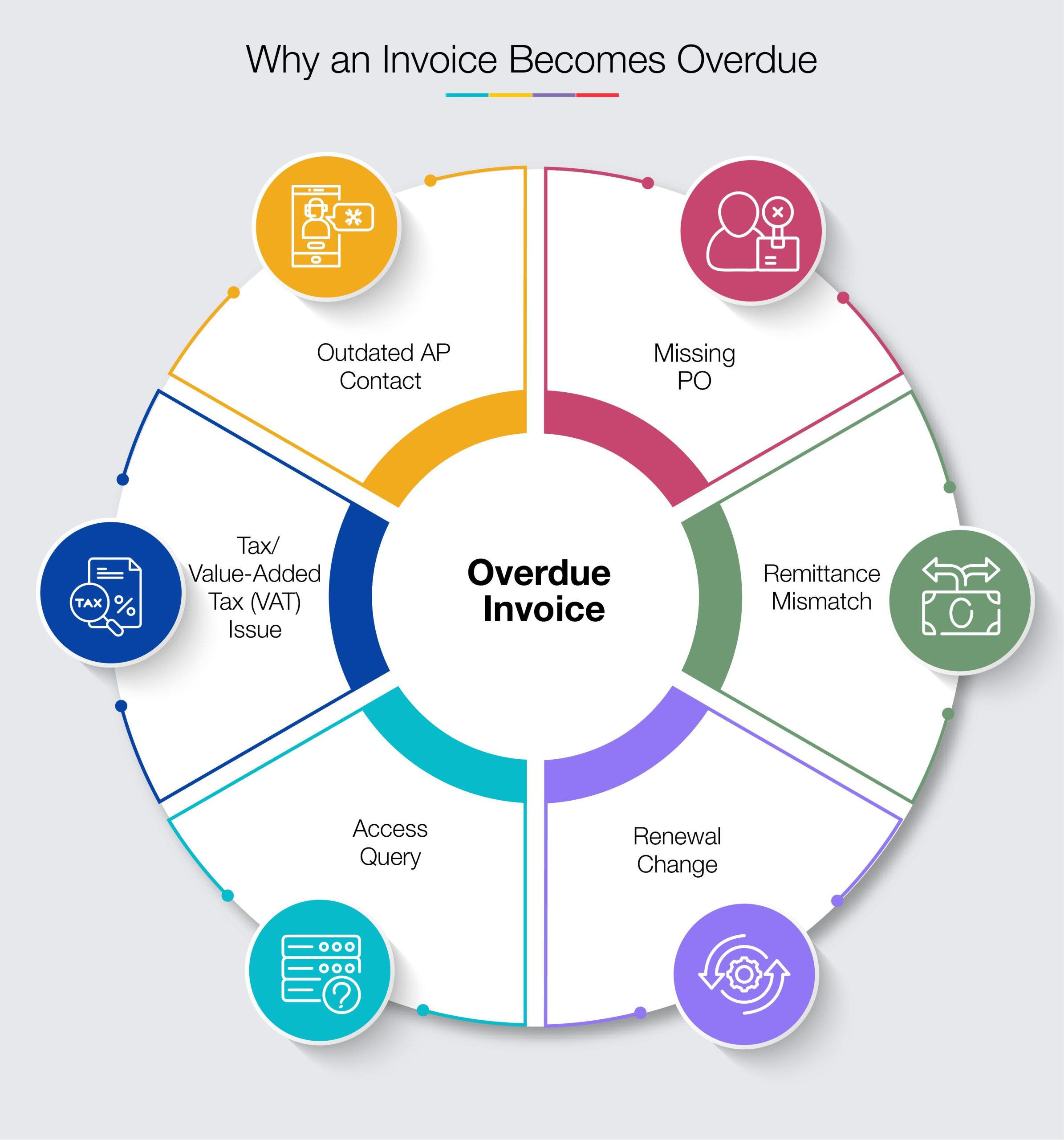
In business-to-business (B2B) publishing, it may mean the invoice was sent to an outdated accounts payable (AP) contact. The purchase order (PO) may be missing. The customer may need a revised invoice or credit note. Payment may have been received but not matched. A subscription agent may be consolidating payment. Access may be under review. A renewal may have changed the commercial terms.
Dunning is the structured follow-up process used to prompt payment on overdue invoices. It usually starts with reminders and, if unresolved, moves toward firmer notices or formal escalation. For publishers, the sequence has to do more than track invoice age. It has to work around institutional buying, subscription operations, access queries, consortia billing, agent workflows, and renewal timing.
A good dunning sequence does not simply send the next reminder. It checks whether the last one had any chance of working.
What Is Actually at Stake in a Publisher’s Accounts Receivable Book
A publisher’s accounts receivable (AR) book is tied to customers, contracts, access, subscription records, agents, consortia, and renewals.
The account base may include libraries, universities, research institutions, societies, corporate subscribers, consortia, subscription agents, and aggregators. Payment can depend on correct invoice routing, tax/VAT documentation, supplier portal submission, budget approval, remittance advice, or confirmation that access and entitlements match what was purchased.
So “late” has several meanings. It may mean the invoice has not reached the right person. It may mean the customer is waiting for a revised invoice or credit note. It may mean payment has gone through an agent. It may mean remittance detail is missing. It may mean an entitlement issue is being worked through by customer service. It may also mean the account missed the deadline and needs a firm reminder.
If the system only knows that an invoice is 14, 30, or 45 days overdue, it does not know enough to choose the right next step.
Why Invoice-Age-Only Dunning Breaks Down
Rigid dunning logic assumes every overdue invoice needs the same next action. That is where avoidable problems begin.
A first late payment from a long-standing consortium is not the same as repeated silence from a chronically late account. A missing PO is not the same as refusal to pay. A payment waiting to be matched is not the same as no payment. A renewal-stage customer should not move through the same escalation path as an inactive account with no current commercial discussion.
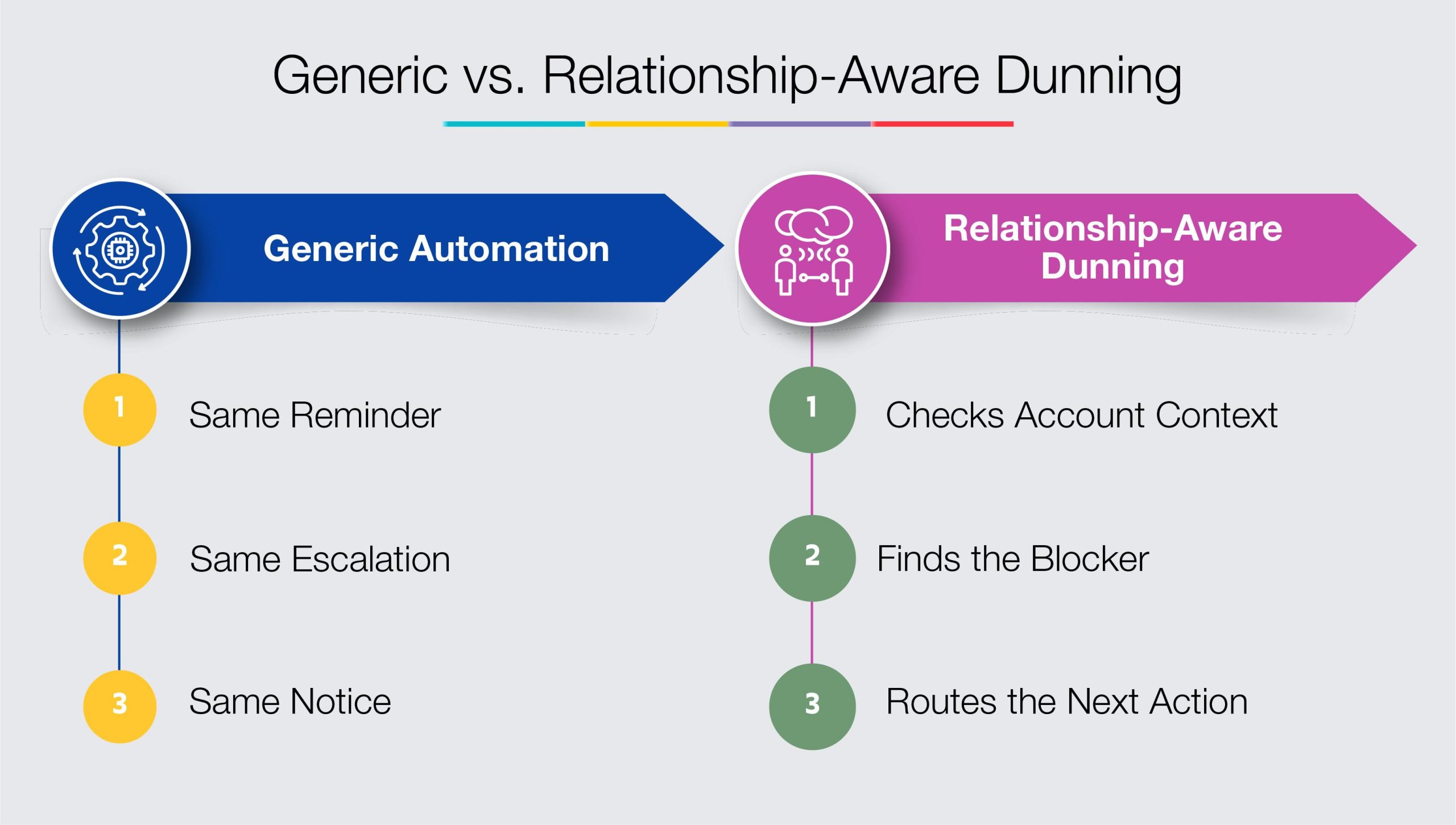
When the sequence is built only around invoice age, four things tend to happen.
The wrong problem gets chased. If the blocker is a PO mismatch, outdated AP contact, missing tax document, portal issue, access query, or remittance gap, another reminder will not fix it.
The customer sees the process gap. A formal notice sent while a revised invoice or credit note is pending does not look disciplined. It looks disconnected.
AR repeats instead of resolving. Teams send more messages, check the same account again, or escalate internally after the customer has already explained the issue somewhere else.
Escalation becomes risky. Late-fee language, service or access action, legal review, and external collections handoff should not trigger automatically for strategic, disputed, renewal-stage, agent-managed, or consortium-managed accounts.
A good dunning sequence is not a pressure ladder. It is a decision path.
The 7-Stage Dunning Sequence Built for Publisher Accounts
A publisher-grade sequence should move in stages, but each stage should have a job. The goal is to remove the reason payment is stuck, then escalate only when the account has had a clear path to resolve it.
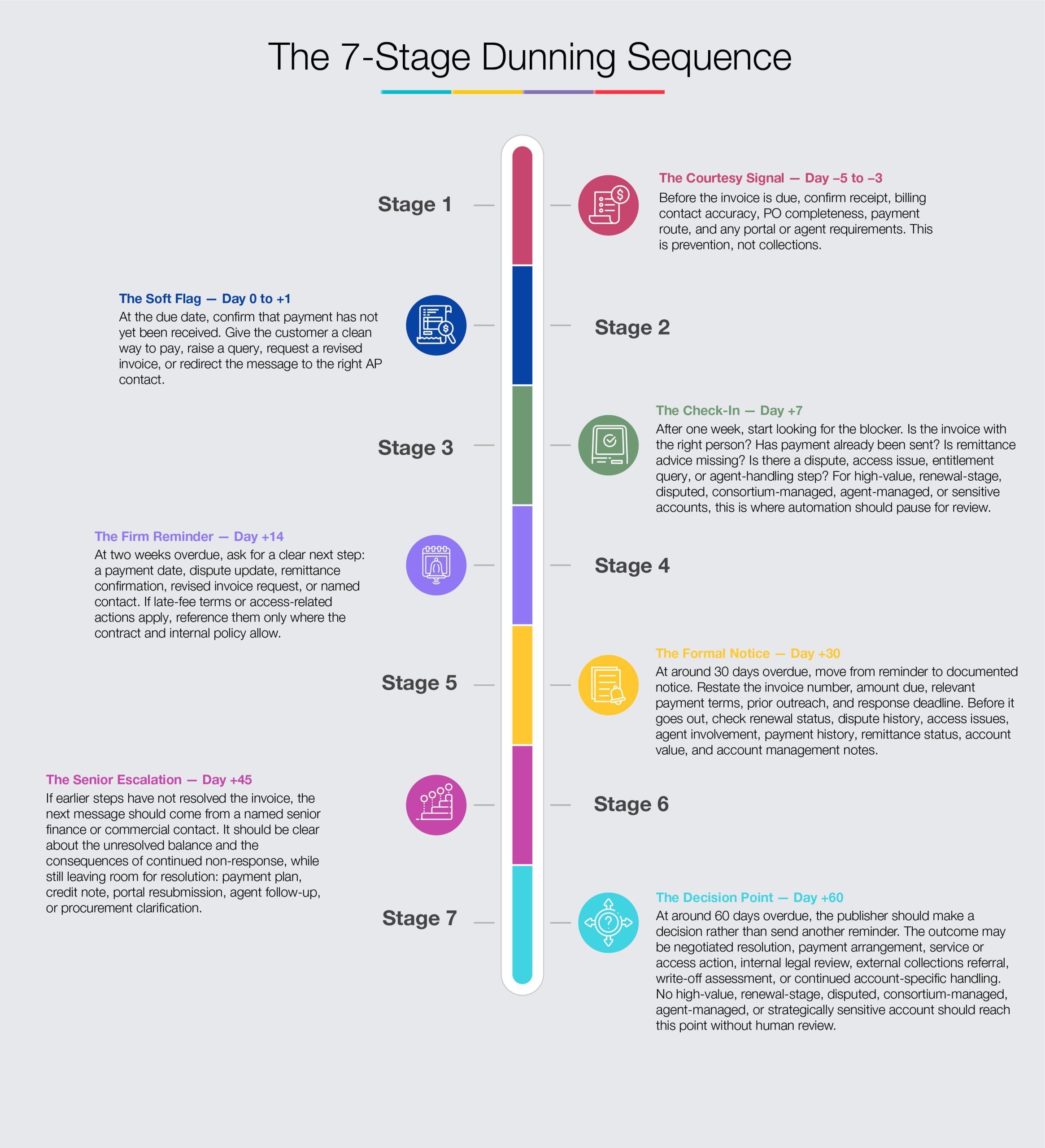
The value of the framework is not the number of stages. It is the discipline behind the sequence: each step checks something, rules something out, or routes the account to a more appropriate action.
Match the Message to the Publishing Persona
The tone of a dunning message should adapt based on who is receiving it.
An academic librarian is highly sensitive to access interruptions. The message should be collaborative and service-first, making clear that the goal is to keep research access available while a routing, invoice, or payment issue is resolved.
A subscription agent or aggregator may be handling consolidated bulk payments across multiple accounts, titles, or publishers. The workflow should not chase individual invoices blindly. It should focus on automated reconciliation and matching missing remittance details to the right invoices.
A corporate procurement office is usually governed by purchase order (PO) rules, tax documentation, vendor portals, and approval workflows. The message should be structured around compliance requirements and portal submissions rather than relationship checking.
Before You Automate
A strong dunning sequence starts before the first message is sent.
Segment the AR book. Account tier, contract value, payment history, dispute status, renewal timing, agent involvement, consortium structure, and relationship sensitivity should shape the workflow from the beginning.
Clean up contact and routing data. Billing contacts should be reconciled across customer relationship management (CRM), enterprise resource planning (ERP), subscription management, customer service, and account management records. The workflow should capture whether the customer requires portal submission, PO validation, tax documentation, agent handling, or specific remittance instructions.
Flag sensitive accounts early. Strategic consortia, major institutions, renewal targets, active dispute accounts, society-linked relationships, agent-managed accounts, and long-standing customers may still need follow-up. They should not receive blind escalation.
Connect AR, renewals, and access operations. Repeated late payment may point to a billing cadence issue, unclear PO requirement, outdated stakeholder map, entitlement mismatch, portal submission gap, or payment-term misalignment.
An overdue invoice is evidence of payment friction. It is not, by itself, evidence of customer intent.
From Sequence to System
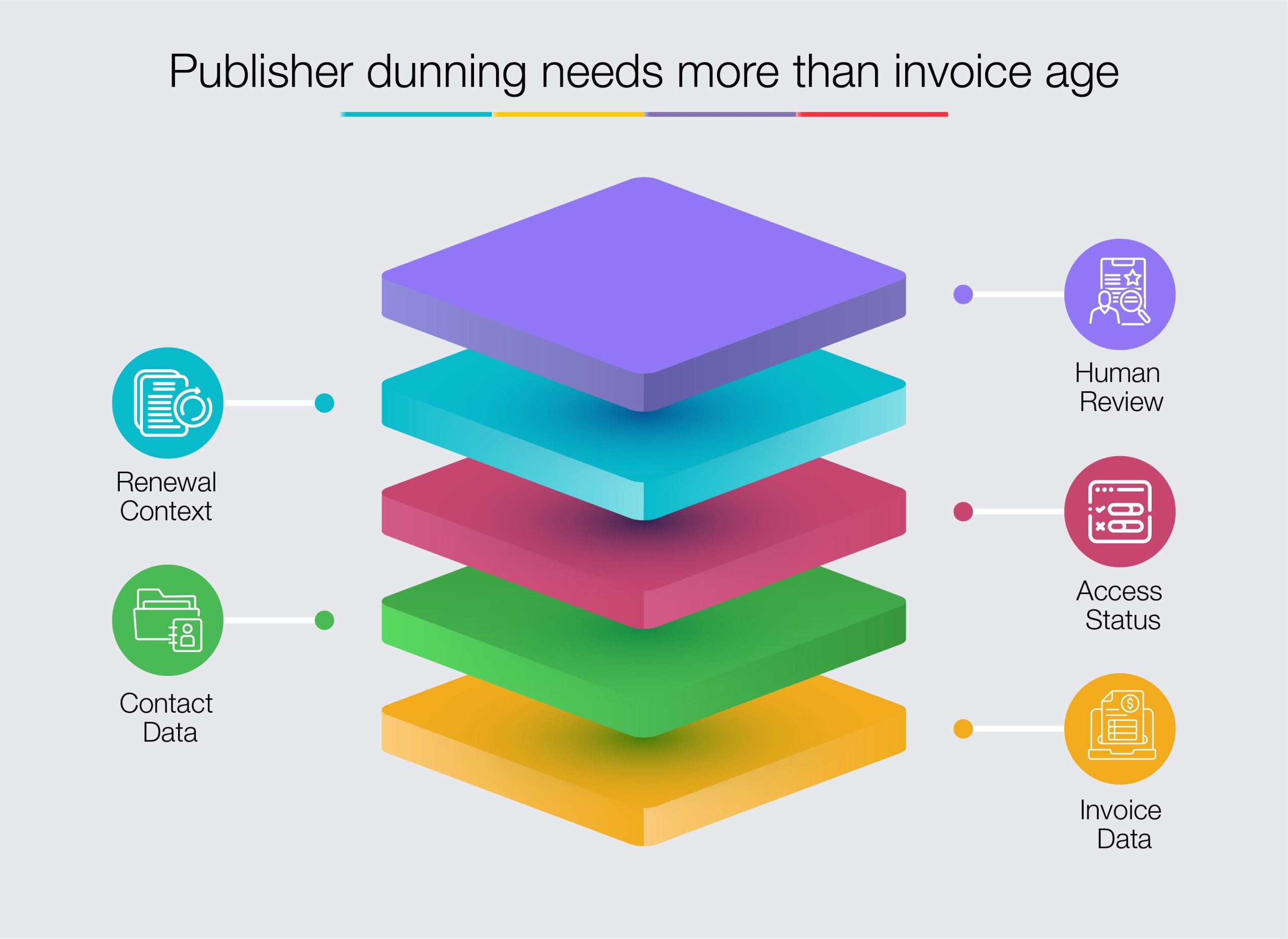
A defensible dunning program needs more than automated emails. It needs a workflow that connects invoice data, customer records, access status, account context, and human review.
At minimum, the system should be able to route accounts by segment, validate contacts, capture routing requirements, flag disputes, pause sensitive accounts, and show where invoices are being resolved or stuck.
Useful reporting should show more than total overdue value. It should show which stages resolve the most accounts, where disputes enter the process, how often contact data fails, how often remittance is missing, which accounts need manual review, and how aging differs by customer segment.
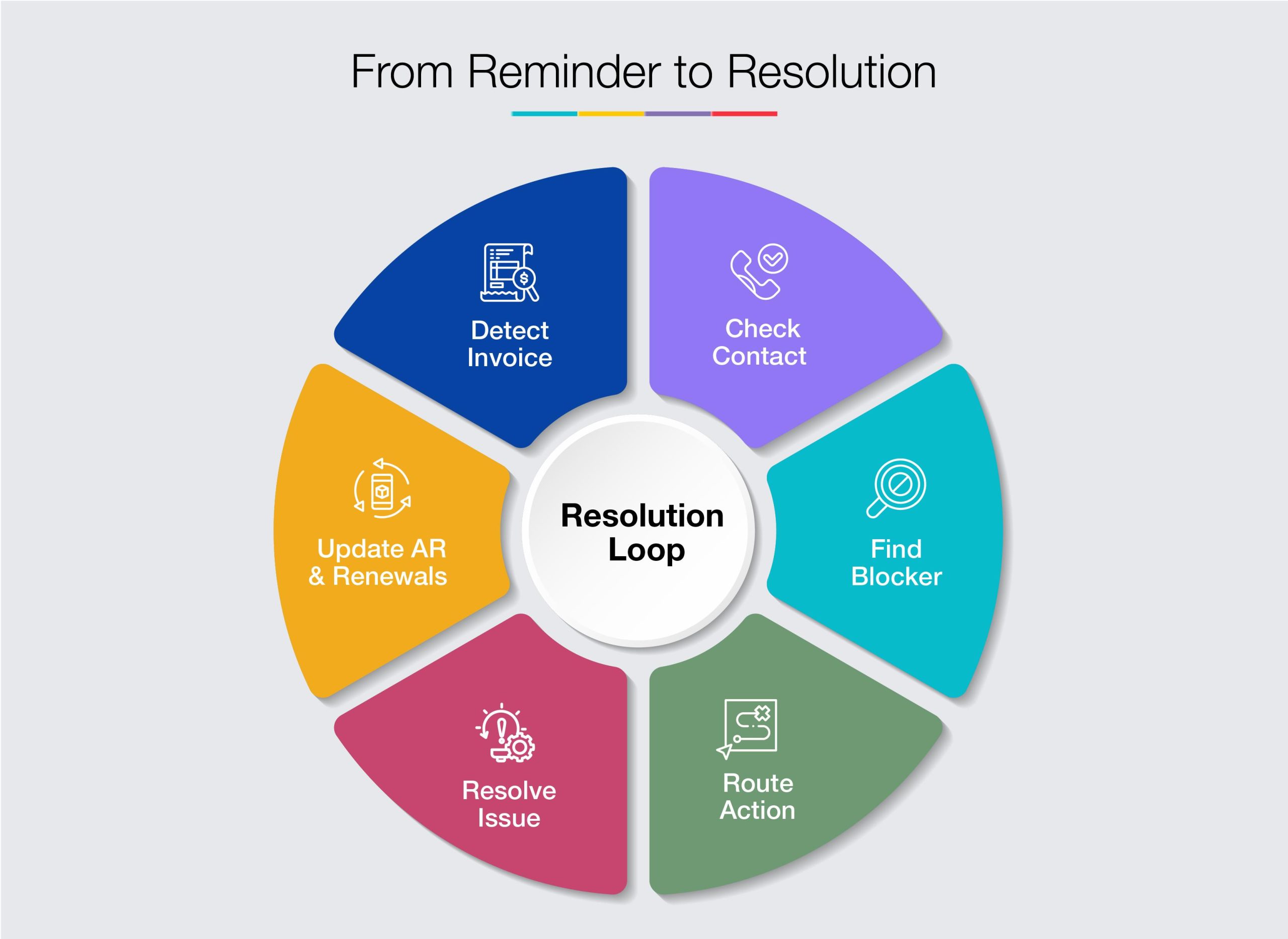
The point is not to send more reminders. It is to make the next step more accurate.
What to Look for in a Dunning Partner
Do not evaluate a dunning partner only on reminder automation. Most systems can send scheduled emails.
For publishers, the harder requirement is operational judgment. The partner must understand when an overdue invoice is really a missing PO, an agent-handled payment, a remittance gap, an access dispute, a renewal timing issue, or a true non-response.
The right partner should bring publishing-domain AR experience, sequence logic that changes with account context, and a clear review model for sensitive moments: formal notices, service or access decisions, legal review, and external collections referral.
In publishing, speed without context is not efficiency. It is exposure.
Revenue Recovery Is a Relationship Decision
The person receiving a payment follow-up may be connected to the same budget, approval chain, subscription relationship, or renewal process that determines future revenue.
That is why dunning cannot sit apart from the account relationship. The best AR teams know when the next step is not another notice, but a revised invoice, a credit note, a remittance check, agent follow-up, or a quick conversation with the account manager.
Revenue recovery should not come at the cost of avoidable relationship damage. With the right dunning framework, publishers can follow up with discipline, escalate with care, and resolve overdue invoices without weakening the accounts they are trying to retain.
Ready to improve collections without putting renewals at risk? Contact Straive to see how our customer experience (CX) and Collections teams support publisher AR operations with better sequencing, review gates, and account-aware follow-up.

Associate VP, Account Management


