
Posted on: February 3rd 2026
Introduction: CX Enters Its AI-Native Era
By 2026, customer experience (CX) will no longer be described as “digitally enabled” or “AI-assisted.” It will be AI-native by design. This shift represents more than incremental automation or smarter conversational interfaces. It reflects a fundamental re-architecture of how organizations understand, engage, and serve customers across the entire lifecycle.
Over the last decade, CX transformation largely focused on omnichannel access, faster response times, and operational efficiency. While these initiatives expanded reach and improved service availability, they remained predominantly reactive. Customers still initiated interactions, repeated context across channels, and navigated fragmented service ecosystems.
AI-enhanced CX changes this dynamic by introducing intelligence that continuously learns from behavior, context, and intent, allowing experiences to evolve dynamically rather than follow rigid workflows.
Exhibit 1: How AI-Enhanced CX Rewrites the Rules of Traditional Customer Experience
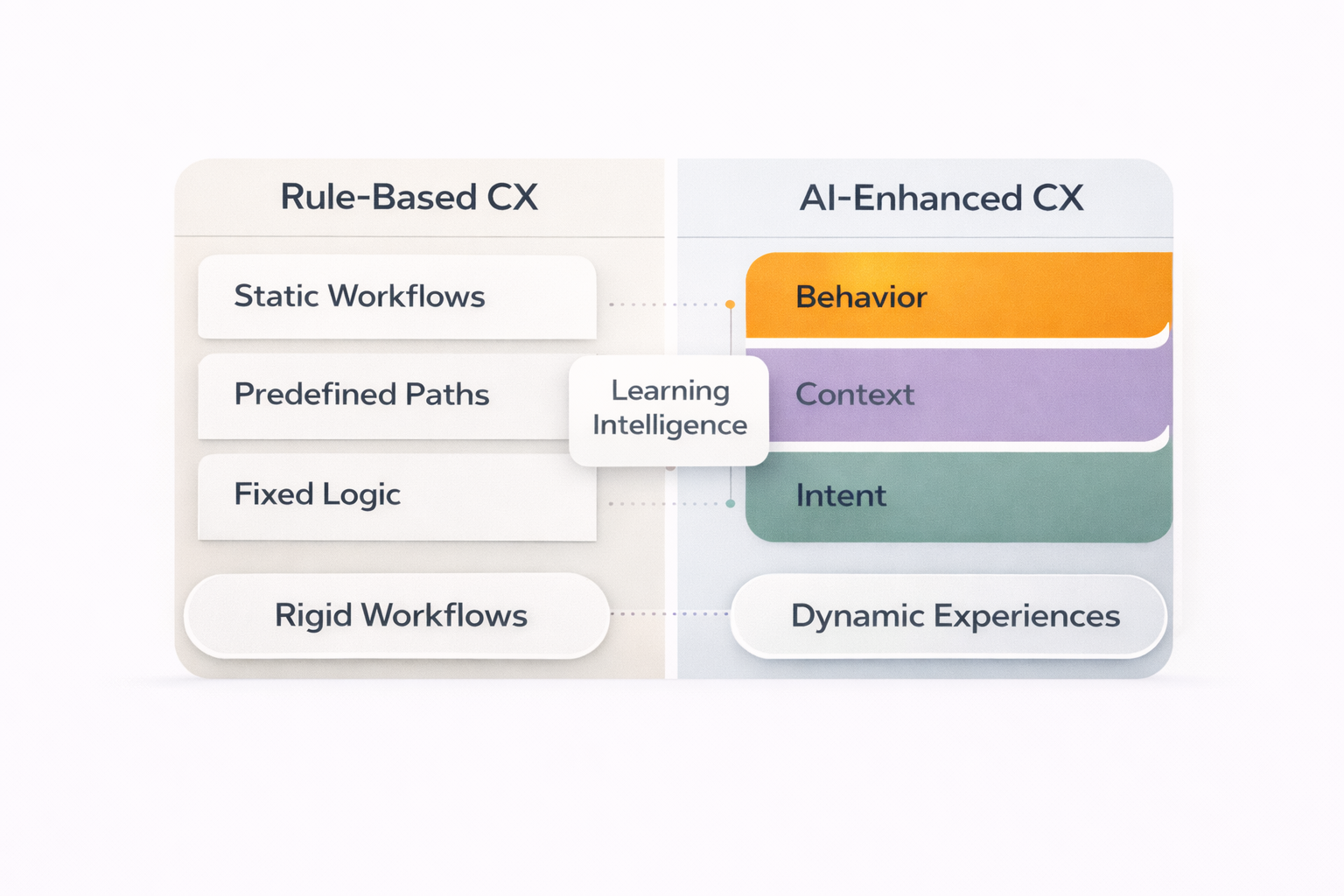
In 2026, CX systems will increasingly anticipate needs, personalize engagement at scale, and coordinate actions across both digital and human touchpoints. The transition from traditional CX to AI-enhanced CX is not about replacing human teams, but about amplifying them with predictive insight, contextual memory, and real-time decisioning. This blog examines where AI in CX stands today, the major shifts expected in 2026, the growing role of generative AI, industry-specific transformations, emerging CX metrics, and what enterprises must do now to prepare for an AI-native future.
AI in CX Today: Where We Stand
AI is already embedded in modern CX operations, though adoption maturity varies widely across industries and organizations. Most enterprises today operate within a hybrid CX model, where AI supports discrete functions rather than orchestrating the end-to-end experience.
Across retail, BFSI, telecom, healthcare, and media, AI is commonly used for chatbots and virtual agents handling routine inquiries, sentiment and intent analysis that supports live agents, recommendation engines that personalize content or product discovery, and automated routing that prioritizes interactions based on urgency or customer value. Speech-to-text and text-to-speech technologies have also become standard, improving accessibility and response consistency.
Exhibit 2: Baseline AI Capabilities Powering Modern Customer Experience 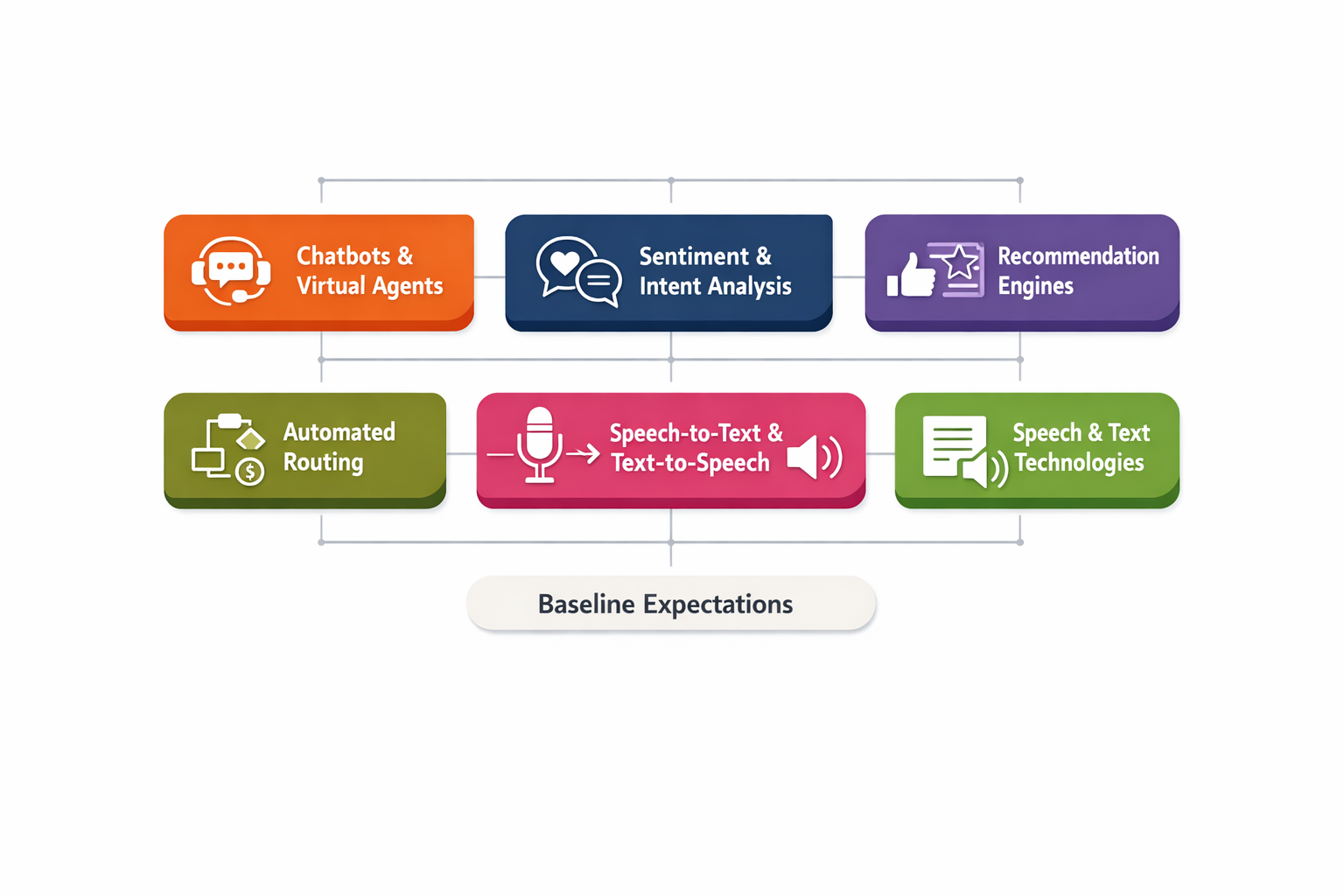
These capabilities, once considered advanced, are now baseline expectations. However, they are often deployed as point solutions rather than components of a unified CX architecture. Customer data frequently remains fragmented across CRM systems, interaction histories, and operational platforms, limiting AI’s ability to deliver continuity and contextual awareness.
What is still missing in many organizations is persistent memory, real-time orchestration, and predictive engagement. AI systems respond effectively when prompted, but they rarely act proactively or holistically. This gap defines the opportunity that 2026 will address as CX moves decisively from AI-enabled to AI-native.
The Biggest AI-Driven CX Shifts Expected in 2026
By 2026, AI will no longer function as a supporting tool within CX. It will operate as the primary coordination layer across customer journeys. Four interconnected shifts will define this transformation.
Exhibit 3: The Emergence of AI-Coordinated CX 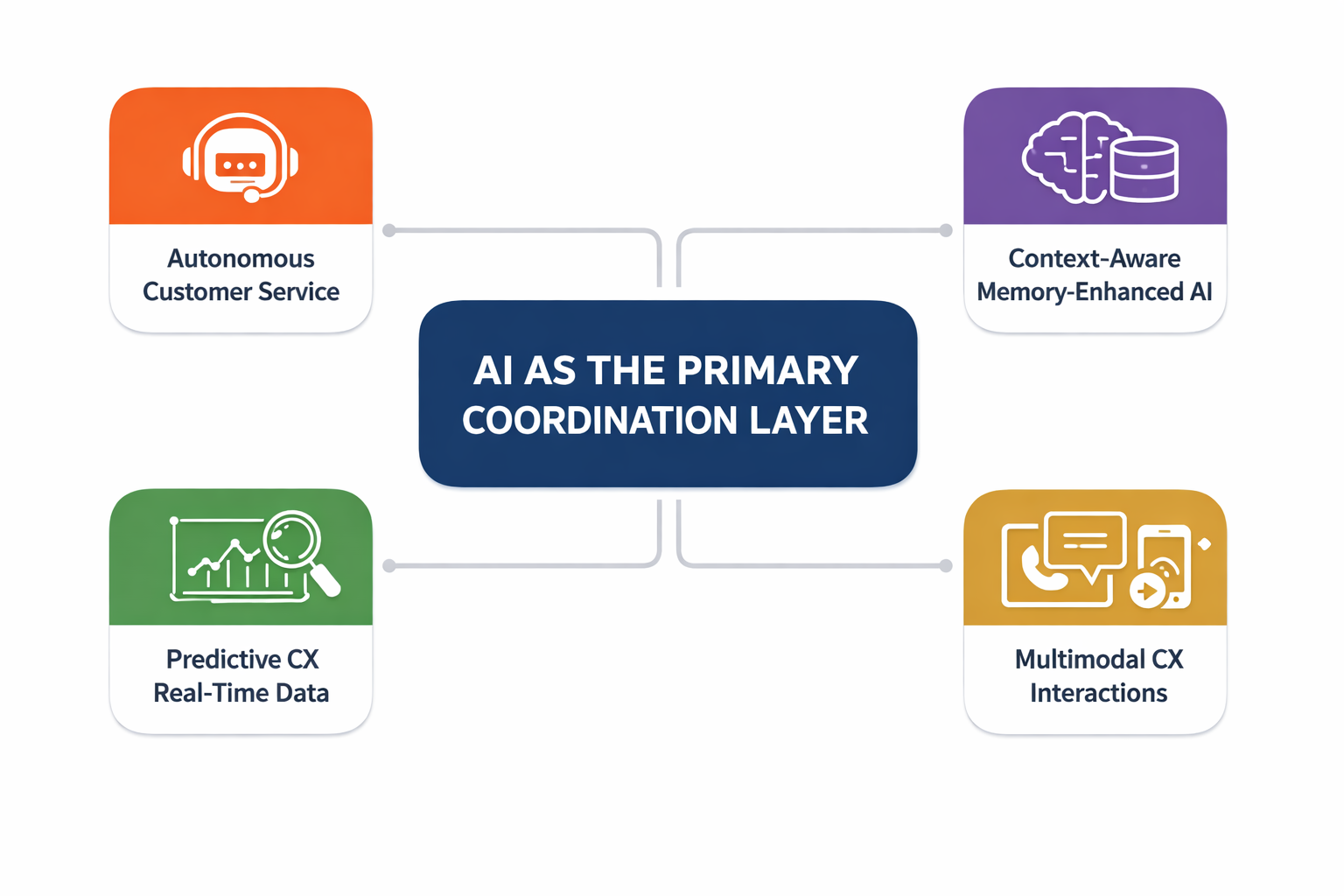
Autonomous Customer Service
Customer service will evolve toward autonomous resolution, where AI systems manage interactions from detection to closure. Instead of escalating issues to human agents by default, AI will assess complexity, risk, and emotional sensitivity before determining whether human intervention is required.
Autonomous systems will identify issues through behavioral signals or system events, access policies and transaction histories, execute actions such as refunds or reconfigurations, and communicate outcomes clearly. Human agents will focus on exceptions involving ambiguity, trust, or emotional nuance, while AI handles repeatable resolutions with speed and consistency.
This change will reshape service operations. The definition of self-service will expand beyond knowledge bases or scripted bots. In AI-native CX, self-service becomes self-completing, where the system not only guides the customer, but also performs the work required to resolve the problem end to end.
Predictive CX Powered by Real-Time Data
CX in 2026 will increasingly be anticipatory rather than reactive. Predictive models will analyze behavioral data, historical interactions, and operational signals to identify friction before customers experience it. Proactive notifications, early interventions, and personalized outreach will reduce inbound volume while strengthening trust and perceived attentiveness.
This shift reframes the organization’s role in the relationship. Instead of waiting for dissatisfaction to surface, the brand becomes a proactive partner, informing, advising, and correcting courses in real time. Predictive CX also addresses silent churn, where customers disengage without ever raising a complaint.
Context-Aware, Memory-Enhanced AI Systems
AI systems will retain longitudinal context, allowing them to understand preferences, prior decisions, and unresolved issues across interactions. Customers will no longer need to repeat information, and experiences will feel continuous rather than episodic.
From an operational perspective, memory-enabled systems accelerate resolution and reduce inconsistency. From a trust perspective, they must be designed with restraint, storing only what meaningfully improves experience, governed by consent, security, and transparency.
Multimodal CX Interactions
Text and voice will be complemented by images, documents, screens, and video. Customers may show a product defect, upload a bill, or interact through voice-plus-screen interfaces, enabling faster diagnosis and more intuitive engagement.
Multimodal CX reduces the effort customers expend translating problems into words and improves accessibility by supporting different interaction preferences.
Generative AI as the CX Engine in 2026
Generative AI will be central to the evolution of AI-powered CX, not as a novelty, but as a decision-making and experience-design engine. Unlike traditional automation, generative models synthesize information, adapt responses dynamically, and generate new outputs rather than selecting from predefined options.
Exhibit 4: Reframing Conversational Intelligence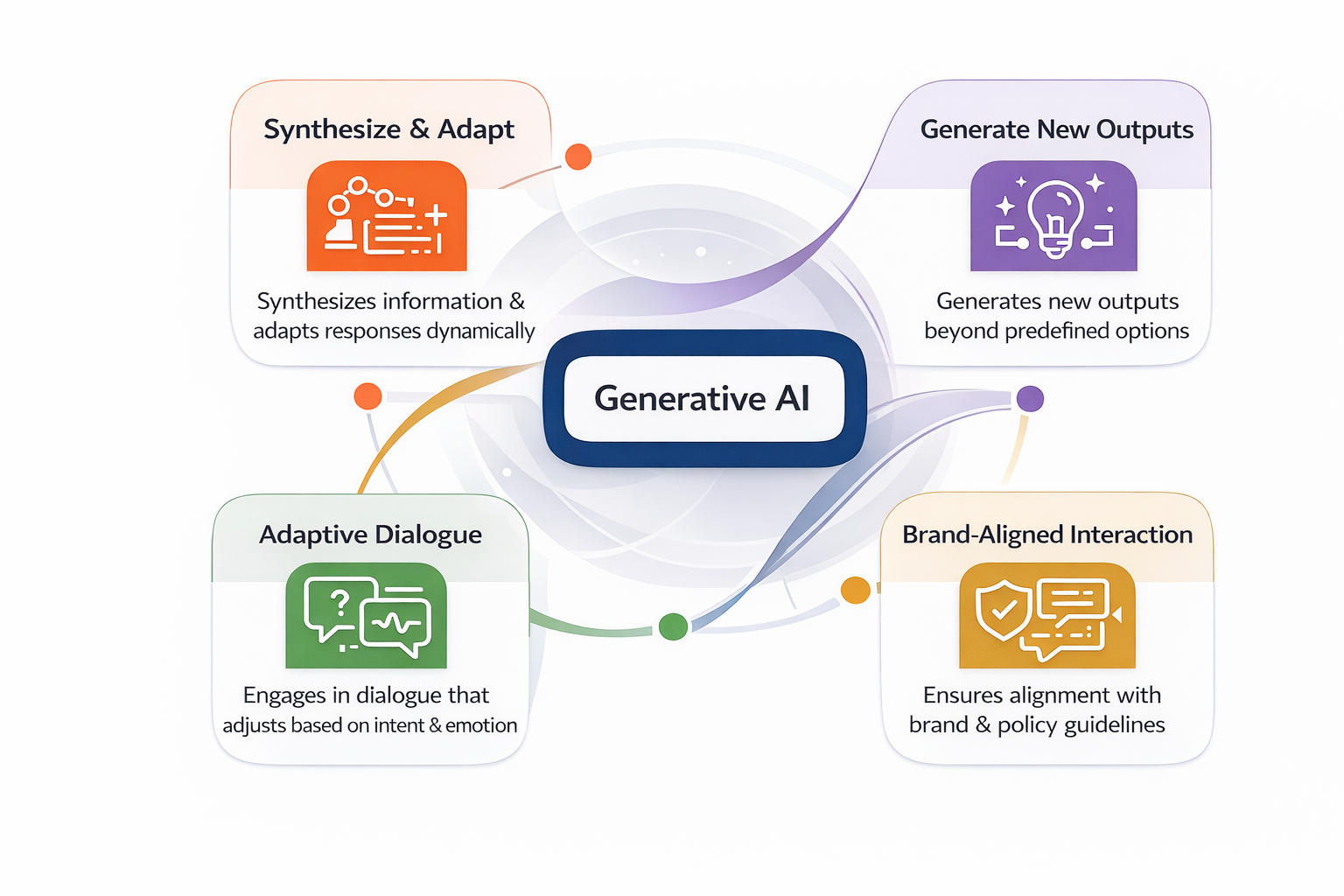
Conversations will shift from scripted responses to adaptive dialogue that adjusts tone, depth, and structure based on intent and emotional cues, while remaining aligned with brand and policy guidelines. However, conversational fluency alone will not define success, as customers ultimately evaluate CX based on outcomes and how quickly and reliably issues are resolved. In 2026, the strongest generative AI systems will tightly integrate conversation with execution, linking dialogue directly to backend actions.
Generative AI will continuously create and refine CX content, including knowledge articles, onboarding flows, in-app guidance, and transactional communication. This reduces content maintenance overhead and improves relevance, while also introducing the need for strong governance to ensure accuracy, compliance, and consistency.
Beyond content and conversation, generative AI will increasingly sit at the intersection of customer data, operational rules, and business objectives. It will recommend next-best actions, adapt workflows dynamically, and support agents with real-time insight. This positions generative AI as the intelligence layer that moves CX from automation toward context-rich personalization.
Industry-Specific Outlook: How AI Will Transform CX
AI-enhanced CX will not look the same across industries. Each sector will apply intelligence differently based on customer expectations, regulatory requirements, and operational complexity.
Exhibit 5: Industry-Specific CX Transformation with AI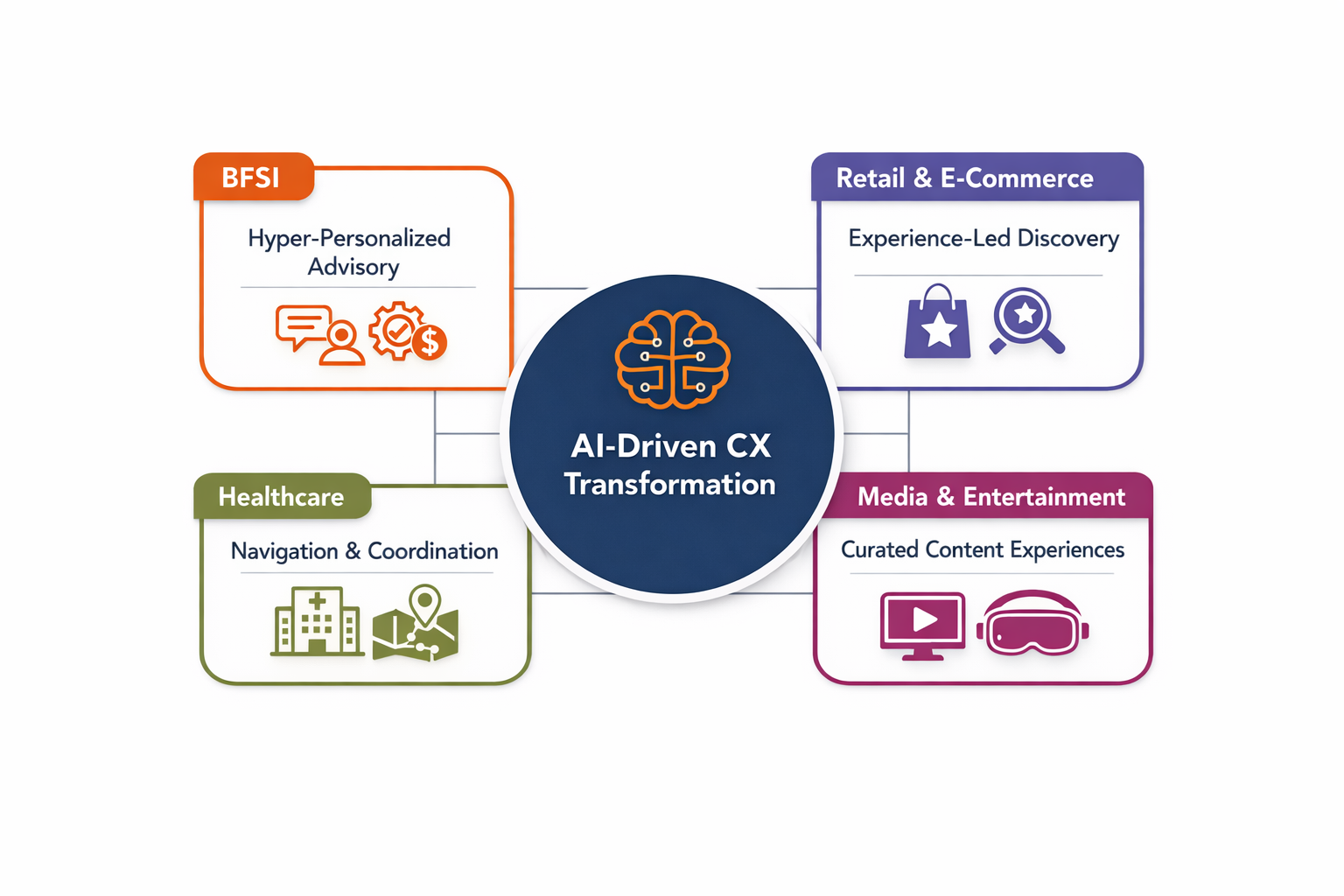
BFSI
In banking and financial services, AI will enable hyper-personalized advisory experiences grounded in real-time financial behavior and life-stage context. CX systems will proactively guide customers through savings, investments, credit, and insurance decisions while maintaining strict governance.
Fraud detection will become embedded within the CX journey rather than treated as a separate process. Customers will experience faster, clearer resolution with minimal friction, reinforcing trust without compromising security. At the same time, transparency and explainability will remain essential wherever financial outcomes are affected.
Retail and E-commerce
Retail CX will move from transactional journeys to experience-led discovery. AI-generated recommendations will account for visual similarity, contextual usage, and intent signals. Multimodal search using images or natural language will become standard.
Predictive insights will improve delivery transparency, post-purchase engagement, and returns management. The most effective retail CX strategies will align personalization with operational reality, ensuring recommendations are not only relevant but also available and fulfillable.
Healthcare
Healthcare CX will focus on navigation and coordination. AI systems will guide patients through appointments, diagnostics, care plans, and follow-ups, reducing administrative burden while improving clarity and continuity. Clinicians remain central to care delivery, with AI streamlining non-clinical interactions and supporting informed decisions. Strong privacy controls and ethical governance will be critical to sustaining trust.
Media and Entertainment
AI will curate not only what content is recommended, but how it is experienced. Dynamic sequencing, personalized discovery paths, and adaptive engagement models will shape CX across streaming, publishing, and interactive media platforms.
Experiences will become more context-aware, responding to time, mood, and recent engagement rather than relying solely on historical preferences.
Measuring AI-Enhanced CX: New Metrics for 2026
As CX becomes predictive and autonomous, measurement frameworks must evolve. Traditional metrics such as CSAT and NPS remain useful, but they are no longer sufficient on their own.
Organizations will increasingly rely on predictive, behavioral, and operational indicators, including inferred satisfaction and churn signals, autonomous resolution effectiveness, customer effort forecasting, engagement continuity, and personalization impact across journeys.
These measures reflect outcomes rather than opinions. AI itself will surface anomalies and emerging experience risks, enabling leaders to intervene before issues escalate. Measurement becomes continuous and embedded into CX operations rather than a periodic reporting exercise.
What Enterprises Must Do Now to Prepare for AI-Native CX
Preparing for AI-native CX requires coordinated action across technology, people, and governance.
Enterprises must first build unified, governed data foundations that support real-time access to customer context. Responsible AI must be designed into CX from the outset, with clear standards for transparency, bias mitigation, explainability, and consent.
CX operations must evolve as well. As AI assumes more execution, teams will shift toward orchestration, oversight, and continuous improvement. This requires rethinking workflows, escalation models, and knowledge management practices.
Exhibit 6: Evolving Team Focus with AI Execution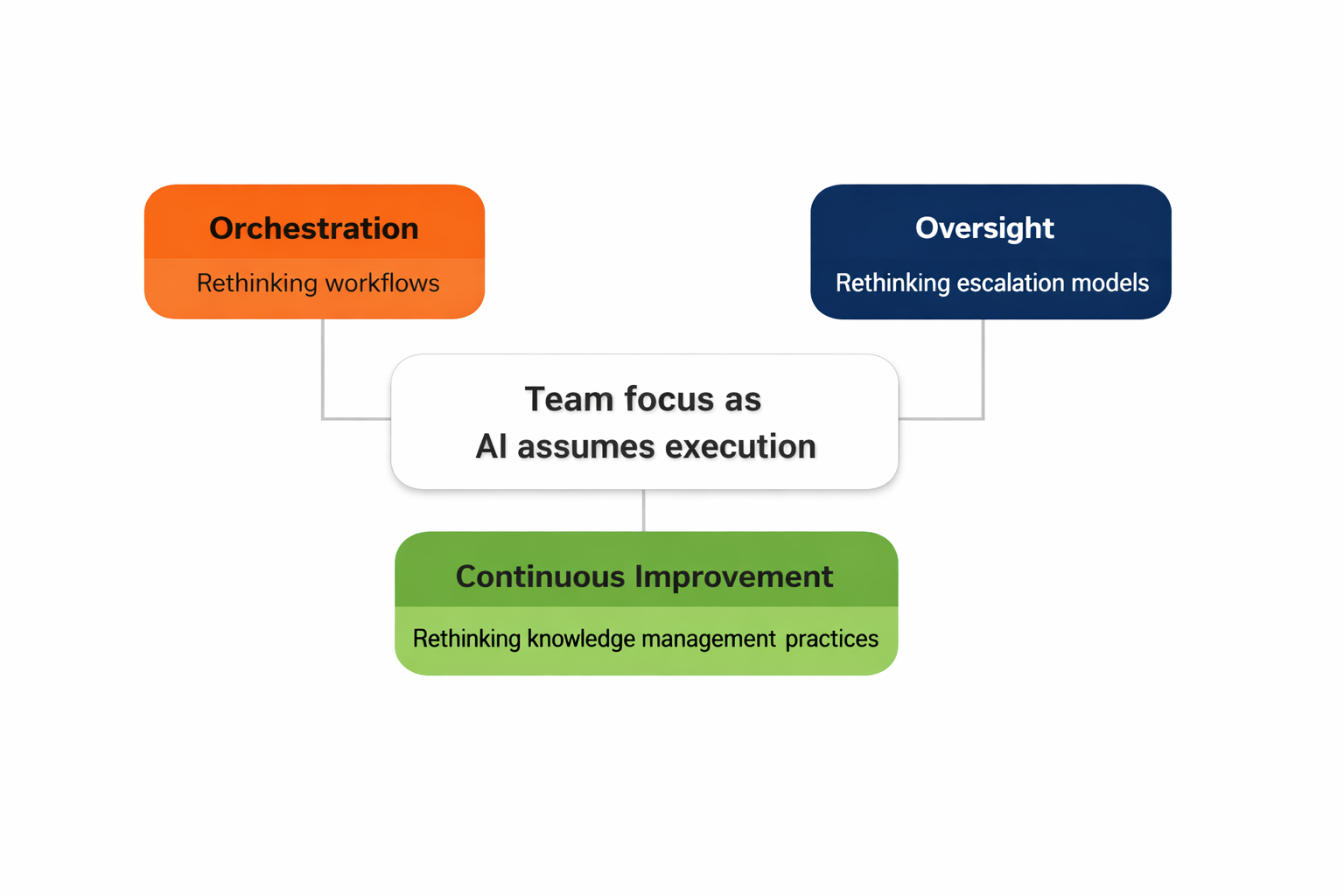
Technology architecture must support real-time orchestration through scalable platforms, APIs, and secure integrations. Finally, workforce readiness is essential. CX professionals need AI literacy to collaborate effectively with intelligent systems and to apply human judgment where it matters most.
Organizations that address these dimensions together will be best positioned to lead in 2026.
Conclusion: The Future of CX Is AI-Native, Not AI-Only
The future of customer experience is not defined by automation alone, but by intelligence applied with purpose and responsibility. By 2026, AI-enhanced CX will be characterized by predictive engagement, contextual continuity, and seamless collaboration between humans and machines.
AI will not replace CX teams. It will elevate them, freeing human talent to focus on trust, judgment, and emotional connection while machines handle scale, speed, and complexity. Enterprises that invest early in data foundations, responsible AI, and operational redesign will move beyond incremental CX gains toward long-term loyalty and sustainable differentiation.
Exhibit 7: Foundations for Responsible, High-Impact AI 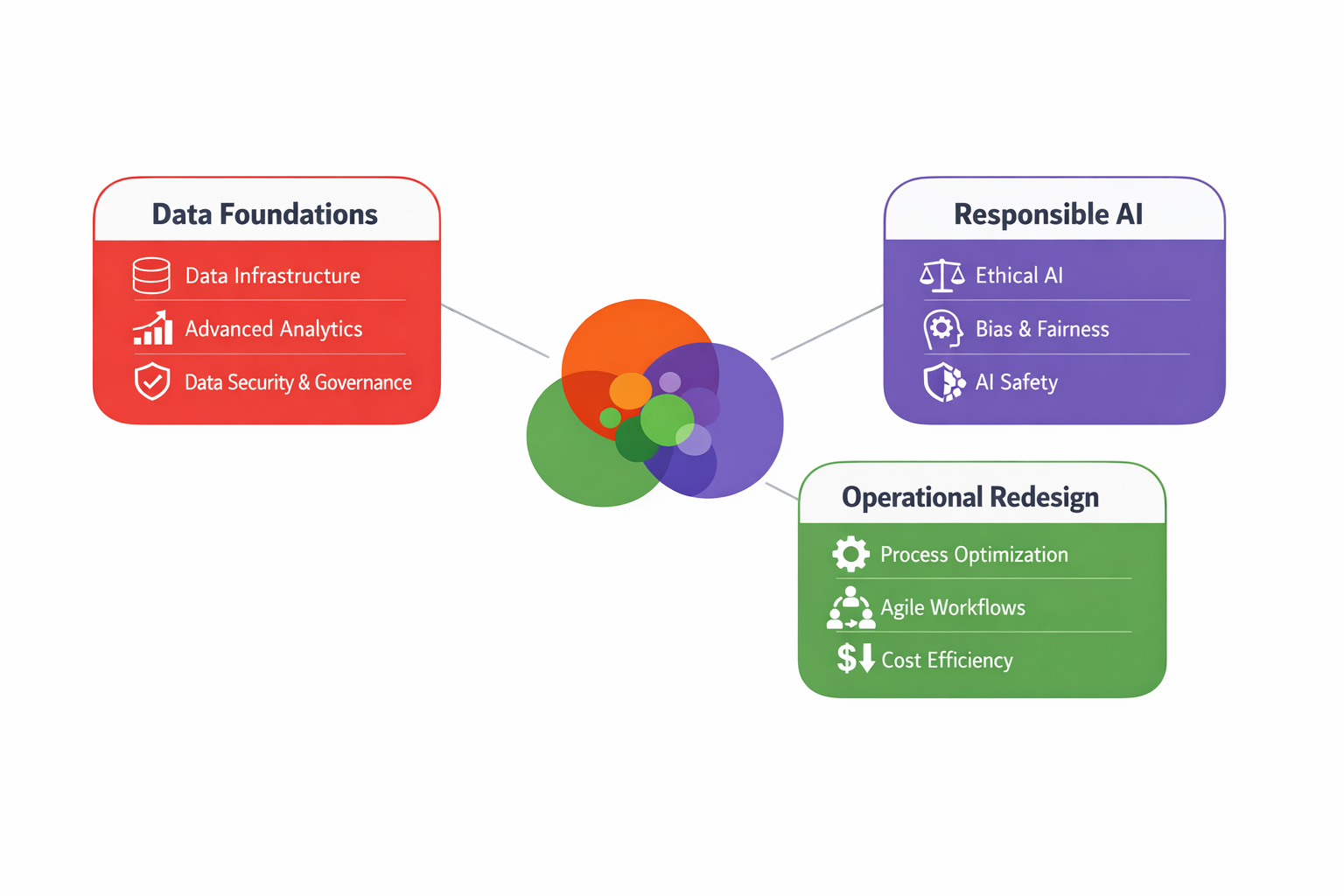
The organizations that succeed in 2026 will not ask whether AI belongs in CX. They will ask how intelligently, ethically, and strategically it can shape experiences that customers value and remember.

Assistant Director, Strategic Programs
Abhishek leads operational excellence and transformative client outcomes, bringing extensive experience in orchestrating large-scale customer experience and technology programs


