
Posted on: July 27th 2026
Most publishers know they have accessibility debt. Few know how much.
As accessibility regulations continue to evolve and compliance deadlines approach, publishers, educational institutions, and content providers face a growing challenge. Decades of legacy content, diverse content formats, and changing accessibility standards have created significant accessibility backlogs that many organizations struggle to quantify.
The challenge is no longer simply about accessibility remediation. It is about understanding the scale of the problem, estimating the investment required, and building a realistic roadmap toward accessibility compliance.
At Straive, we believe accessibility should be managed with the same rigor as any other strategic business initiative. Organizations need visibility, forecasting, and governance capabilities that allow them to move beyond reactive remediation toward proactive accessibility planning. This is where predictive accessibility intelligence becomes a critical enabler.
| “The challenge is no longer simply about accessibility remediation. It is about understanding the scale of the problem, estimating the investment required, and building a realistic roadmap toward accessibility compliance.” |
The Hidden Cost of Accessibility Debt
Accessibility debt is often invisible until organizations begin preparing for compliance audits, regulatory reviews, platform migrations, or digital transformation initiatives.

Fig 1: The Hidden Cost of Accessibility Debt
Many publishers manage extensive repositories of legacy content accumulated over years or even decades. These repositories may include books, journals, research articles, educational materials, PDFs, EPUBs, multimedia assets, and archival content created under varying standards and workflows.
The problem is not simply the volume of content. It is the uncertainty surrounding it.
Many organizations also lack visibility into their actual compliance exposure. Without a clear understanding of where accessibility gaps exist, leaders are often unable to accurately assess regulatory risk, prioritize remediation efforts, or determine whether existing content repositories can withstand increasing accessibility scrutiny.
Organizations frequently struggle to answer fundamental questions:
- How much of our content is accessibility compliant?
- Where are the highest-risk areas?
- Which content requires immediate remediation?
- What will remediation cost?
- How long will compliance readiness take?
Without clear answers, accessibility initiatives often become reactive exercises driven by looming deadlines rather than strategic priorities.
Resource constraints further compound the challenge. Accessibility teams are expected to manage growing workloads while operating within fixed budgets and limited staffing models. As a result, many organizations find themselves unable to accurately forecast remediation costs or allocate resources effectively.
Why Traditional Accessibility Audits Fall Short
Historically, organizations have relied on manual accessibility audits and content sampling to assess compliance readiness.
While these approaches provide useful snapshots, they rarely provide a complete picture of accessibility risk across large content repositories. Content sampling can identify localized issues, but it often fails to reveal the true scale of accessibility debt, systemic compliance gaps, or future remediation requirements.
Manual audits are time intensive and expensive. Content sampling provides only a partial view of the overall accessibility landscape. More importantly, traditional assessments often identify issues only after they have become critical.
This reactive approach creates several challenges:
- Incomplete visibility into large content repositories
- Difficulty identifying systemic accessibility issues
- Limited ability to estimate remediation effort
- Delayed decision-making and budgeting
- Increased compliance risk
As accessibility requirements become more stringent, organizations need a more scalable and data-driven approach to understanding accessibility risk.
Introducing Predictive Accessibility Intelligence
The next evolution of accessibility management lies in predictive accessibility intelligence.
Rather than simply identifying existing issues, predictive systems analyze content repositories at scale to provide a comprehensive view of accessibility readiness.
At Straive, we see predictive accessibility intelligence as a way to help organizations move from fragmented remediation to structured accessibility governance.
Accessibility on Demand is not simply a remediation approach. It is a predictive framework that enables organizations to understand, forecast, and govern accessibility outcomes at scale. By combining repository-wide analysis with forecasting intelligence, organizations gain the visibility needed to make informed decisions before compliance challenges become business risks.
This approach is built around four core capabilities.
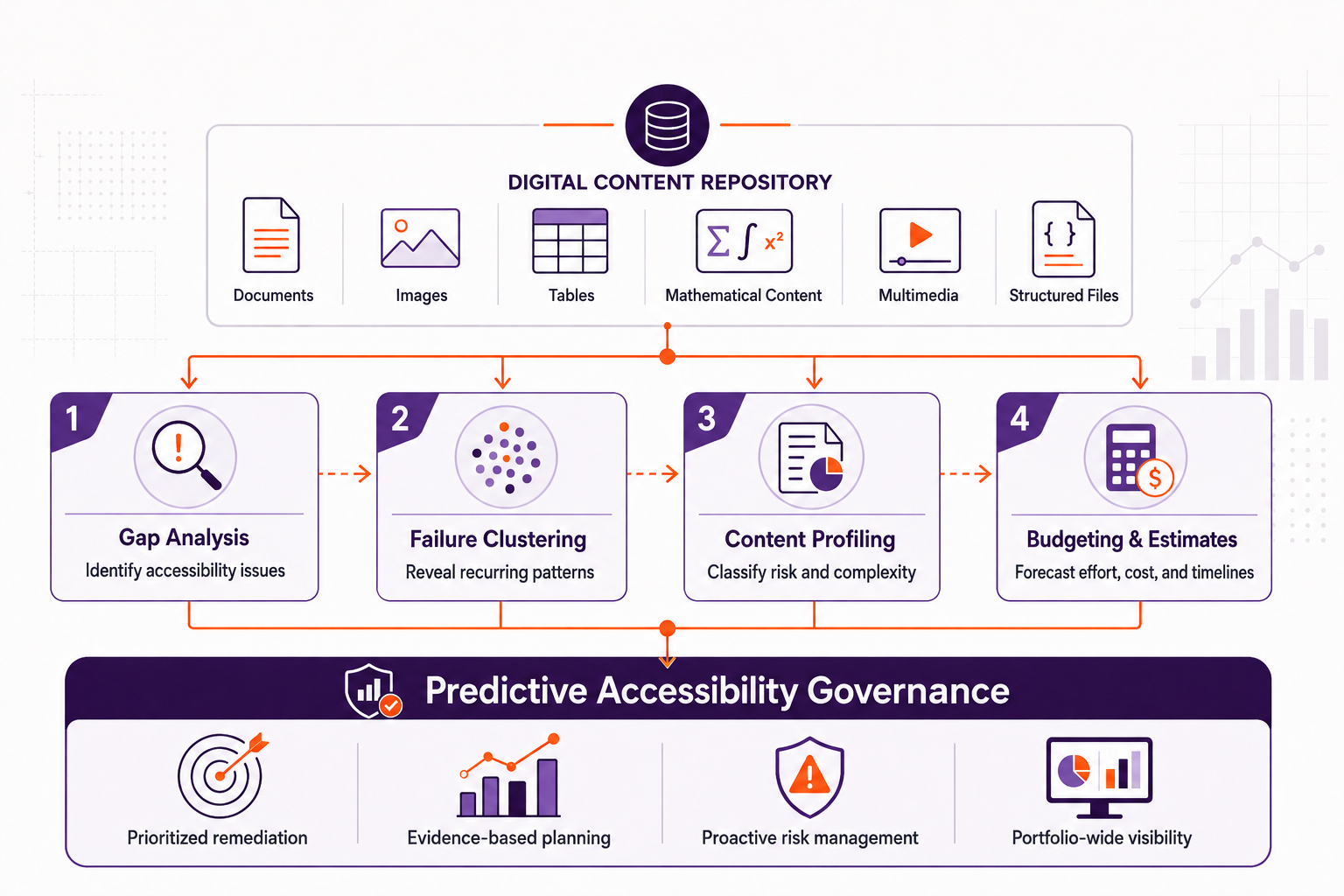
Fig 2: The Predictive Accessibility Intelligence Framework
Gap Analysis
Organizations need a clear understanding of where accessibility gaps exist across content collections. By evaluating documents, images, tables, multimedia assets, and structured content, accessibility teams can identify areas requiring intervention and prioritize remediation efforts accordingly.
Failure Clustering
Accessibility issues rarely occur in isolation.
Predictive systems can identify recurring patterns of non-compliance across content repositories, including missing alternative text, inaccessible mathematical content, broken reading orders, non-compliant tables, and multimedia accessibility gaps.
By identifying these clusters of failure, organizations can address root causes rather than individual symptoms.
Content Profiling
Not all content carries the same level of accessibility complexity.
Advanced profiling enables organizations to classify assets based on risk, complexity, content type, and remediation requirements. This allows teams to prioritize high-impact content while optimizing remediation workflows.
Budgeting and Estimates
Perhaps most importantly, predictive accessibility intelligence provides visibility into the scale of remediation effort required.
Rather than relying on assumptions, organizations gain evidence-based estimates that support planning, resource allocation, and executive decision-making.
| “Accessibility should be managed with the same rigor as any other strategic business initiative.” |
Forecasting Compliance Readiness
Accessibility compliance should not be treated as a one-time project. It should be managed as an ongoing operational capability.
Predictive accessibility intelligence enables organizations to forecast compliance readiness through a structured framework:
- Error Estimation
Identifying likely accessibility issues across repositories. - Backlog Assessment
Quantifying remediation requirements by content category. - Risk Scoring
Prioritizing content based on business impact and compliance exposure. - Compliance Forecasting
Predicting readiness timelines and remediation effort. - Accessibility Governance
Enabling informed decision-making and continuous oversight.
This shift from retrospective assessment to forward-looking forecasting enables organizations to make informed decisions long before compliance deadlines become urgent.
Cost and Resource Modeling for Accessibility Compliance
One of the most significant barriers to accessibility initiatives is uncertainty around cost.
Leadership teams often support accessibility goals but struggle to secure funding when remediation requirements remain unclear. Predictive accessibility intelligence addresses this challenge through cost and resource modeling.
By evaluating content complexity, remediation requirements, workflow dependencies, and throughput targets, organizations can estimate:
- Total remediation effort
- Budget requirements
- Resource allocation needs
- Project timelines
- Prioritization strategies
This level of transparency transforms accessibility planning from a speculative exercise into a measurable business process.
As a result, accessibility investments become easier to justify, manage, and govern.
Beyond estimating costs, predictive accessibility intelligence enables organizations to forecast remediation effort, model budget requirements across multiple planning cycles, and prioritize investments based on risk and business impact. This creates a more structured foundation for long-term accessibility planning and helps organizations align accessibility initiatives with broader business objectives.
Accessibility Governance as a Strategic Function
The future of digital accessibility extends beyond compliance.
Organizations increasingly recognize accessibility as a strategic capability that influences user experience, institutional reputation, learner outcomes, and risk management.
For executive teams, accessibility governance is increasingly becoming a matter of institutional readiness. Leaders need visibility into compliance exposure, remediation progress, budget utilization, and future resource requirements. This level of insight supports more effective compliance planning and enables organizations to prepare for evolving accessibility regulations with greater confidence.
Effective accessibility governance requires executive visibility into compliance readiness, remediation progress, budget utilization, and organizational risk exposure. When accessibility becomes part of strategic planning, organizations can move from reactive compliance management to proactive readiness.
This is the broader value of Accessibility on Demand. It gives organizations the intelligence to understand where they are today, what risks they face, and what it will take to build a sustainable accessibility program for the future.
From Reactive to Predictive Accessibility
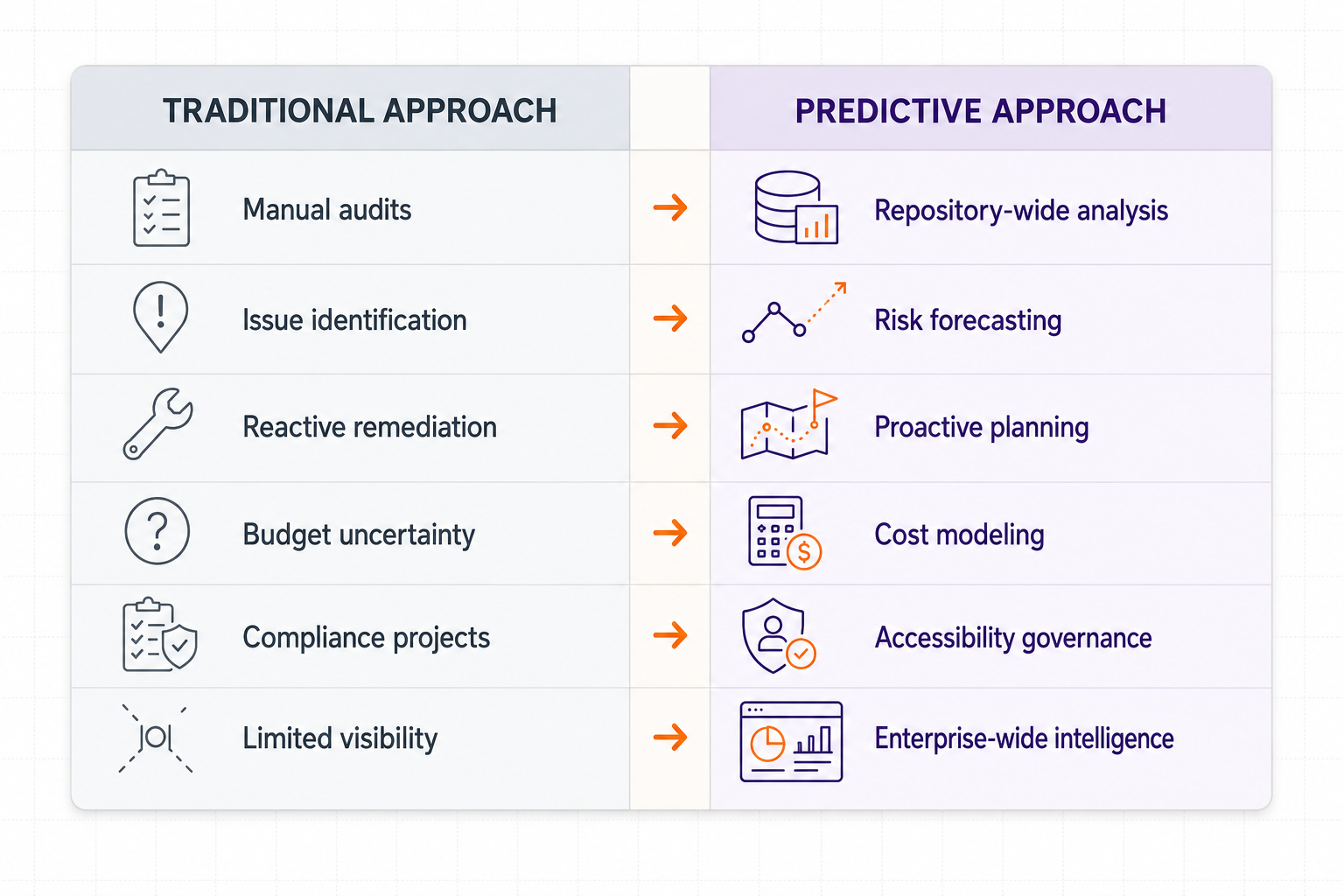
Fig 3: Comparison of traditional and predictive accessibility approaches.
A Straive Perspective
| “Accessibility should not be discovered at the last minute. It should be planned, measured, forecasted, and governed.” |
At Straive, we believe accessibility should not be discovered at the last minute.
It should be planned, measured, forecasted, and governed.
The organizations that will succeed in the evolving accessibility landscape are not necessarily those with the largest remediation teams. They are the ones with the greatest visibility into their accessibility obligations and the strongest ability to make informed decisions.
Predictive accessibility intelligence represents a fundamental shift in how organizations approach accessibility compliance. By combining large-scale content analysis, forecasting, risk assessment, and governance frameworks, accessibility becomes more than a regulatory requirement. It becomes a measurable and manageable business function.
As accessibility regulations continue to evolve, organizations that treat accessibility as an operational afterthought will find themselves responding to compliance pressures under increasing time and budget constraints. Those that embrace predictive accessibility intelligence today will be better positioned to forecast risk, allocate resources effectively, and build sustainable accessibility programs for the future.
Accessibility on Demand provides organizations with the intelligence needed to move from uncertainty to predictability. Instead of reacting to accessibility issues as they emerge, organizations can forecast risk, estimate effort, allocate resources strategically, and build sustainable accessibility programs that scale with their content ecosystems.
Accessibility on Demand is ultimately about transforming accessibility from a remediation challenge into a governance capability. That shift will define the next generation of accessible publishing.
That is the promise of Accessibility on Demand, and the direction in which Straive is helping organizations move.

Balamuraly K is an AI strategist and 25-year Straive veteran who transforms academic publishing workflows through Agentic AI. His work focuses on digital accessibility, content transformation, and leveraging data-driven AI models to ensure ethics in peer review. A lifelong learner, he holds advanced certifications in AI and disruptive tech from HBS Online and multiple IIMs.


