
Posted on: June 23rd 2026
I. The Operating Model Shift
Traditional collections management relies heavily on lagging indicators such as aging reports. By the time an invoice becomes 60 days past due, the probability of full recovery drops significantly. Predictive risk scoring changes this paradigm by leveraging agentic AI and machine learning to identify delinquency risks before they materialize, enabling proactive intervention rather than reactive recovery efforts.
This shift reflects a broader trend in finance transformation. PwC research indicates that the top 20% of firms capture nearly 75% of AI’s financial gains, highlighting that disciplined execution-not just technology adoption-is what ultimately drives ROI. By embedding AI-driven intelligence into collections workflows, finance teams can evolve from transactional back-office functions into proactive, high-impact operational partners.
The Contrast: Traditional vs. Predictive
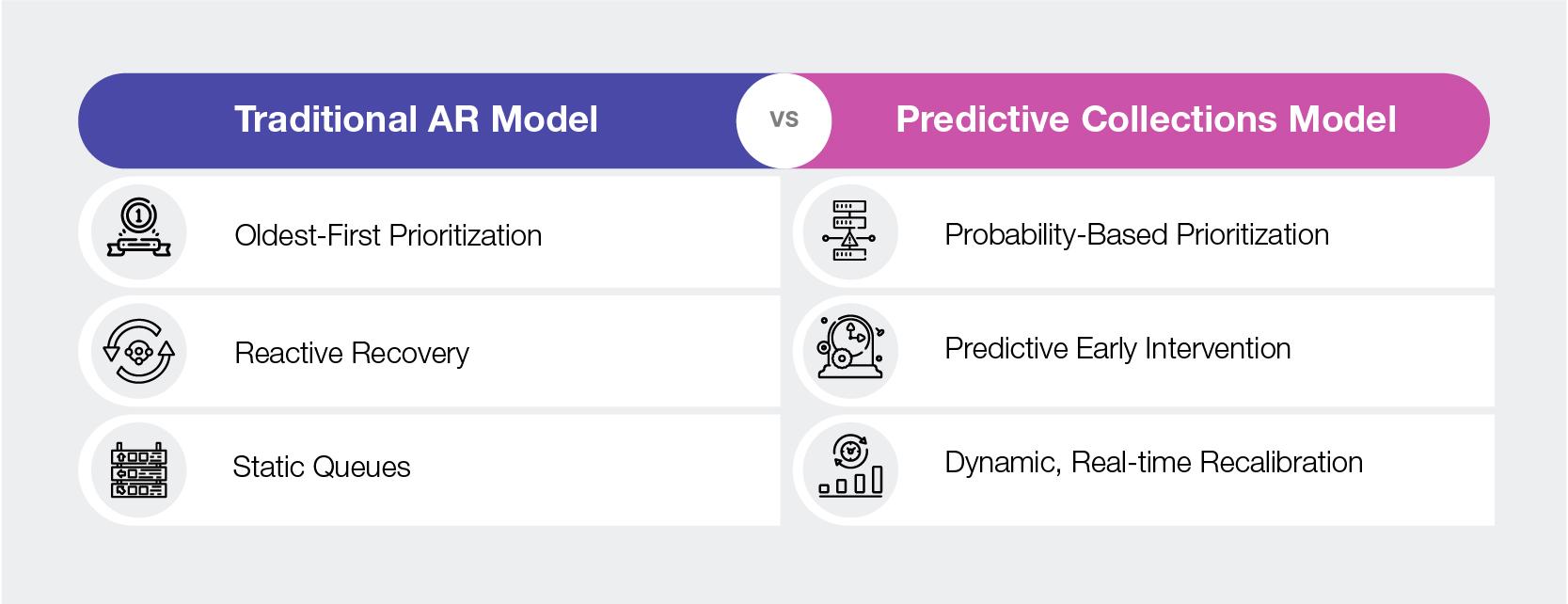
Traditional vs. Predictive Collection Models
II. The Engine: How Predictive Scoring Works
The predictive scoring engine is an AI-driven analytical system that evaluates receivables using historical payment behavior, credit bureau updates, and customer sentiment signals. By identifying patterns and assessing repayment risk, it predicts the likelihood of payment and categorizes receivables by risk level, enabling more targeted collection strategies.
The Four Receivables Risk Segments
Leveraging AI-led execution models, organizations can segment their portfolio to apply the right amount of pressure at the right time:
- Low-Risk / Self-Cure: Requires minimal intervention.
- Medium-Risk: Accounts showing early variability; proactive engagement here prevents slippage.
- High-Risk: Recurring late payers; requires fast escalation.
- Critical Exposure: Accounts that threaten significant write-offs.
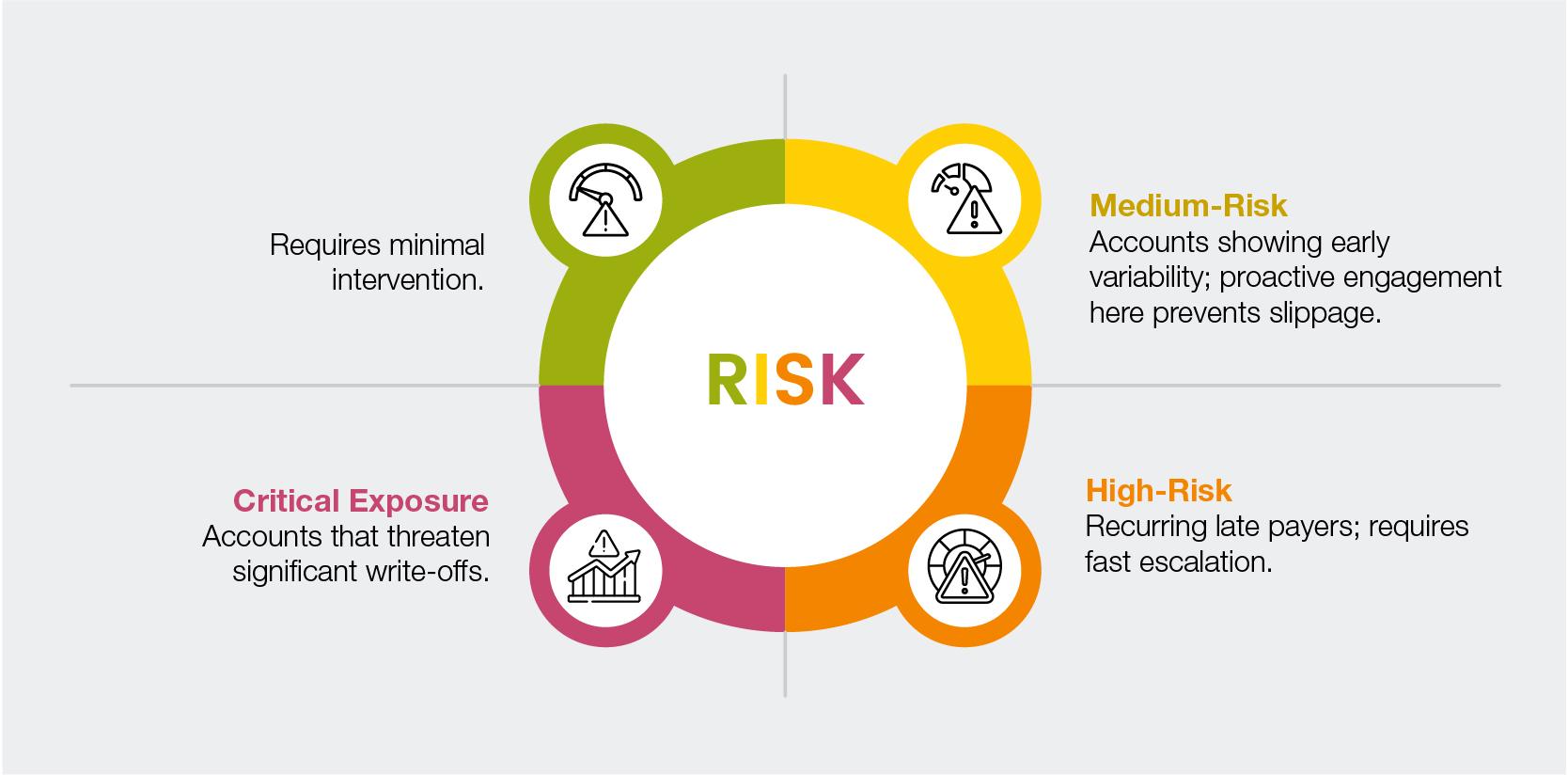 Overview of Key Receivables Risk Segments
III. The CFO Value Case: Verifiable ROI
Predictive scoring delivers measurable ROI across three core financial drivers: accelerated cash flow, collection effectiveness, and lower cost-to-collect.
1. Accelerated Cash Flow (DSO Reduction)
Predictive models prioritize accounts based on their likelihood to pay, not just their age.
- Benchmark: Companies implementing AI-driven collections report an average 37% reduction in Days Sales Outstanding (DSO) (Stuut 2026 Research).
- Impact: For a firm with a 55-day DSO baseline, a 20-day reduction can release millions in non-dilutive working capital.
2. Enhanced Quality (CEI vs. DSO)
While DSO measures speed, the Collection Effectiveness Index (CEI) measures the quality of the process-how much of the total available funds were actually collected.
- Metric: Many AR practitioners consider a CEI above 90% a sign of strong collection effectiveness.
3. Lower Cost-to-Collect
AR automation can substantially reduce repetitive collections activity, allowing human collectors to focus exclusively on complex negotiations and disputes rather than routine reminders.
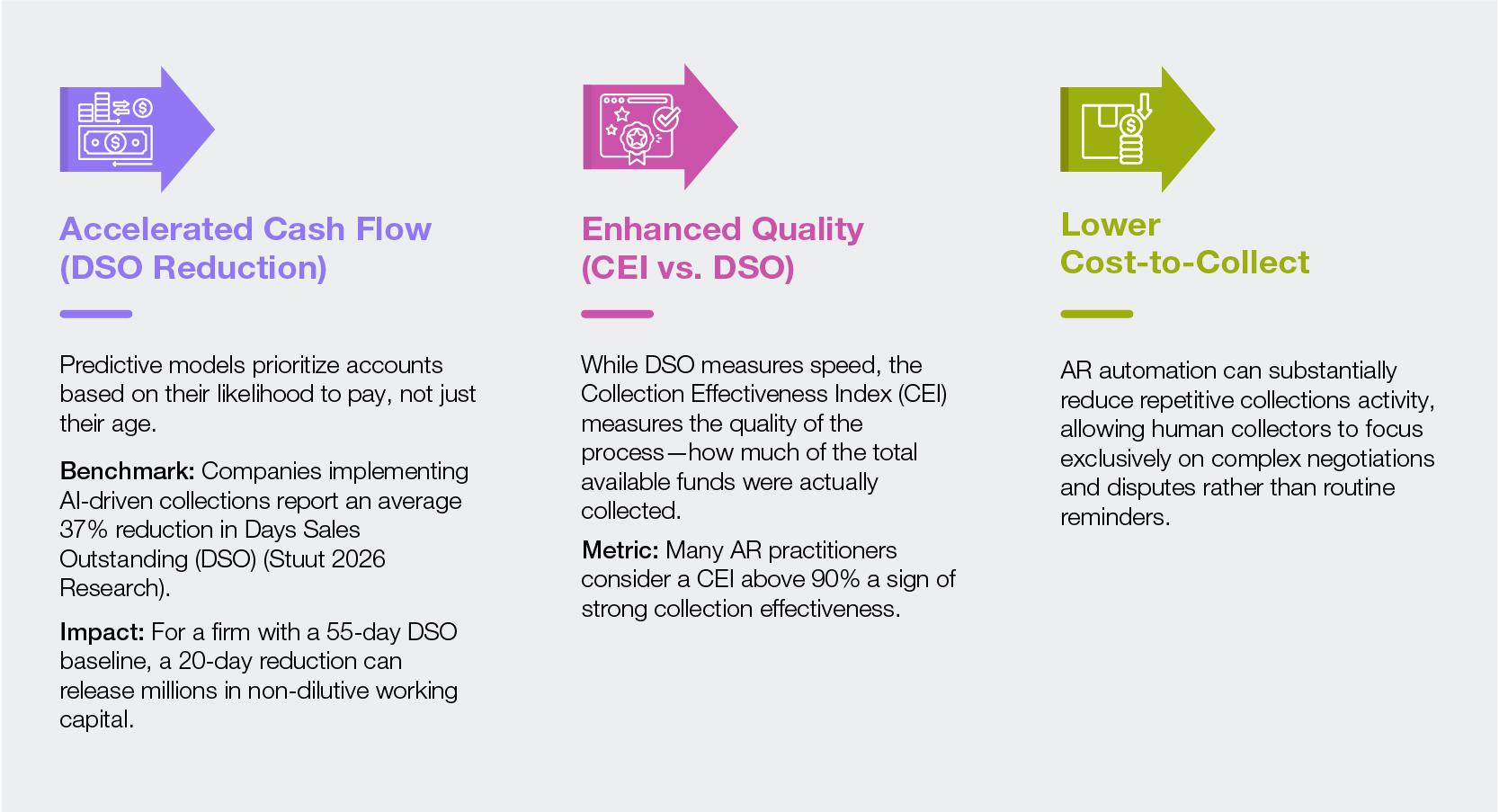
The Impact of AR Automation
V. Implementation Checklist: 5 Questions for the CFO
Before approving a predictive analytics investment, CFOs should evaluate the following:
- Data Quality: Is your ERP data sufficiently clean and complete to support accurate model training and forecasting?
- Actionability:Can your current collections team act on predictive scores within their existing workflows?
- Integration Speed: Can the solution integrate via API within days, or will it require an ERP overhaul lasting several months? (Industry benchmarks suggest API-led integration can often be completed within 3–4 days.)
- Measurability: Do you have baseline metrics for bad debt and Collection Effectiveness Index (CEI) to measure performance improvement?
- Partner Scalability: Can the provider support enterprise-scale deployment across multiple global business units?
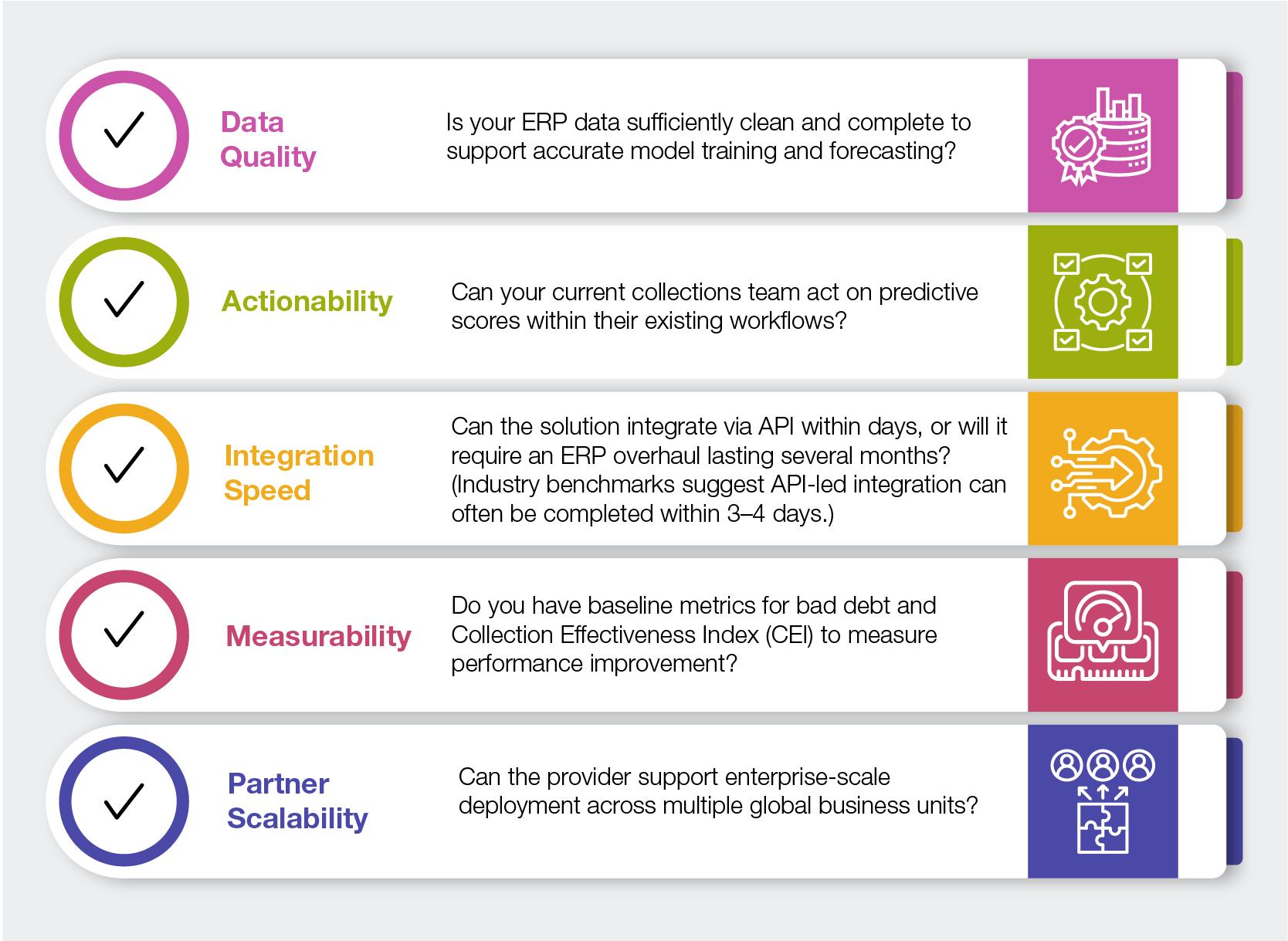
Predictive Analytics Deployment Checklist
V. Conclusion: Financial Sustainability
The accounts receivable automation market is projected to grow from USD 3.44 billion in 2025 to USD 6.66 billion by 2031, expanding at a CAGR of 11.64% during 2026–2031. This growth reflects increasing enterprise demand for operational efficiency, accelerated collections, enhanced customer management, and improved cash-flow visibility.
As organizations face rising economic uncertainty and tighter liquidity pressures, AR automation is evolving from a back-office efficiency tool into a strategic financial capability. Predictive risk scoring, AI-driven analytics, and real-time receivables monitoring are enabling CFOs to strengthen working-capital management, reduce credit risk, and improve financial resilience.
Ultimately, companies that invest in intelligent AR automation will be better positioned to achieve long-term financial sustainability and operational agility.

Assistant Director, Strategic Programs
Abhishek leads operational excellence and transformative client outcomes, bringing extensive experience in orchestrating large-scale customer experience and technology programs


