
Posted on: January 30th 2025
Customer experience has become one of the most reliable predictors of business performance. In many industries, it now influences loyalty and revenue more than product features or pricing. Customers no longer stay with brands simply because they have used them for years. They stay because the experience feels smooth, respectful, relevant, and consistent. They leave when it does not.
This shift has forced leaders to rethink how they define and deliver customer experience. Traditional approaches that rely on periodic surveying, static segmentation, and manual journey mapping cannot keep up with the pace of change. Customers expect rapid problem resolution, context-aware engagement, and near-instant fulfillment. Most companies cannot deliver that level of consistency without help.
Artificial intelligence has stepped into this reality and is reshaping the discipline of customer experience from the ground up. Instead of treating CX as a series of disconnected touchpoints, AI helps companies build living systems that learn, adapt, and improve continuously. This article explores what defines a modern CX strategy, why expectations have risen, and how AI enables a more intelligent and human-centered experience.
Rethinking the CX Playbook: What a Customer Experience Strategy Really Means Today
A customer experience strategy is the long-term plan that guides how a brand interacts with customers across their journey. It defines how a company wants customers to feel, how consistently those feelings should be delivered across channels, and how operations must be structured to support that intent.
Exhibit 1: Customer Experience Strategy Beyond Channels and Journeys
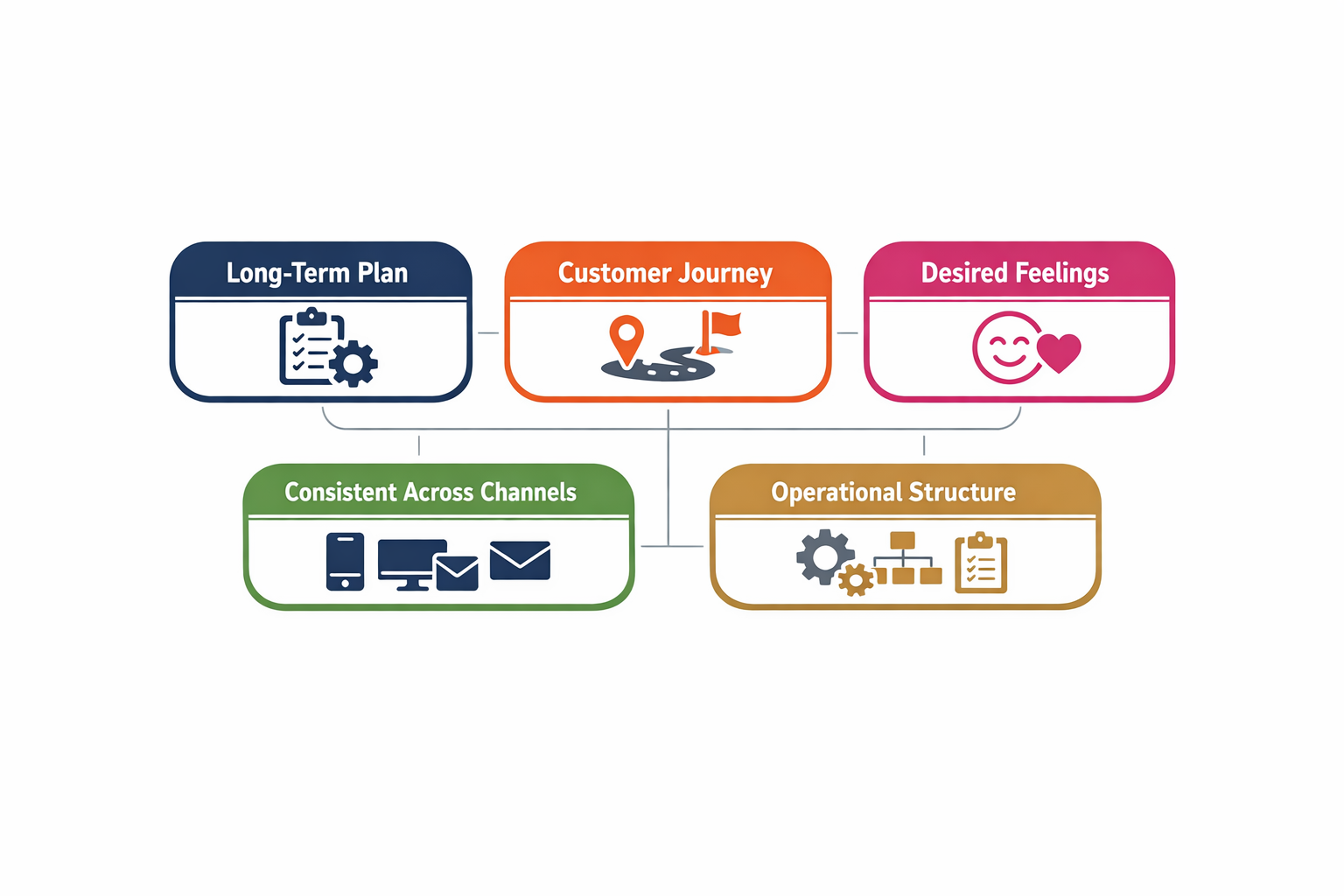
While the foundational elements of CX strategy have remained largely consistent, the expectations placed on them have increased dramatically. Organizations that once relied on periodic surveys, static reporting, and manual analysis are now expected to interpret millions of behavioral, transactional, and conversational signals in near real time. This growing gap between expectation and operational capability is one of the primary reasons AI has moved from being a supplementary tool to a core CX capability.
The Expectation Surge: Why Customer Experience Must Evolve Faster Than Ever
Customer expectations are shaped by the most seamless experiences they encounter anywhere, not just within a specific industry. Once customers experience frictionless onboarding, instant fulfillment, or intuitive digital support, they begin to expect the same level of ease across all interactions.
Personalization is no longer perceived as a differentiator. Customers expect brands to recognize them, remember past interactions, and adapt responses to their current needs. When communication feels generic or disconnected from context, it signals a lack of attention.
Speed has become equally critical. Digital-first interactions have conditioned customers to expect immediate responses, and even brief delays can be interpreted as indifference. At the same time, customers move fluidly across channels, expecting brands to maintain continuity regardless of where an interaction begins or ends. Repetition and loss of context quickly erode trust.
Exhibit 2: The Shift From Generic to Context-Aware CX
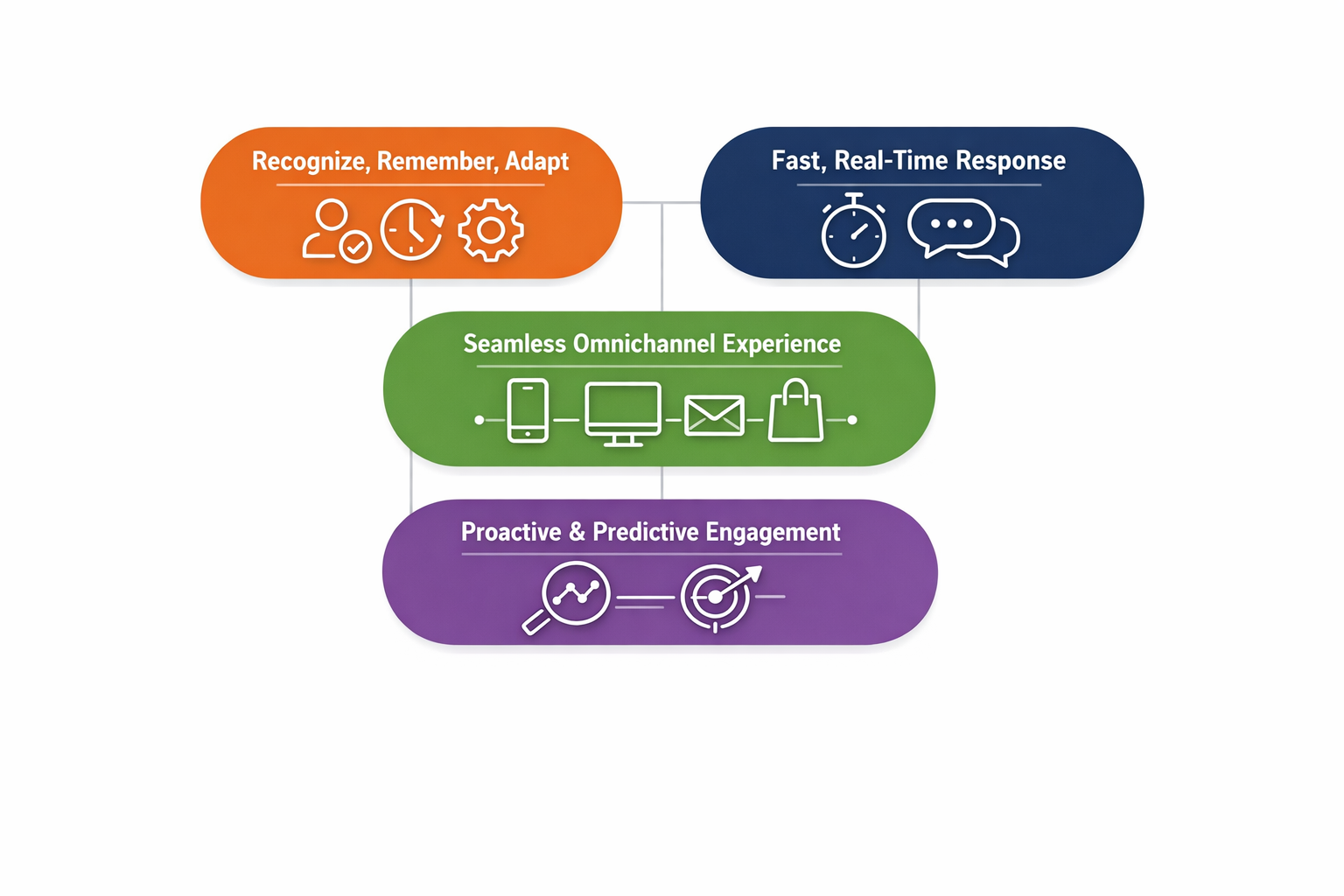
CX has also shifted from a reactive discipline to a predictive one. By the time a customer raises a complaint, the relationship is often already strained. Leading organizations aim to detect early signals of friction and intervene before dissatisfaction escalates. Trust, data responsibility, and transparency have become inseparable from the experience itself.
AI enables this shift by allowing organizations to sense, interpret, and respond to customer needs as they emerge rather than weeks or months later.
How AI Is Redefining Customer Experience
AI introduces a level of awareness and responsiveness that traditional approaches struggle to match. By analyzing large volumes of interaction data across channels, AI surfaces patterns, sentiment changes, and friction points that would otherwise remain hidden.
Rather than delivering uniform experiences, AI allows interactions to adapt dynamically based on context, behavior, and intent. This creates engagement that feels more relevant and timely. At the operational level, AI reduces friction by automating routine tasks, enabling customers to resolve simple needs quickly while allowing human agents to focus on complex or emotionally sensitive situations.
Exhibit 3: AI Driven Customer Experience for Smarter, Faster and More Human CX 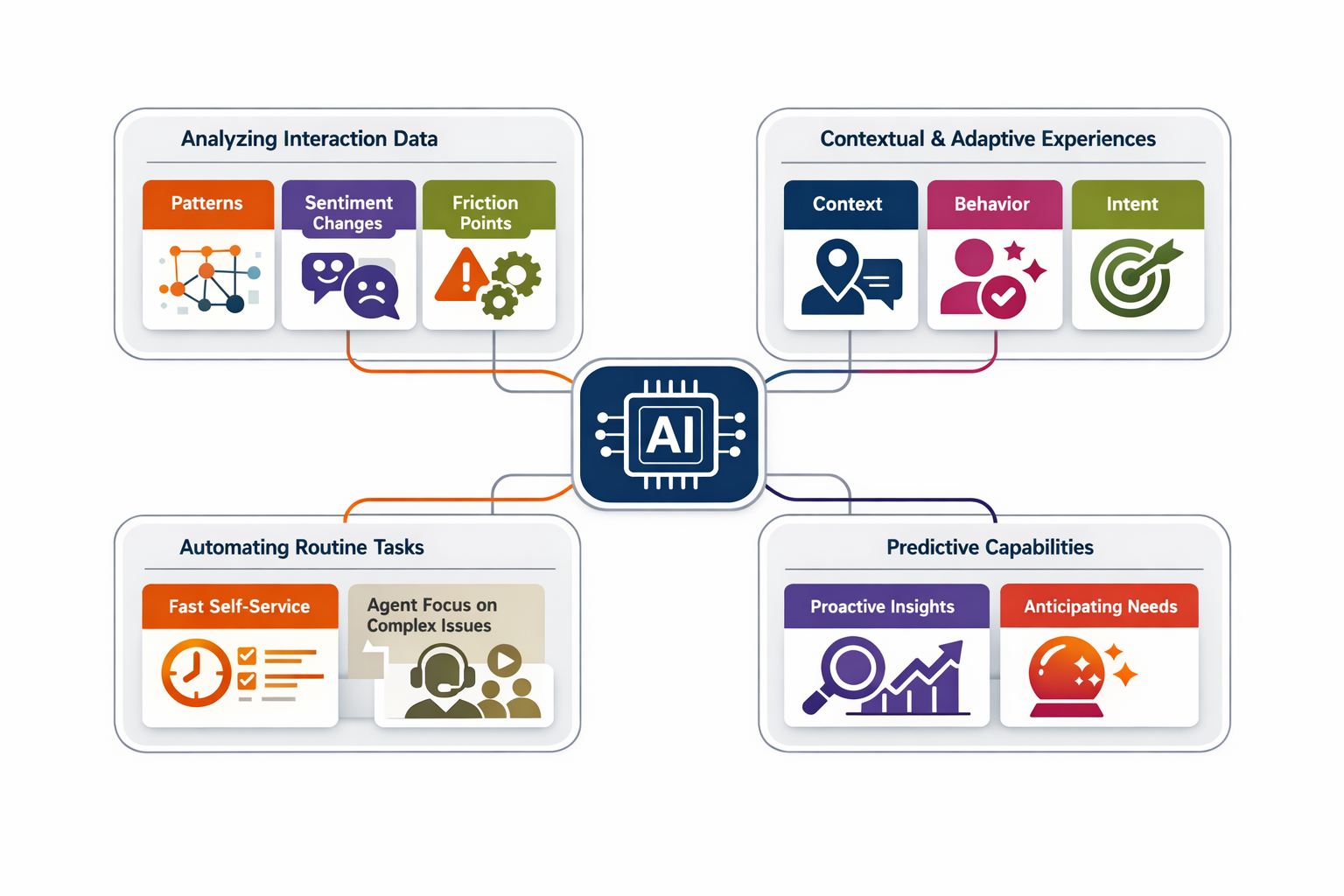
Predictive capabilities further shift CX from reaction to anticipation. AI can identify early indicators of dissatisfaction or disengagement and highlight moments where proactive outreach is most likely to be effective. Used responsibly, AI does not replace human care but strengthens it by ensuring that engagement is informed, contextual, and timely.
Reality Check: AI in CX Must Coexist with Legacy Systems
While AI-driven CX is often discussed in the context of modern digital platforms, the reality for most large enterprises is far more complex. Core customer data frequently resides in legacy environments such as mainframes, long-established ERP systems, or heavily customized applications built decades ago. These systems were never designed to integrate seamlessly with modern AI services.
As a result, CX transformation rarely involves replacing foundational systems. Instead, successful organizations adopt an integration-first approach, layering intelligence around existing platforms rather than disrupting them. Middleware, APIs, event-driven architectures, and data abstraction layers enable relevant customer signals to be accessed safely without compromising system stability or regulatory compliance.
Exhibit 4: AI in CX Depends on Legacy System Integration 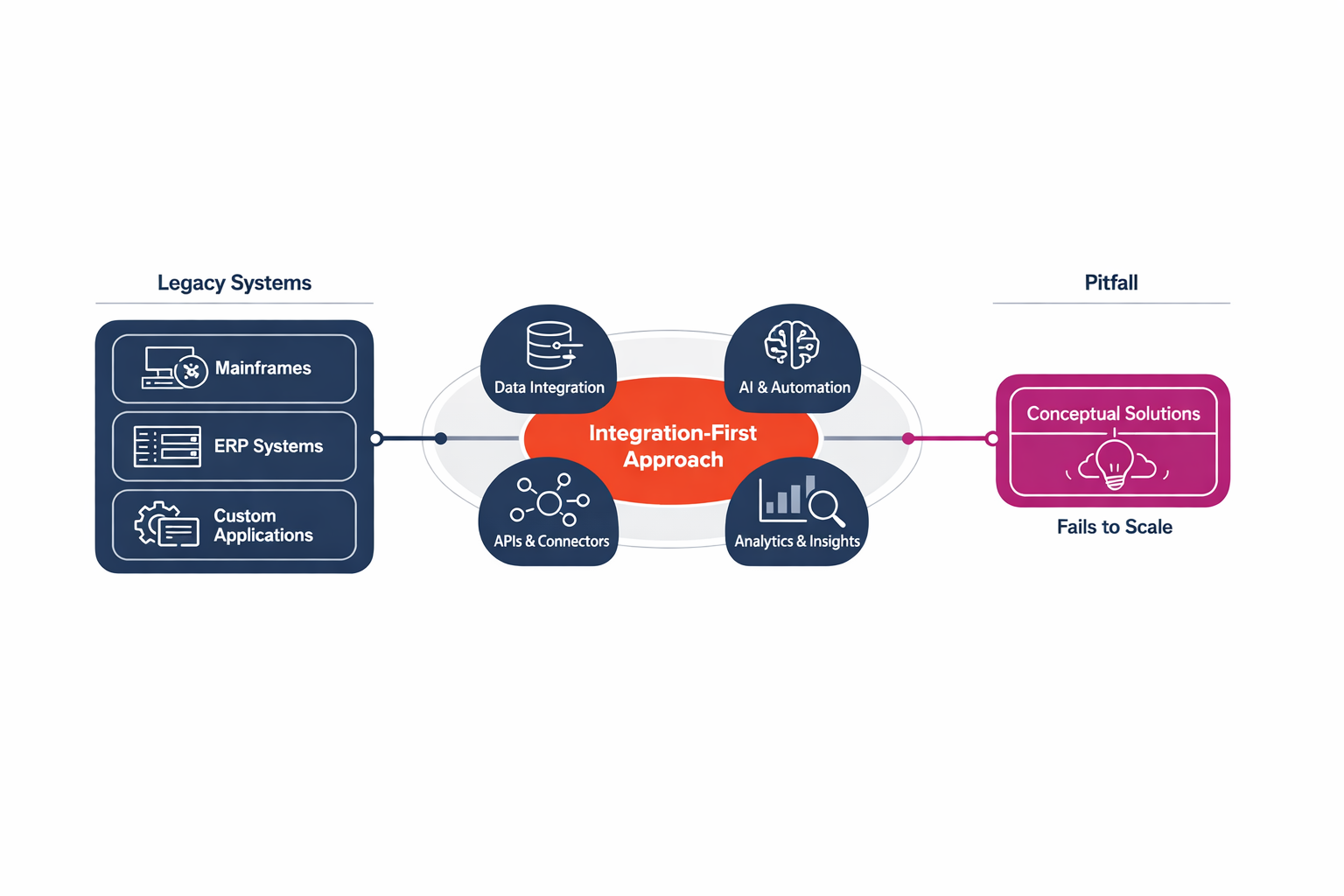
Ignoring these constraints often leads to CX strategies that appear compelling conceptually but fail to scale operationally. Acknowledging and planning for legacy realities is essential for sustainable AI adoption in enterprise CX environments.
Building an AI-Ready CX Strategy: A Practical Framework for Leaders
To deliver meaningful impact, AI must be embedded into CX strategy as part of an integrated operating model rather than deployed as isolated tools. This begins with a clear CX vision that defines not only performance outcomes but also the emotional experience the organization intends to create.
AI deepens customer understanding by bringing together behavioral, transactional, conversational, and sentiment data. This enables organizations to move beyond static segmentation toward a more nuanced understanding of individual needs and motivations. Journey analysis then reveals where customers encounter friction and where improvements will deliver the greatest impact.
When intelligence is embedded directly into interactions, AI can improve onboarding, guide customers through complex processes, and route requests more effectively. At the same time, operational models must evolve. Teams need new skills to interpret AI insights, supervise automated decisions, and focus on higher-order customer needs. CX becomes a living system that continuously learns and adjusts based on real-time feedback rather than periodic reviews.
The “How”: From Models to Meaningful CX Outcomes
AI-driven CX does not emerge from a single technology decision. It is built through layered architectures designed to balance capability, control, and cost. At the foundation are machine learning models and Large Language Models that interpret language and intent. However, enterprises rarely rely on open-ended generation alone.
To ensure accuracy and governance, many organizations use Retrieval-Augmented Generation approaches, grounding AI responses in approved enterprise knowledge rather than allowing unrestricted generation. Above this sit orchestration layers that determine when AI should respond, when information should be retrieved, and when escalation to a human agent is required.
Exhibit 5: Layered AI Architecture for Scalable, Governed Customer Experience 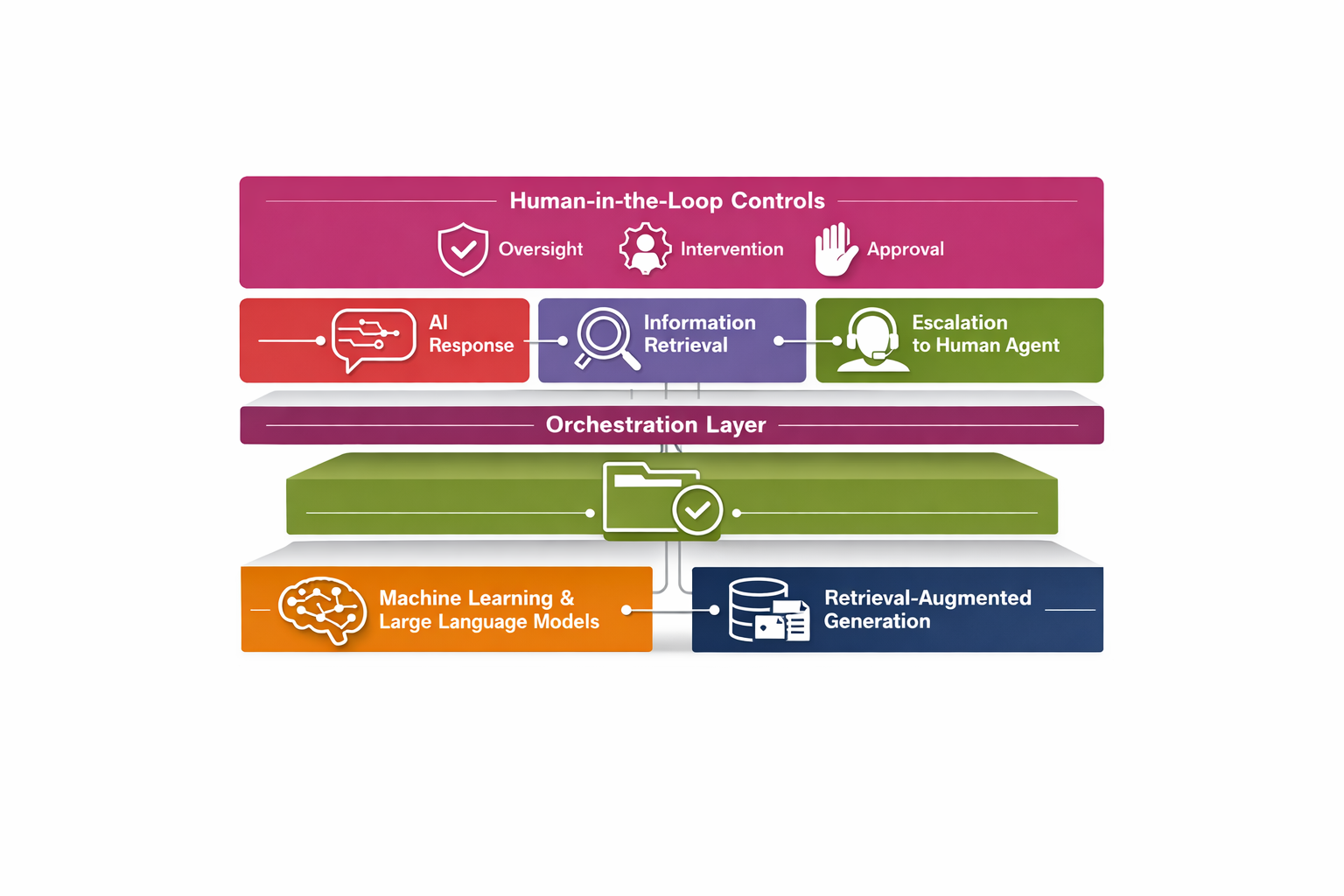
Human-in-the-loop controls are critical. They ensure accountability, allow agents to correct AI outputs, and support continuous improvement without relinquishing responsibility for customer outcomes.
Managing Risk: AI Hallucinations and Enterprise Accountability
One of the most significant risks in AI-driven CX is hallucination, where systems generate confident but incorrect information. In regulated industries, inaccurate statements about pricing, eligibility, or policy terms can create legal, financial, and reputational exposure.
Responsible CX strategies explicitly address this risk. AI responses are grounded in verified enterprise sources, confidence thresholds are applied, and high-risk interactions are escalated to human agents. AI should function as an assistive capability rather than an authoritative source in scenarios where precision and compliance are essential.
Hyper-Personalization in Practice: How AI Makes Engagement Feel Individual
AI has elevated personalization from a marketing tactic to a baseline expectation. Experiences now adapt in real time based on observed behavior, offering guidance, reassurance, or alternatives when hesitation or uncertainty is detected.
Conversational AI has improved significantly, with systems able to interpret intent, reference prior interactions, and adjust tone. When deployed thoughtfully, this reduces friction rather than replacing meaningful human engagement. Recommendations and offers become more relevant because they are grounded in behavior rather than assumptions.
Customer Skepticism: When AI Is Not the Right Answer
Despite advances in conversational design, many customers remain skeptical of machine-led interactions. This is particularly true during emotionally charged or complex situations.
Effective CX strategies respect this reality by providing transparent disclosure when AI is used, clear escalation paths to human agents, and customer choice over interaction modes. AI should reduce effort, not force adoption. Trust grows when customers feel they remain in control of how they engage.
Deep Intelligence: How AI Reveals Insights Customers Do Not Voice Explicitly
AI enables organizations to surface patterns that customers rarely articulate directly. Predictive models identify early disengagement, behavioral analysis reveals hidden friction, and voice and text analytics surface recurring issues across interactions.
Exhibit 6: How AI Surfaces the Customer Insights You Never Hear 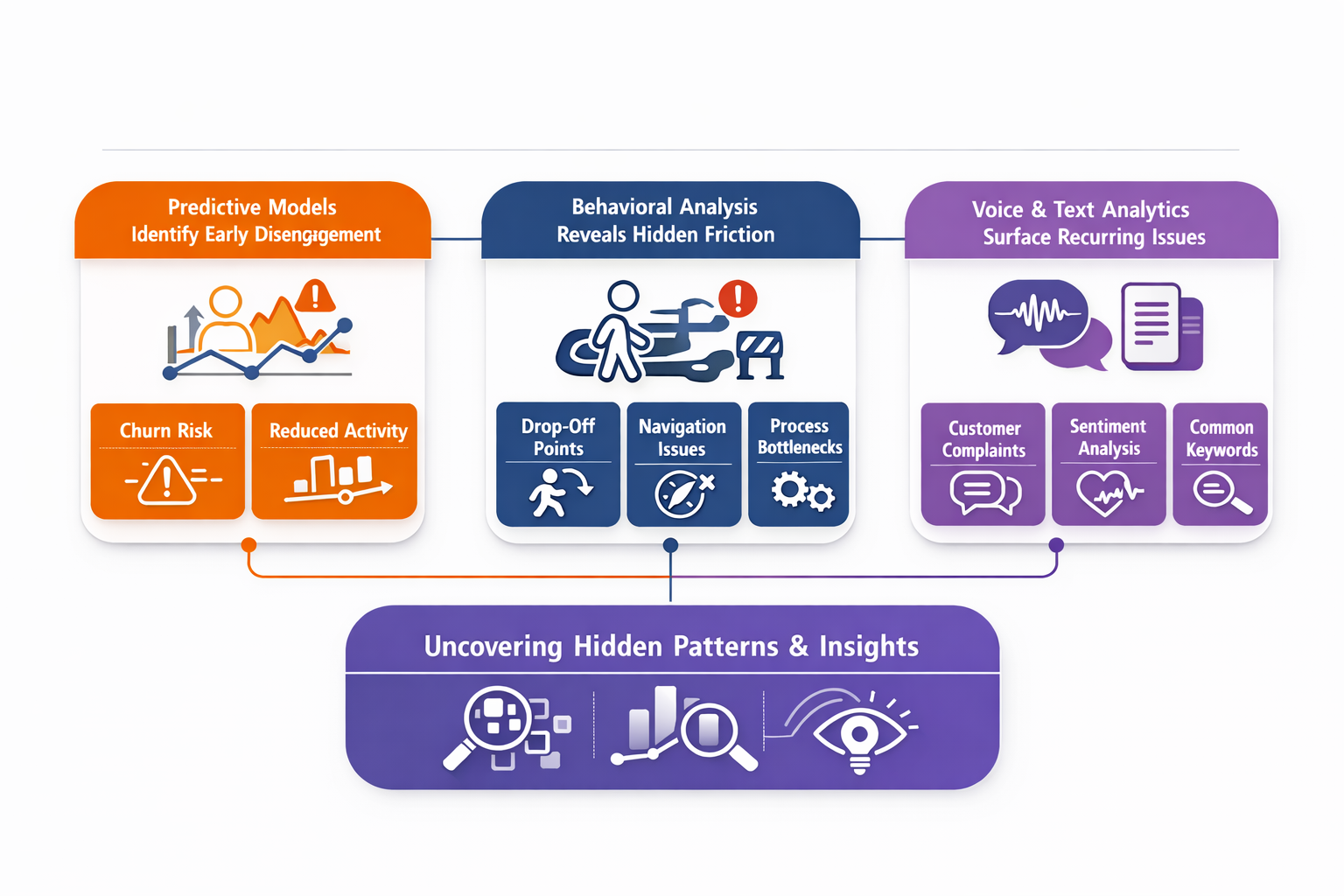
By linking these insights to journey performance and long-term customer value, CX teams can prioritize improvements that deliver meaningful impact rather than incremental optimization.
The Economics of AI-Driven CX: Cost Matters
Advanced AI capabilities introduce real economic considerations. Model inference, API usage, compute infrastructure, data pipelines, and specialized engineering talent all contribute to total cost of ownership.
Leading organisations address this by applying AI selectively, focusing on journeys where it delivers measurable value. They balance real-time and batch processing, choose appropriately sized models, and continuously assess cost relative to CX and operational outcomes. AI is treated as a targeted investment rather than a universal solution.
AI Governance and Decision Ownership in Customer Experience
Customer experience breaks down when no one owns the decisions customers actually feel. In real contact centers, recommendation engines and automated workflows influence refunds, wait times, and tone, yet responsibility often sits nowhere.
Strong CX teams make ownership explicit. Leaders decide what automation can approve, when humans step in, and how edge cases are handled. Governance is not theory. It is how organizations protect trust, avoid escalation loops, and ensure customers are treated consistently when systems fail.
Measuring AI Impact in CX Beyond Traditional Metrics
Traditional CX metrics such as NPS and CSAT remain useful, but they are insufficient for evaluating AI-driven transformation on their own. AI changes not only customer perception but also how efficiently journeys operate.
Exhibit 7: Redefining CX Measurement for the Age of AI 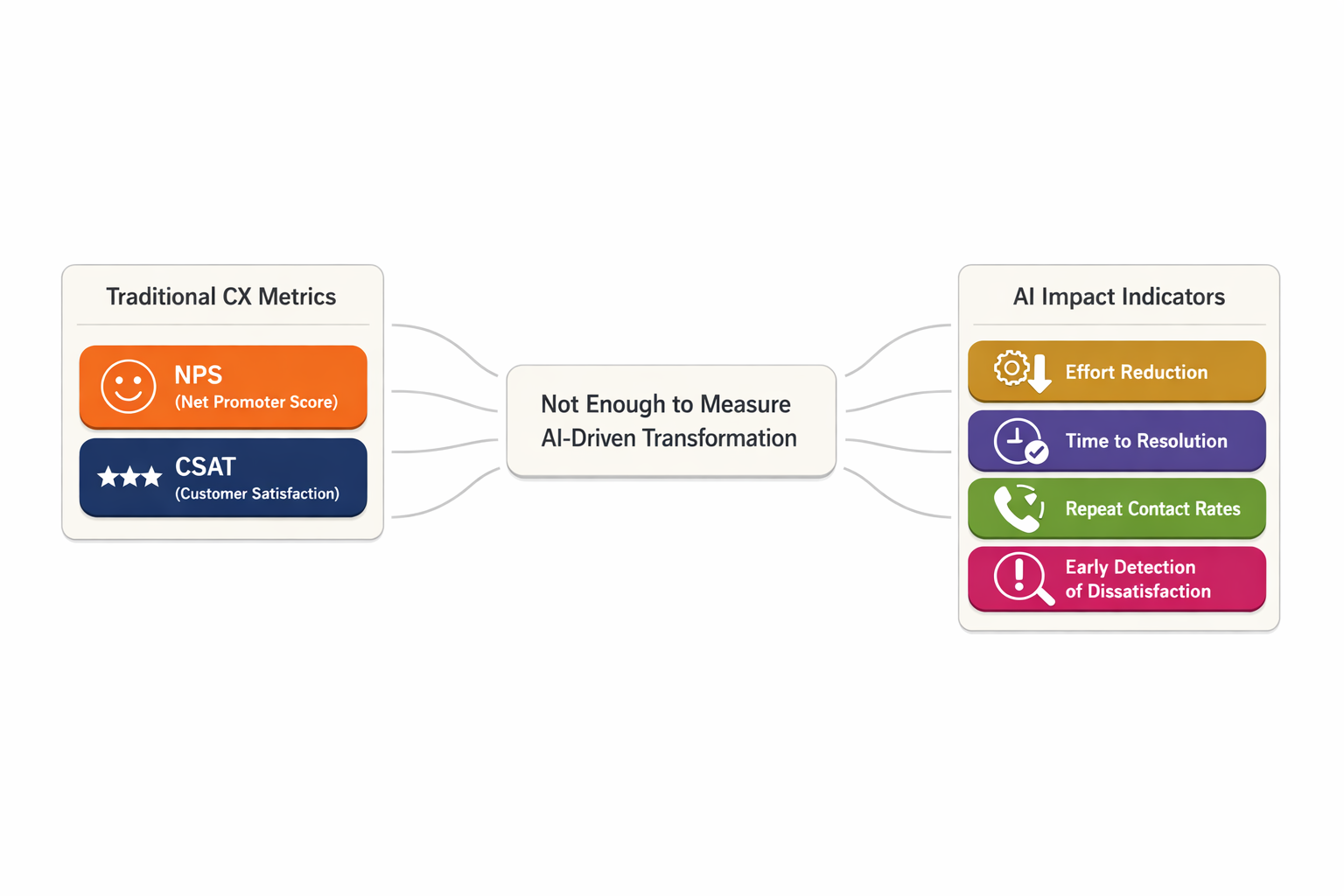
Leading organizations complement perception metrics with behavioral and operational indicators such as effort reduction, time to resolution, repeat contact rates, and early detection of dissatisfaction. By linking these measures to outcomes such as retention, cost-to-serve, and lifetime value, CX leaders can make informed decisions about where AI genuinely adds value.
Organizational Readiness and the Human Side of AI-Driven CX
Technology alone does not transform customer experience. Organizational readiness plays an equally important role. As AI reshapes CX operations, roles evolve, and workflows change.
Agents increasingly act as supervisors of automated interactions rather than sole problem solvers. This requires new skills, confidence in challenging AI outputs, and clarity around accountability. Successful organizations invest in training, change management, and communication to ensure AI is positioned as a support for human judgment rather than a replacement.
The Future of CX: AI Trends That Will Reshape Experience Strategy
Emerging trends such as agentic systems, emotion-aware interactions, preventive CX models, and deeper automation will continue to influence experience design. At the same time, ethical AI practices and strong governance will become increasingly important differentiators in customer trust.
Conclusion
AI is transforming customer experience by enabling deeper understanding, greater relevance, and more proactive engagement at scale. When implemented responsibly, it strengthens trust rather than undermining it.
Exhibit 8: Designing the Next Era of Customer Experience with AI 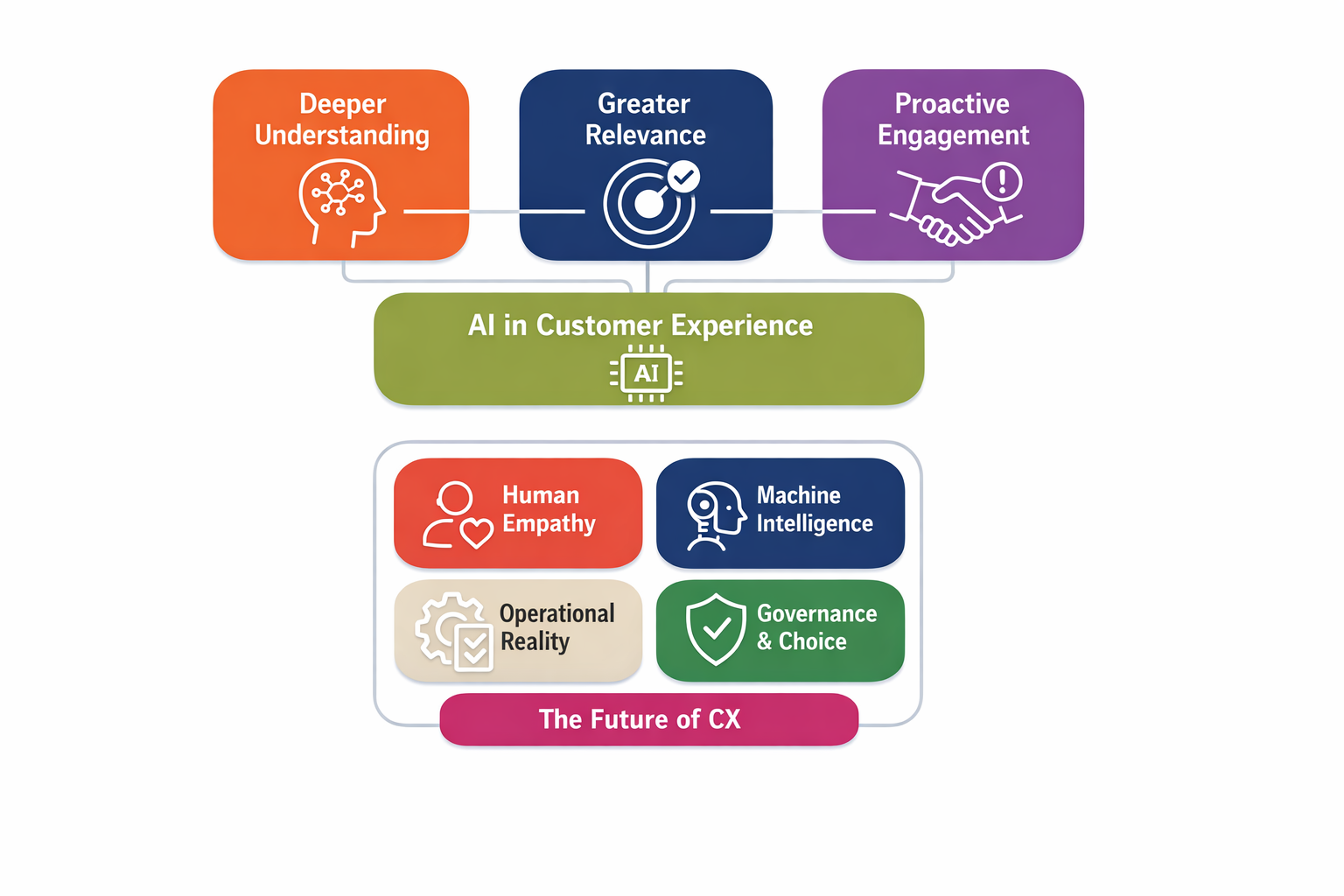
The future of CX belongs to organizations that combine human empathy with machine intelligence, grounded in operational reality, governance, and respect for customer choice. AI’s role is not to replace human connection, but to make every interaction more informed, timely, and meaningful.

Associate VP, Account Management


